A Walima reception outfit needs to achieve something surprisingly difficult for a wedding guest.
It should feel refined and celebratory without overshadowing the occasion. It should look elegant and considered, while remaining appropriate for someone attending rather than hosting the celebration.
That balance is what makes choosing a Walima guest outfit different from simply buying another formal dress.
For many UK wedding guests, the Walima becomes an opportunity to wear softer palettes and more fluid silhouettes than the deeper tones often chosen for the Baraat. Ivory, champagne, powder blue, blush, sage, silver and other refined shades naturally come into consideration.
But colour alone cannot make a guest outfit work.
The silhouette, fabric, hand embroidery, dupatta, jewellery and overall scale all determine whether a softer outfit still carries enough presence for a formal reception.
This Walima formal dress guide explains how to bring those elements together so that your reception outfit feels polished, personal and clearly distinct from everyday formal wear.
Guests beginning their search can explore Abdullah Bin Shahbaz’s hand embroidered formal wear for UK weddings, where Walima guest pieces are developed through made to order sizing, premium fabrics and traditional hand embellishment.
Walima Formal Dress Guide UK Wedding Guests Can Use Before Choosing a Design
Before saving dozens of pastel outfits, decide what you want your Walima guest look to feel like.
Is it a formal evening reception in a large ballroom?
A smaller daytime celebration?
A hotel event with strong artificial lighting?
An elegant dinner where you will spend much of the evening seated with family?
These details affect the dress more than many guests initially expect.
A large evening reception can support stronger embroidery and a more structured silhouette because the outfit needs to hold its own in a grand space. A smaller celebration can allow quieter craftsmanship to become more noticeable.
The most useful starting point is therefore not:
“What colour should I wear?”
It is:
“What kind of formal presence should this reception look create?”
Once that is clear, decisions around colour, fabric and handwork become much easier.
What Should a Wedding Guest Wear to a Walima?
A wedding guest can wear a lehenga, elegant formal ensemble, pishwas, sharara, gharara or long formal dress to a Walima. There is no single required shape.
What usually distinguishes Walima guest styling is refinement. The silhouette may feel more fluid. The colours may become softer. Embroidery can remain detailed while appearing more controlled than the stronger ceremonial looks sometimes seen at the Baraat.
This does not mean the dress needs to be simple. A beautifully hand embroidered Walima guest outfit can feel perfectly appropriate when the colour palette and embroidery density are balanced for someone attending the reception.
The goal is to look polished and celebratory without competing with the couple or the immediacy of the occasion.
How Should a Walima Guest Outfit Differ From a Baraat Guest Outfit?
The two outfits should feel intentionally different if you are attending multiple events.
A Baraat guest outfit often carries stronger colour. Richer tones, deeper jewel colours and more pronounced embroidery can create a festive presence appropriate for the main wedding celebration.
The Walima gives guests room to shift the mood. You might move from deeper tones into powder blue. From dense gold handwork into silver detailing. From a highly structured lehenga into a softer flowing silhouette. Or you may keep a similar level of embroidery while changing the colour and fabric completely.
The contrast does not need to come from making the Walima outfit dramatically lighter. It can come from changing the design language.
This is particularly important when planning a complete wedding guest wardrobe. Each event should have its own personality rather than looking like the same outfit repeated.
Best Walima Formal Dress Colours for UK Wedding Guests
Pastels work beautifully for Walima guest dressing because they create a soft, celebratory mood appropriate for a reception.
Powder blue can feel fresh and refined. Sage green offers softness without becoming overly delicate. Dusty rose introduces warmth. Champagne and ivory create timeless elegance. Silver-grey can look especially sophisticated during an evening reception. Lilac and muted mauve offer another contemporary direction.
But these colours are not rules. Emerald, deeper blue or other jewel tones can also create a striking reception look when the embroidery and silhouette are balanced for a guest.
The important question is whether the shade feels appropriate for a reception while allowing you to look distinct from the couple.
How to Style a Pastel Walima Outfit for a Formal Reception
This is where many wedding guests become uncertain. A pastel outfit needs enough structure and detail to feel formal rather than casual.
The solution is not simply adding more embellishment everywhere. Instead, focus on the areas that establish formal character.
The neckline should feel considered. The sleeves should carry enough detail to appear intentional in photographs. The lower silhouette needs enough volume or structure to feel significant. The dupatta should complement the outfit rather than looking like an afterthought. Borders can also create a stronger formal finish.
The embroidery then connects these areas. A pastel Walima guest dress looks complete when all of its elements feel designed to work together.
Powder Blue for a Walima Guest Look
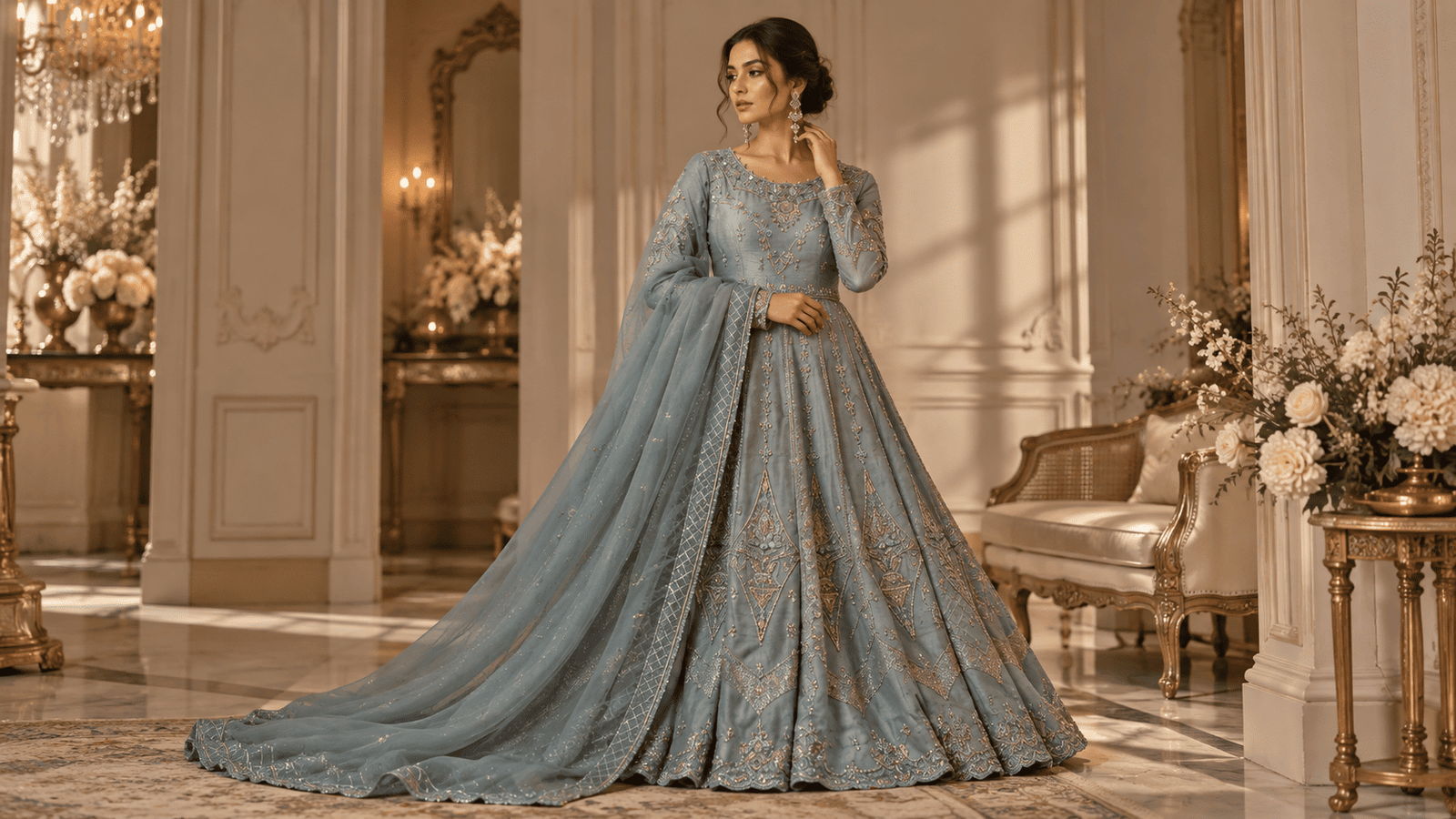
Powder blue has become a natural reception colour for wedding guests because it combines softness with enough distinction to feel celebratory.
It works particularly well with silver, pearl and cooler metallic handwork. Under evening lighting, reflective embellishment can make the colour appear richer without changing its fundamental character.
The fabric matters significantly. A powder blue silk dress feels more grounded. Organza can create lighter layers and movement. Tissue can add luminosity. Embroidery can range from delicate resham to stronger cutdana, crystal and metallic work depending on how formal you want the final look to feel.
Sage Green for a Walima Guest Look
Sage is another useful choice for guests who want softness without choosing a conventional blush or blue. Its slightly muted quality works beautifully with antique metallics, pearls and delicate threadwork.
The shade also provides enough colour to remain visible under venue lighting. A sage Walima guest look can lean traditional through zardozi and dabka or feel more contemporary through restrained embellishment.
The Naqsh collection is especially useful for exploring softer formal palettes, smaller motifs and more delicate hand embroidery suitable for wedding guests.
Can a Wedding Guest Wear Ivory to a Walima?
Yes, with care. Ivory can create a highly sophisticated Walima guest look, but it is worth considering the couple’s outfits and the overall dress code before choosing it.
Fabric becomes particularly important with ivory. Tissue can create natural light reflection. Silk provides richer structure. Organza can add softer movement through a dupatta or overlay. Metallic embroidery can then give the outfit formal character without requiring a dramatic colour contrast.
Zarveen provides a useful example of ivory tissue paired with hand-applied metallic detailing, showing how a light palette can still feel formal through craftsmanship.
Should Walima Guest Embroidery Be Lighter Than Baraat Guest Embroidery?
Not necessarily. A Walima guest outfit can carry substantial handwork. What often changes is how that embroidery is expressed.
A Baraat guest outfit may use denser gold zardozi and stronger colour contrast. A Walima guest outfit may instead use silver metallics, crystals, pearls, resham or more tonal work. The density can still be significant. The visual effect simply becomes more refined.
Think in terms of different embroidery character, not automatically less embroidery.
Best Embroidery Techniques for a Walima Guest Dress
Zardozi can work beautifully on a Walima guest dress when the metallic tone complements the colour palette. Dabka introduces physical depth. Resham can soften the embroidery and bring colour into floral or ornamental motifs. Cutdana and crystals become particularly effective during evening receptions because they respond strongly to artificial light. Mukesh can create more subtle reflected light across a dupatta or quieter areas of the garment. Pearls can also fit naturally into a softer Walima aesthetic.
The strongest designs often combine several techniques rather than relying on only one.
Fabric Can Change the Entire Walima Guest Look
The same pastel shade can create completely different formal moods depending on the fabric. Silk provides depth and elegant structure. Organza creates sheer movement and works especially well for dupattas and layered silhouettes. Tissue contributes luminosity and can make metallic embroidery feel naturally connected to the fabric.
A guest who wants a flowing reception look may require a different fabric strategy from someone choosing a more structured silhouette. The amount of embroidery also influences the decision. Dense handwork requires sufficient support. Delicate threadwork leaves greater freedom for lighter materials.
Walima Lehenga or Formal Ensemble: Which Is Better for Guests?
Neither is automatically better. A lehenga maintains a strong connection with South Asian formal tradition and can be particularly effective when you want your Walima guest look to feel festive. A more contemporary formal ensemble creates a refined reception mood, with a long vertical line that can make handwork appear elegant rather than heavily traditional.
A pishwas sits somewhere between those directions, maintaining South Asian design identity while creating graceful movement. Shararas and ghararas offer another alternative.
The decision should reflect your personal style rather than the current trend cycle. Ask which silhouette makes you feel like yourself while still providing enough formal presence for a reception.
When a Long Shirt Works for a Walima Guest
A long shirt can create an extremely elegant Walima guest outfit when the lower silhouette and embroidery are balanced. Pairing it with an izaar, flowing trousers, sharara or richly worked lower garment creates several dimensions in the outfit.
The shirt can carry detailed embroidery around the neckline and sleeves while the lower half contributes movement and texture. This can be especially useful for guests who want a refined look without a voluminous skirt. The result can feel contemporary without abandoning traditional hand craftsmanship.
Your Walima Outfit Should Photograph Well From Across the Room
Reception venues can be large. This means the outfit has to work at more than one viewing distance. Close embroidery matters, but so does the complete silhouette.
A garment with extraordinary detail but very little visual structure may disappear in wide reception photographs. Think about shape. Think about the dupatta. Think about how the embroidery is distributed across the garment. The outfit should look intentional from the entrance, not only in close-up photographs.
Choosing Jewellery for a Walima Guest Dress
Jewellery should respond to the neckline and embroidery. A silver-toned powder blue outfit may naturally support cooler jewellery. An ivory or champagne dress with antique gold work can move in another direction. Pearls can work beautifully with softer reception palettes.
If the neckline is heavily embroidered, large jewellery may compete with it. A more open neckline creates room for a statement necklace. The important thing is to decide which element should dominate around the face. The dress and jewellery should not both fight for first place.
How the Walima Dupatta Should Work for Guests
A Walima guest dupatta often benefits from feeling lighter and more fluid than the main garment. Organza can work particularly well because it holds embroidered borders while remaining relatively easy to manage through an evening.
Mukesh or scattered embellishment can create light throughout the centre without making the dupatta heavy. The key question is how it will actually be worn. Over one shoulder? Draped more loosely for the reception? Decide this before the embroidery layout is finalised, as a beautiful border can lose its effect when the drape places it somewhere the design never anticipated.
Consider the Reception Lighting
Walima receptions are frequently held in venues with strong artificial lighting. That changes how fabric and embroidery behave. Crystals and cutdana can become much more visible. Metallic handwork reflects warm venue lights differently from natural daylight. Pastels can appear warmer or cooler depending on the room.
If possible, look at the dress under more than one lighting condition before finalising colours. This is particularly important for ivory, silver-grey and pale blue shades, where subtle changes in tone become more noticeable under artificial light.
UK Summer Walima Dressing for Guests
Summer receptions can still take place in warm indoor venues. Several layers of fabric, dense embroidery and professional lighting can increase discomfort even when the weather outside is mild. A lighter dupatta and controlled layering can make a significant difference.
You do not need to remove formal richness. Instead, concentrate it where it has the greatest visual value. The bodice, sleeves and borders can carry strong craftsmanship while other sections remain lighter. This creates enough formal impact without making the dress unnecessarily exhausting to wear.
Winter Walima Dressing in the UK for Guests
Winter gives guests more freedom to explore richer fabrics and structured silhouettes. However, most receptions still take place inside heated venues. Do not choose an excessively heavy garment purely because the wedding is in December.
Think about the complete evening. Arriving. Photographs. Sitting. Greeting family. Moving around the venue. A winter Walima guest dress should look seasonally appropriate while remaining wearable once you are indoors.
The Walima Outfit Should Fit You, Not a Standard Size
Fit has an enormous effect on how formal wear appears. A beautifully embroidered neckline can lose its impact when the shoulders do not sit correctly. A skirt or long dress can appear poorly proportioned when the length does not work with your height. Sleeves must allow natural movement. The waist should remain comfortable while seated during dinner.
This becomes especially important with heavily hand embroidered clothing because significant alterations after completion can disturb the embroidery layout.
Made to Order Can Be Especially Valuable for a Walima Guest Outfit
A wedding guest often has a very specific vision for a Walima reception. You may love an existing design but want it in powder blue instead of ivory. You may prefer silver embroidery rather than warm gold. The sleeves may need additional coverage. The neckline may need adjusting. Made to order construction allows these decisions to be considered before the dress is completed.
This creates a more coherent result than buying a finished garment and attempting to transform several elements afterwards.
Naqsh or Zarposh for a Walima Guest Look?
Both can work for wedding guests, but they represent different levels of visual intensity.
Naqsh has a softer language built around delicate motifs, fine resham, pastel tones and refined formal silhouettes, making it a natural choice for guests who prefer understated elegance.
Zarposh moves towards stronger metallic embroidery, richer handwork and more pronounced formal presence, suitable for guests who want a more statement reception look.
The better choice depends on how prominent you want your Walima guest outfit to feel. A guest who prefers softer dressing does not need to force herself into heavily worked couture. Likewise, a guest who wants a strong formal reception look should not reduce the embroidery simply for the sake of restraint.
What Should You Discuss During a Walima Outfit Consultation?
Start with the wedding date. Then discuss the venue, time of day and general scale of the reception. Bring examples of colours you genuinely like, but remain open to seeing how they behave on different fabrics. Explain your preferred silhouette. Confirm the embroidery direction, neckline, sleeves and dupatta. If you already own important jewellery, show it. Ask about final garment weight. And make sure the designer understands the level of movement and comfort you expect through the evening.
When Should You Order Your Walima Guest Dress?
Do not assume that a pastel guest dress automatically takes less time to create than a more heavily coloured outfit. Fine handwork still requires artisan time. Custom colour changes may affect thread and embellishment selection. A detailed dupatta can involve considerable work even when the overall dress looks visually soft.
Start the conversation early enough that the design can be decided thoughtfully rather than under unnecessary time pressure.
A Walima Guest Outfit Checklist Before You Order
Before confirming the dress, make sure you have decided:
- the reception venue and time of day
- your preferred colour family
- how different the Walima look should feel from your Baraat outfit
- silhouette
- fabric
- embroidery density and metallic tone
- neckline
- sleeves
- measurements
- dupatta style
- jewellery direction
- footwear height
- production timeline
- whether the complete outfit feels appropriately formal for a reception
If these decisions are reasonably clear, the designer has a much stronger foundation for creating the right guest outfit.
FAQs About Walima Guest Dresses for UK Weddings
What should a wedding guest wear to a Walima?
A wedding guest can wear a lehenga, elegant formal ensemble, pishwas, sharara, gharara or long formal dress to a Walima. The key is choosing something refined and celebratory that feels appropriate for a reception.
What colour is best for a Walima guest dress?
Powder blue, ivory, champagne, blush, sage, silver-grey, lilac and dusty rose are popular Walima guest colours. The best choice depends on the venue, the time of day and your personal style.
Should a Walima guest dress be lighter than a Baraat guest dress?
It often has a softer colour palette or more refined visual character, but it does not have to contain less embroidery. Many guests choose a different design language for the Walima rather than simply a lighter outfit.
Can a guest wear ivory to a Walima?
Yes, with consideration. Ivory can work beautifully for a guest when the fabric, embroidery and silhouette give the outfit enough formal character. It is worth checking the couple’s outfits and any dress code first.
Can I wear a lehenga to a Walima as a guest?
Yes. A lehenga remains a strong Walima guest option, particularly when the colour and embroidery create a refined reception look appropriate for someone attending the celebration.
Which fabric works best for a Walima guest dress?
Silk, organza and tissue can all work depending on the silhouette and embroidery. Silk provides structure, organza creates movement, and tissue adds luminosity.
Which embroidery is best for a Walima guest outfit?
Zardozi, dabka, resham, mukesh, cutdana, pearls and crystals can all work for a Walima guest outfit. The best combination depends on the colour palette, the venue lighting and how formal you want the final look to feel.
Should Walima guest jewellery be understated?
It can be, particularly when the dress already contains detailed embroidery. The jewellery should complement the neckline and embroidery rather than competing with them.
Can a Walima guest dress be made to order?
Yes. Made to order formal wear allows custom sizing and agreed changes to colour, neckline, sleeves and embroidery density, making it ideal for wedding guests who want a precise fit.
Conclusion
The best Walima guest dress is not simply the palest outfit you own. It is the dress that lets you feel polished and celebratory while remaining appropriate for someone attending the reception.
Colour may become softer. The silhouette may become more fluid. Metallic embroidery may move from rich gold into silver, pearl or tonal detailing. But the craftsmanship should still make you feel confident and well dressed for a formal evening.
For UK wedding guests, this balance becomes especially important in large formal venues where the outfit needs to hold its own without overshadowing the occasion.
At Abdullah Bin Shahbaz, Walima guest outfits are developed through made to order sizing, premium fabrics and traditional hand embroidery. Explore the Pakistani formal wear collection, discover the softer Naqsh collection or richer Zarposh collection, and contact the team or message on WhatsApp to discuss your Walima date, colour, silhouette and customisation requirements.