
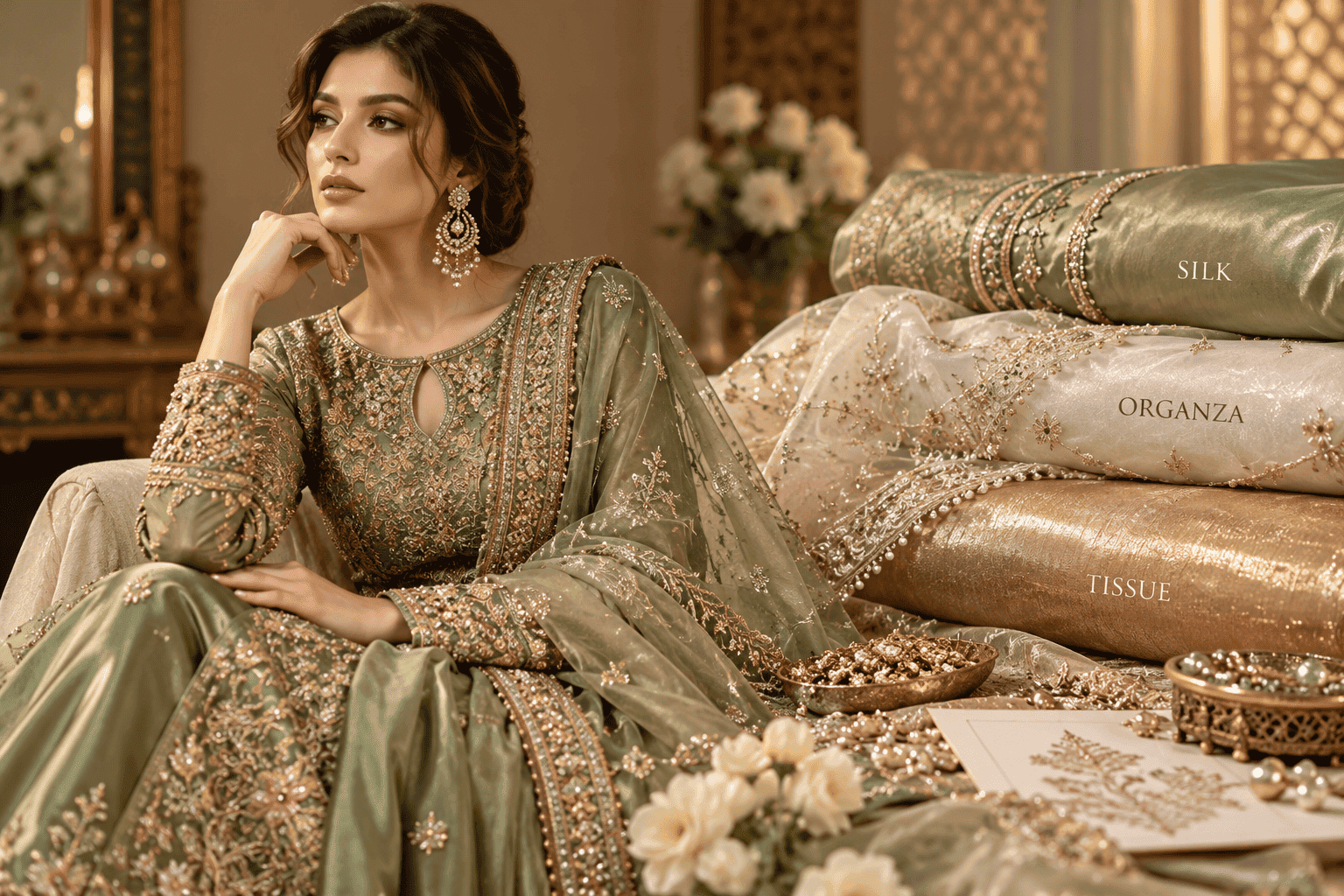
The fabric of a bridal outfit affects almost everything that follows. It changes how the silhouette falls, how embroidery sits on the surface, how much structure the garment holds and how comfortable it feels after several hours of wear.
This makes fabric selection especially important for made to order Pakistani bridalwear.
A richly embroidered design may look beautiful in a photograph, but the same embroidery can behave very differently on silk, organza or tissue. A fabric that works perfectly for a structured Baraat outfit may not create the movement a bride wants for a lighter Nikkah or Mehndi look.
For UK brides, the wedding season adds another consideration. A summer celebration, winter reception and indoor evening wedding can each place different demands on the fabric.
Choosing the right material therefore begins with more than colour.
The wedding event, embroidery, silhouette, season and comfort should all be considered together.
Brides exploring hand embroidered bridal wear in the UK can use these factors to narrow down the fabric that best supports their preferred bridal look.
Why Bridal Fabric Matters More Than It First Appears
Fabric is the foundation of the complete garment.
Before embroidery, borders or embellishments are added, the fabric determines how the outfit will move and how much structure it naturally holds.
A softer material can create fluid movement.
A more structured fabric can give a lehenga or formal silhouette greater presence.
Some materials reflect light naturally, while others have a quieter finish that allows the embroidery to become the main visual feature.
The fabric also needs to support the weight of the handwork.
Dense zardozi, dabka and other metallic techniques place more weight on the base material than delicate resham motifs or scattered mukesh.
This is why a fabric should never be selected only because it looks luxurious on its own.
It needs to suit the design that will eventually sit on top of it.
Which Bridal Fabrics Are Commonly Used for Luxury Pakistani Bridalwear?
Silk, organza and tissue are among the most useful fabrics for luxury South Asian bridalwear because each offers a different combination of structure, movement and visual finish.
Other materials can also appear in formal and bridal design, but the correct choice depends on what the garment is expected to do.
A fabric suitable for a heavily worked lehenga may not be the best choice for a flowing dupatta.
Likewise, the material used for a structured shirt may differ from the fabric chosen for a softer outer layer.
The complete bridal outfit can therefore involve more than one fabric.
What matters is that the materials work together rather than appearing as separate decisions.
Silk for Bridal Wear
Silk is one of the most versatile fabrics used in luxury bridalwear.
It can provide enough body to support detailed embroidery while still allowing the garment to move naturally.
The exact look depends on the type and weave of the silk.
Some silks feel smooth and fluid, while others have more structure. This gives designers flexibility when developing different silhouettes.
For a bride, silk can work particularly well when the outfit needs to feel substantial without appearing stiff.
Metallic hand embroidery also sits beautifully against silk because the natural surface of the fabric creates contrast with the embellishment.
This combination can work across Nikkah, Baraat and Walima dressing depending on colour and embroidery density.
When Does Silk Work Best?
Silk is useful when the garment needs a balance between elegance and structure.
A straight formal shirt can benefit from its clean fall.
A fuller bridal silhouette can use silk to create controlled volume.
Silk can also support richly developed borders and hand embroidery without requiring the entire dress to feel overly rigid.
For brides who want a classic look with a premium finish, it is often one of the first fabrics worth considering.
The important point is to look at the particular silk being used rather than treating every silk fabric as identical.
Weight, weave and finish can all change how it behaves.
Organza for Bridal Wear
Organza creates a much lighter visual impression.
Its sheer quality allows designers to add volume without creating the same heaviness as some denser fabrics.
This makes it especially useful for dupattas, overlays and silhouettes where the bride wants movement with a more delicate appearance.
Organza also works beautifully with embroidery because the contrast between transparent fabric and detailed handwork can make individual motifs more visible.
A border can define the edge of the dupatta while scattered embroidery remains light through the centre.
This is one reason organza works well for brides who want detail without a completely dense surface.
Why Organza Works Well for Dupattas
A bridal dupatta needs to photograph beautifully, but it also needs to behave properly when draped.
Organza can provide enough structure to hold its shape while still looking delicate.
This balance is particularly useful when a dupatta contains an embroidered border.
The fabric allows the edge to remain visible while the centre stays relatively light.
Mukesh, resham motifs and smaller embellishments can also work well across organza because they remain distinct against the sheer base.
For a double dupatta look, organza can be useful when one piece needs to provide detail without adding excessive additional weight.
Tissue Fabric for Bridal Wear
Tissue has a different personality from both silk and organza.
Its surface can carry a subtle luminosity that gives the garment a formal, celebratory character even before heavy embellishment is added.
This makes tissue particularly effective for brides who want the fabric itself to contribute to the finished look.
Metallic embroidery can complement tissue naturally because both respond strongly to light.
The result can feel especially appropriate for evening receptions and formal bridalwear.
However, tissue should still be selected according to the garment.
The right construction and lining help ensure that the finished outfit feels comfortable and maintains the intended shape.
Silk vs Organza vs Tissue for Bridal Wear
Each fabric creates a different bridal effect.
| Fabric | Visual Character | Best Suited For | Embroidery Consideration |
|---|---|---|---|
| Silk | Rich, smooth and structured | Bridal shirts, lehengas and formal silhouettes | Supports detailed handwork well |
| Organza | Sheer, light and elegant | Dupattas, overlays and lighter silhouettes | Works beautifully with borders and scattered motifs |
| Tissue | Luminous and formal | Statement bridalwear and evening looks | Complements metallic embroidery and reflective detailing |
There is no universal winner.
The right fabric depends on the silhouette, embroidery and experience the bride wants from the garment.
How Embroidery Should Influence Your Fabric Choice
Embroidery and fabric should be planned together.
Dense metallic handwork needs a base capable of supporting it.
If the fabric is too delicate for the amount of embroidery being applied, the garment may lose its intended structure.
Lighter embroidery creates more freedom.
Resham motifs, scattered mukesh and selectively placed embellishment can work beautifully on fabrics where movement and softness matter more.
This is why embroidery density should be discussed before the final fabric is confirmed.
The bride may love a particular material, but if the design requires extensive handwork, another fabric may create a stronger finished result.
The goal should always be harmony between the base and the embellishment.
How Fabric Changes the Appearance of Hand Embroidery
The same embroidery can look completely different when placed on another fabric.
Gold metallic work on deep silk can appear rich and highly contrasted.
The same gold detailing on ivory tissue may feel softer and more luminous.
Resham threadwork on organza can appear delicate and almost floating because of the transparency of the base.
Fabric colour also changes the visual intensity.
A motif that feels subtle on one shade may become much more noticeable on another.
When brides request a colour change on a made to order design, the fabric and embroidery should therefore be reviewed together.
Changing the base colour is not always simply a matter of replacing one shade with another.
The complete surface needs to remain balanced.
Choosing Fabric for a Nikkah Dress
Nikkah dressing often gives brides room to explore softer fabrics and lighter visual details.
Silk can create understated richness without requiring excessive embellishment.
Organza works beautifully when the bride wants a delicate dupatta or a more ethereal finish.
Tissue can also suit a Nikkah outfit when the design needs a subtle reflective quality.
Ivory, champagne, blush and other softer colours can respond particularly well to these materials.
However, the event itself should not limit personal style.
A bride can choose a richly embroidered silk Nikkah outfit if that feels more appropriate to her celebration.
The important consideration is that the fabric works with the silhouette and embroidery rather than simply matching a traditional expectation.
Choosing Fabric for a Mehndi Outfit
Movement becomes particularly important for Mehndi dressing.
A bride may spend more time walking, dancing and interacting with guests, so the fabric should allow the garment to move comfortably.
Lighter materials can help create that freedom.
Organza overlays and dupattas can add visual volume without making the complete outfit overly heavy.
Silk can still work well where the garment requires greater structure.
The embroidery should also be considered.
A fabric carrying colourful resham and lighter embellishment may feel more practical for a lively Mehndi than one covered in extremely dense metallic handwork.
The right choice balances celebration with wearability.
Choosing Fabric for a Baraat Dress
A Baraat outfit often carries the strongest formal presence within the bridal wardrobe.
This makes fabric structure particularly important.
The garment may need to support richer zardozi, dabka and other detailed hand embroidery.
Silk and other structured bridal fabrics can provide a strong foundation for this type of work.
Tissue can also contribute a luminous formal finish where the design suits it.
The amount of fabric matters as well.
A heavily flared bridal silhouette creates a very different effect from a straight formal ensemble.
Brides should therefore consider the fabric in relation to the complete shape of the dress rather than selecting it separately.
Choosing Fabric for a Walima Dress
Walima styling often allows for a softer interpretation of formal bridalwear.
Silk can provide polished elegance.
Organza can add movement through the dupatta or outer layers.
Tissue can create a refined evening shine without requiring the complete garment to be densely embellished.
Pastel and muted colours often highlight the texture of the fabric particularly well.
This gives brides the option to create visual richness through material, silhouette and embroidery working together rather than relying only on heavy surface decoration.
The most successful Walima outfits tend to feel balanced from every angle.
Summer Bridal Fabrics for UK Weddings
A summer wedding can make fabric weight especially important.
Brides may move between indoor and outdoor spaces, spend time under photography lighting and remain dressed for several hours.
Lighter fabrics and carefully controlled layering can improve comfort.
Organza can work particularly well for dupattas and overlays because it creates visual volume without always adding the same weight as a dense material.
Silk can still be suitable when the weave and construction support the intended season.
Embroidery density deserves equal attention.
Even a relatively light fabric can feel heavy once extensively embellished.
The complete garment matters more than the fabric name alone.
Winter Bridal Fabrics for UK Weddings
Winter weddings create different possibilities.
Brides may be able to work with richer fabrics, additional layers and more substantial embroidery without the same concerns associated with warmer weather.
Structured silks can feel particularly appropriate for formal winter celebrations.
A heavier bridal look can also support denser borders and stronger metallic handwork.
However, indoor venues are often heated.
This means a winter bridal outfit still needs to remain wearable once the bride moves inside.
The aim should not simply be to choose the heaviest fabric available.
Comfort should be considered across the entire wedding day.
Indoor vs Outdoor Wedding Fabric Choices
Venue also changes the fabric decision.
A large indoor ballroom with controlled lighting creates different conditions from an outdoor garden ceremony.
Reflective fabrics and metallic embroidery can look particularly dramatic under evening lighting.
Outdoor daylight may reveal more of the natural fabric texture and softer embroidery details.
Wind is another practical consideration for lightweight dupattas and sheer fabrics.
A highly structured garment may photograph beautifully indoors but feel more difficult to manage outside.
When planning the outfit, think about where the main ceremony, photographs and reception will actually take place.
Fabric should work in those real conditions rather than only in a studio image.
How Fabric Affects Bridal Dress Fit
Fabric and fit are closely connected.
A structured fabric holds its shape differently from a softer material.
This changes how the garment sits around the shoulders, waist and lower silhouette.
Embroidery can make the difference even greater.
Once dense handwork is added, an originally flexible fabric may behave more firmly.
This is why made to order measurements should be considered alongside fabric selection.
Brides choosing custom sizing should discuss how the selected material will sit on the body rather than assuming every fabric behaves identically.
If you are planning a made to order outfit, our bridal wear consultation guide for UK brides covers the most important questions to discuss before confirming your order.
Fabric Choice and Ready Made vs Made to Order Bridal Wear
Ready made bridalwear gives the bride the advantage of seeing the completed fabric, embroidery and silhouette together before purchasing.
Made to order bridalwear allows these elements to be discussed before production.
If you want a colour adjustment, different embroidery density or another fabric direction, made to order construction may provide more flexibility.
However, one fabric cannot always be substituted directly for another.
Changing from silk to organza, for example, may alter the drape and structure of the garment enough that other design elements also need reconsideration.
This is why fabric customisation should always be discussed in context.
If you are still deciding between the two approaches, read our guide to ready made vs made to order bridal wear in the UK.
What Should You Ask About Bridal Fabric Before Ordering?
Ask exactly which fabric is being used.
Avoid relying only on broad descriptions such as premium fabric.
Ask how the material behaves when worn and why it has been selected for the particular design.
If the dress is heavily embroidered, ask whether the fabric comfortably supports the handwork.
If the garment is intended for summer, discuss how the layers and lining affect comfort.
If you are considering a colour change, ask whether the alternative shade is available in the same material and whether the embroidery will need to be adjusted.
You should also ask about the dupatta separately.
The best fabric for the main garment is not automatically the best fabric for the dupatta.
A clear consultation helps prevent these individual choices from conflicting with one another.
Should You Choose Fabric Before Embroidery?
The two decisions should usually develop together.
Choosing the fabric first without considering the embroidery can create limitations later.
Likewise, deciding on extremely heavy handwork without knowing which base fabric will support it can lead to an unbalanced garment.
The designer should understand the complete visual direction.
For example, if you want a soft pastel Walima outfit with delicate movement, the fabric and embroidery should both support that idea.
If you want a commanding Baraat look with dense metallic work, the garment may need greater structure.
Bridalwear works best when material and embellishment solve the same design problem together.
How Fabric Affects the Bridal Dupatta
The dupatta deserves its own fabric discussion.
It may need to sit over the head, fall across the shoulders or create movement behind the bride.
A lighter fabric can make draping easier.
Organza is particularly useful when the bride wants definition without excessive weight.
Embroidery placement then needs to reflect how the dupatta will actually be worn.
A border intended to frame the face should behave differently from one designed primarily for shoulder draping.
If a second dupatta is being added, the two fabrics should also complement each other.
The aim is to create layers, not unnecessary heaviness.
Fabric Should Work With Jewellery and Styling
Bridal fabric also changes how jewellery appears.
A highly reflective surface paired with heavy metallic embroidery and elaborate jewellery can create a very rich effect.
That may be exactly what a Baraat bride wants.
For another event, a quieter fabric can allow statement jewellery to become more prominent.
The neckline matters too.
Silk, organza and tissue each create different visual backgrounds around the face and shoulders.
If you already know which jewellery you plan to wear, mention it during the consultation.
It can help the complete bridal look feel more deliberate.
Do Not Choose Bridal Fabric From Photographs Alone
Photography can change the way fabric appears.
Lighting may make one material look glossier or softer than it does in person.
Colour can also shift depending on studio lighting, screen settings and surrounding tones.
Use photographs for inspiration, but look for close detail whenever possible.
Video can be particularly useful because movement shows how the fabric drapes, reflects light and responds to the weight of the embroidery.
If you are comparing designs, pay attention to more than colour.
Look at how the fabric falls around the skirt, sleeves and dupatta.
These details reveal much more about how the finished garment may feel.
How to Make the Final Fabric Decision
Start with the wedding event.
Then consider the silhouette.
Think about the amount and type of hand embroidery you want.
Next, consider the wedding season and venue.
Once those decisions are clear, the fabric choice becomes much easier.
You are no longer asking which material sounds the most luxurious.
You are asking which material best supports the dress you actually want.
That is a far more useful question.
Luxury bridalwear is strongest when the fabric, embroidery and fit feel as though they were designed together from the beginning.
FAQs About Bridal Fabrics in the UK
Q: What are the best bridal fabrics for a UK wedding?
A: Silk, organza and tissue are all useful options for luxury bridalwear. The best choice depends on the wedding season, silhouette, embroidery level and how much structure or movement you want from the outfit.
Q: Is silk good for a bridal dress?
A: Yes. Silk can provide a rich finish, comfortable movement and enough structure to support detailed hand embroidery, depending on the particular weave and garment design.
Q: Is organza suitable for bridalwear?
A: Yes. Organza works especially well for dupattas, overlays and bridal designs that need lightness with some structure. It can also showcase embroidered borders and scattered motifs beautifully.
Q: Is tissue fabric suitable for bridal dresses?
A: Tissue can work very well for formal bridalwear because of its luminous surface. It often complements metallic embroidery and evening styling, although the final construction should still prioritise comfort and support.
Q: Which bridal fabric is best for heavy embroidery?
A: The fabric needs enough structure to support the chosen handwork. Silk and other structured bridal materials can work well with heavier embroidery, but the exact choice should be made according to the garment and embellishment technique.
Q: Which fabric is best for a summer wedding in the UK?
A: Lightweight fabrics and carefully planned layers can improve comfort for summer weddings. Organza can work particularly well for dupattas and overlays, while silk may also suit depending on its weight and construction.
Q: What fabric works best for a winter bridal outfit?
A: More structured and substantial fabrics can work well for winter celebrations, particularly when paired with richer embroidery. However, indoor venue temperatures should still be considered when planning the complete outfit.
Q: Can I change the fabric of a made to order bridal dress?
A: Possibly, but a fabric change can affect the drape, structure, embroidery and overall appearance of the original design. Discuss any change with the designer before production rather than assuming one fabric can be substituted directly for another.
Conclusion
Choosing bridal fabric is not simply about deciding between silk, organza or tissue.
The right material should support the silhouette, embroidery and experience of wearing the dress.
Silk can bring structure and richness. Organza can create lightness and elegant movement. Tissue can introduce a luminous formal quality that works beautifully with metallic handwork.
For UK brides, season and venue add another layer to the decision.
The best result comes from considering all of these details together.
At Abdullah Bin Shahbaz, made to order bridalwear is developed around premium fabrics, traditional hand embellishment and individual design requirements. Explore our hand embroidered bridal wear for UK brides and discuss your preferred fabric, embroidery, silhouette and wedding event with the team before your bridal piece enters production.