
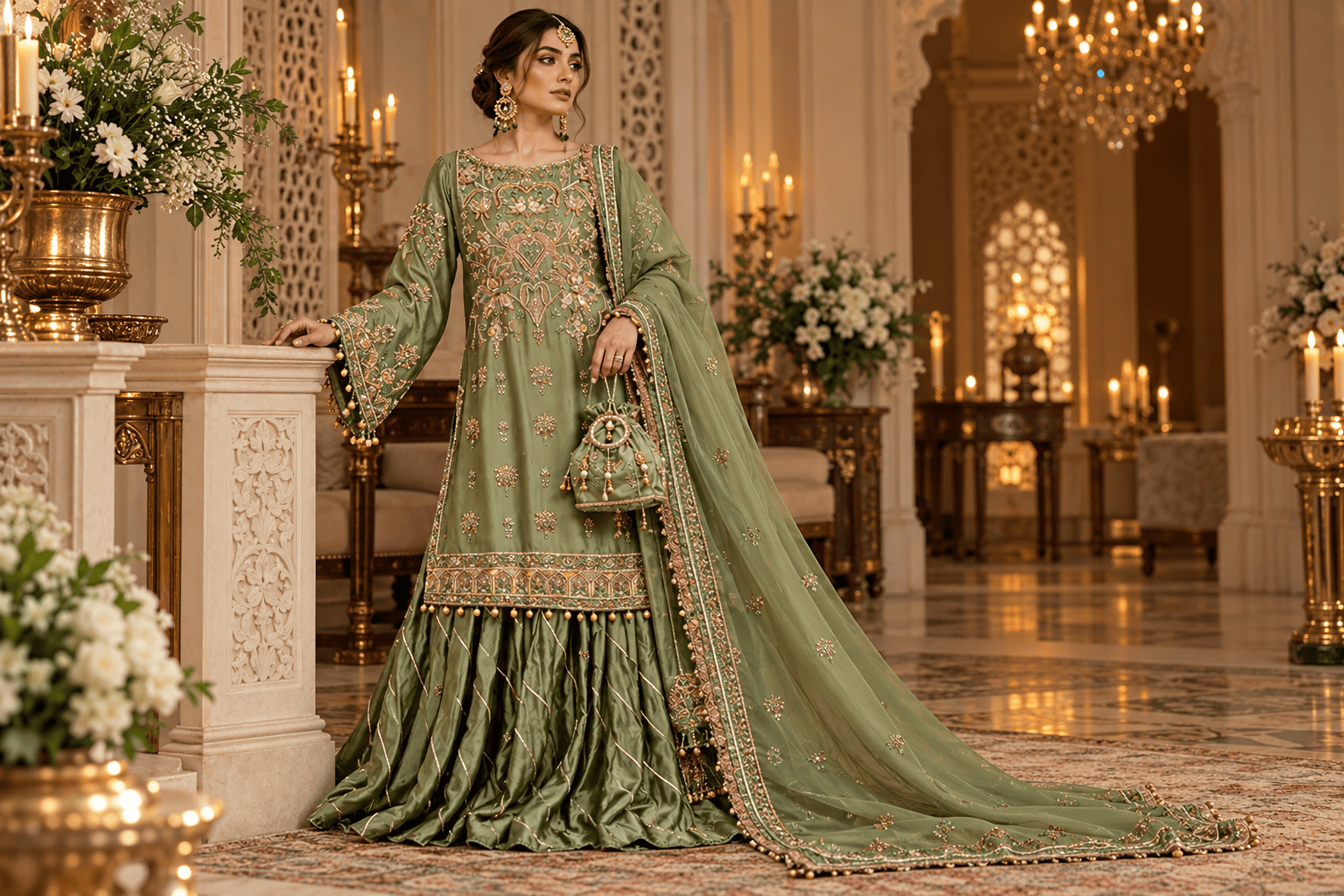
A bridal dress can be admired from across the room, but its real character often reveals itself much closer. The neckline, cuffs, borders and dupatta tell the story of how the outfit was made. In Pakistani bridalwear, much of that story comes from hand embroidery.
Traditional Pakistani bridal embroidery techniques such as zardozi, dabka, resham, mukesh and cutdana each bring something different to a garment. Some add metallic depth. Others introduce colour, texture or light. When used with care, these techniques can turn a beautiful fabric into a bridal piece that feels personal, detailed and unmistakably handcrafted.
For brides in the UK, understanding the difference between these forms of handwork can make choosing a wedding outfit much easier. It becomes possible to look beyond words such as “heavy”, “luxury” or “premium” and focus instead on the type of craftsmanship, the placement of the embroidery and how the dress will actually look and feel when worn.
If you are exploring hand embroidered bridal wear in the UK, knowing how these techniques work can also help you communicate more clearly during a bridal consultation.
Why Pakistani Bridal Embroidery Techniques Matter
Embroidery is not simply added decoration.
On a well-designed bridal outfit, the handwork helps shape the entire look. A richly worked neckline can frame the face and jewellery. Embroidery around the cuffs draws attention to the hands. A detailed border adds weight and definition to a lehenga or dupatta, while softer motifs can keep the overall look elegant rather than overwhelming.
The same technique can also look completely different depending on how it is used.
A small amount of zardozi on an ivory Nikkah dress may feel refined and understated. The same technique used more densely across a red Baraat lehenga can create a much stronger, more ceremonial effect.
This is why it is useful to understand the embroidery itself instead of judging bridalwear only by how heavily embellished it appears.
What Is Zardozi Embroidery?
Zardozi is one of the most recognisable forms of metallic hand embroidery used in Pakistani bridal couture.
It is known for creating rich, dimensional motifs that sit visibly above the surface of the fabric. The technique is often used to define florals, borders, vines and architectural patterns, particularly on garments designed for formal wedding events.
On bridalwear, zardozi is rarely isolated to one small area. It may frame the neckline, continue across the sleeves, appear around the hem and then be repeated more delicately along the dupatta.
What makes it effective is not simply the amount used.
Good zardozi should feel connected to the silhouette. The embroidery should strengthen the design rather than make the garment appear crowded.
For a Baraat outfit, richer metallic work can create the strong visual presence many brides want. On a Nikkah or Walima piece, smaller sections of zardozi can add luxury without making the dress feel excessively heavy.
How Zardozi Changes the Look of a Bridal Dress
Zardozi tends to give bridalwear a formal, almost sculptural quality.
Because the embroidery has physical depth, it catches light differently from ordinary threadwork. As the bride moves, metallic surfaces become more noticeable, particularly in photography and evening lighting.
This makes zardozi especially effective on areas that naturally attract attention.
A neckline can become a focal point. Sleeves can appear more structured. Borders can give the lower half of the outfit greater definition.
However, more zardozi is not always better.
A dress can lose its elegance if every section competes for attention. The strongest designs usually have areas of richness and areas where the fabric is allowed to remain visible.
That balance is what makes embroidery feel considered rather than simply excessive.
What Is Dabka Embroidery?
Dabka brings a different type of texture to bridalwear.
It is commonly recognised by its raised, coiled metallic appearance. When applied by hand, it gives motifs a more three-dimensional finish and works particularly well alongside other embroidery techniques.
Dabka may be used to outline a floral design, give structure to a border or add depth around a central motif.
Because it sits above the fabric, it also contributes to the physical weight of the garment.
This is something brides should consider when choosing a heavily embellished outfit.
Dense dabka work may look spectacular, but it should still allow the garment to remain wearable through several hours of photographs, ceremonies and movement.
The best use of dabka is therefore not simply “more”.
It is the right amount in the right place.
Is Dabka the Same as Zardozi?
The two are closely connected, but they are not exactly the same.
Zardozi is a broader style of metallic embroidery, while dabka refers to a particular type of coiled decorative material commonly used within detailed handwork.
In practice, bridal motifs often combine them.
A single floral design may include dabka for raised definition, other metallic work for structure, resham for colour and cutdana for sparkle.
This layering is part of what gives Pakistani bridal embroidery its richness.
A bride does not need to become an embroidery expert before ordering a dress. It is enough to understand that luxury handwork is often created through several techniques rather than one decorative method alone.
What Is Resham Embroidery?
Resham embroidery brings softness and colour to bridalwear.
Instead of relying on metallic materials, resham uses fine thread to build motifs across the fabric. Floral patterns, vines and delicate ornamental details can all be developed through this technique.
Resham can be used very lightly or in a much richer way.
On a softer Nikkah outfit, it may create delicate motifs in ivory, blush, sage or pastel tones. For Mehndi dressing, stronger colours can be introduced through threadwork without making the garment overly metallic.
It also works beautifully when combined with zardozi or dabka.
The thread adds colour and shape, while metallic elements provide depth and highlights.
This contrast is one of the reasons mixed embroidery often looks more sophisticated than a surface created entirely from one type of material.
When Is Resham a Good Choice for Bridalwear?
Resham is especially useful when a bride wants detailed handwork without a very heavy appearance.
It can create richness while keeping the visual mood softer.
For a Nikkah, fine resham embroidery can work beautifully on organza, silk or other elegant fabrics. On a Mehndi outfit, colourful resham can give the dress more personality and movement.
For Baraat or Walima couture, it can be layered with metallic work to make the embroidery feel deeper and more complex.
The important point is that resham does not belong to only one type of wedding event.
Its final effect depends on colour, density and how it is combined with the rest of the dress.
What Is Mukesh Work?
Mukesh creates a very different kind of impact.
Instead of forming large raised motifs, it introduces small reflective details across the fabric. When the garment moves, these tiny points of light catch the surrounding lighting and give the surface a subtle shimmer.
This can be especially beautiful on dupattas.
A dupatta decorated with scattered mukesh can feel visually rich without becoming too dense. When paired with a more heavily embroidered border, the centre of the fabric remains lighter while still reflecting light.
This makes the technique useful for brides who want sparkle without depending on large crystals or very heavy embellishment.
Under soft indoor lighting, mukesh can appear delicate.
Under stronger wedding lighting, the same details become much more noticeable.
Why Mukesh Works So Well With Bridal Dupattas
The dupatta often needs to achieve two things at once.
It has to feel special enough to complete the bridal look, but it also needs to drape naturally.
A heavily embroidered surface across the entire dupatta can sometimes become difficult to manage, particularly when worn over the head.
Mukesh offers another approach.
Small reflective details can be distributed throughout the fabric, while richer handwork can remain concentrated along the border.
The result still feels bridal, but the visual weight is controlled.
This is a good example of how bridal embroidery works best when the technique is chosen for a particular purpose rather than simply added because it looks luxurious.
What Is Cutdana Embroidery?
Cutdana introduces faceted decorative pieces that reflect light and add definition to embroidered motifs.
It is often used alongside threadwork, metallic embroidery and beadwork.
Because the pieces catch light, cutdana can make detailed areas such as necklines, sleeves and borders appear more polished without requiring large stones.
A designer may use it sparingly to highlight parts of a motif or apply it more densely to create stronger evening sparkle.
Its effect depends heavily on placement.
Used carefully, cutdana helps bring attention to the embroidery.
Used excessively, it can compete with the threadwork and metallic detail already present.
As with every bridal embroidery technique, balance matters.
How Cutdana Differs From Crystals
Both cutdana and crystals can create shine, but they do not always produce the same visual effect.
Crystals tend to appear as more distinct points of sparkle.
Cutdana can be integrated more closely into embroidery patterns, allowing it to follow the shape of florals, borders and other motifs.
This makes it easier to combine with zardozi, dabka and resham without making the reflective details feel separate from the embroidery.
A well-designed bridal dress may contain several types of embellishment while still appearing cohesive because each material has been given a clear role.
That is often what separates thoughtful couture from decoration added simply for impact.
How Several Embroidery Techniques Work Together
Most luxury Pakistani bridal outfits do not rely on one technique from beginning to end.
The beauty often comes from combination.
A neckline might use resham to create floral forms, zardozi to add metallic structure, dabka for raised detail and cutdana to introduce small areas of reflection.
The dupatta may then use lighter handwork with mukesh scattered through the fabric.
Each material performs a different job.
This is why a close view of bridalwear can be so different from a full-length image.
From a distance, the overall design feels rich.
Up close, you can see the layers of craftsmanship that create that impression.
If you want to understand how genuine artisan work differs from automated decoration, read our guide to hand embroidery vs machine embroidery in bridal wear.
Choosing Embroidery for a Nikkah Dress
Nikkah dressing does not need to follow one fixed formula.
Some brides prefer ivory, champagne or pastel colours with delicate detailing. Others choose deeper tones and richer embroidery.
If the aim is refinement, resham can create softness while selective zardozi or cutdana adds definition around important areas.
The dupatta can also carry lighter mukesh work to introduce shimmer without making the complete outfit feel too heavy.
What matters most is that the embroidery suits the atmosphere of the wedding and the bride’s personal style.
A small ceremony does not automatically require a simple dress.
Likewise, luxury does not require maximum embroidery coverage.
Choosing Embroidery for a Mehndi Outfit
Mehndi outfits often allow greater freedom with colour and movement.
Resham can be particularly effective here because multiple shades can be worked into floral and decorative motifs.
Metallic embroidery can still be present, but the overall balance may be lighter than a formal Baraat ensemble.
Comfort is also important.
If the bride expects to move and dance during the event, extremely dense handwork across the entire garment may not be necessary.
The embroidery can instead be concentrated around the bodice, sleeves and borders while allowing the fabric and silhouette to create movement.
Choosing Embroidery for a Baraat Dress
Baraat bridalwear often supports the richest embroidery within the wedding wardrobe.
Zardozi and dabka can create a strong ceremonial presence, particularly when combined with deeper colours, structured fabrics and heavily developed borders.
The neckline, sleeves, lehenga and dupatta can all carry connected motifs.
However, even a heavily embroidered Baraat dress needs visual structure.
If every part of the garment receives the same level of detail, the overall design can become difficult to read.
A skilled composition uses contrast.
Some areas become focal points, while others provide breathing room.
That is often what allows a very richly embroidered dress to remain elegant.
Choosing Embroidery for a Walima Dress
Walima bridalwear often moves towards a softer or more polished visual direction.
Pastel tones, ivory, silver, sage, powder blue and other muted palettes can work particularly well with refined metallic embroidery and resham.
Mukesh and cutdana can introduce evening light without requiring extremely dense embellishment.
The silhouette also has an important role.
A beautifully structured outfit with carefully placed embroidery can feel just as luxurious as a much heavier design.
For brides who prefer this more refined direction, the Naqsh collection is a useful reference for softer motifs and delicate handwork.
Those drawn towards richer metallic detailing can also explore Zarposh.
Does More Embroidery Mean a Better Bridal Dress?
No.
The amount of embroidery does not determine the quality of the design.
A garment can be covered in embellishment and still feel poorly balanced.
Another dress may use significantly less embroidery but look much more luxurious because the placement, fabric and finishing are stronger.
Look at how the embroidery supports the silhouette.
Does the neckline work with the jewellery area?
Do the sleeve details feel connected to the bodice?
Does the lower border give the garment definition without overwhelming it?
Does the dupatta complete the outfit rather than competing with it?
Those questions are more useful than asking whether the dress has enough embroidery.
How Your Bridal Silhouette Affects Embroidery Placement
Different silhouettes provide different surfaces for handwork.
A lehenga offers space for repeated motifs and developed borders.
A pishwas can use its long panels to create vertical embroidery arrangements.
A gharara or sharara gives the designer different areas of emphasis around the knee, flare and hem.
Straight-cut bridalwear offers another structure entirely.
This is why the silhouette should be selected before major embroidery changes are requested.
If the shape changes, the embroidery may also need to change.
For brides considering a custom commission, our guide to ready made vs made to order bridal wear in the UK explains how embroidery, measurements and personalisation can be planned before production.
Fabric and Embroidery Need to Work Together
The fabric underneath the embroidery is just as important as the handwork itself.
Dense metallic embroidery needs a base that can support its weight.
Lighter threadwork can work beautifully on softer fabrics.
Organza, silk, tissue and other bridal materials each produce a different final effect.
Fabric also changes the way colour and shine appear.
Gold embroidery on deep red can feel strong and traditional. The same metallic tone on ivory or sage can appear much softer.
For this reason, embroidery should not be selected independently from fabric.
The two decisions belong together.
How Hand Embroidery Can Affect Bridal Fit
Heavy embroidery changes the way fabric behaves.
A densely worked bodice can become more structured. Sleeves may feel firmer once embroidery has been applied. A substantial border can add extra weight to the hem.
These details matter when the garment is made according to personal measurements.
If major alterations are required after production, embroidery positioned across seams can make the process more complicated.
This is why accurate measurements should be confirmed before extensive handwork is completed.
If you are preparing for a made to order commission, read our guide to getting the right fit for a made to order bridal dress before submitting your final measurements.
How Embroidery Density Affects Comfort
A bridal dress has to do more than photograph beautifully.
It has to be worn.
A bride may spend several hours sitting, standing, walking and greeting guests. A Mehndi may involve dancing. A Baraat may include a heavier dupatta and more structured garment.
Dense embroidery can add physical weight.
This does not mean a heavily embroidered dress should be avoided.
It means the placement should be discussed properly.
A skilled designer can preserve richness around focal areas while keeping movement in mind.
Comfort and couture do not have to compete with one another.
How Embroidery Influences the Cost of Bridalwear
Hand embroidery is one of several factors that can influence the cost of a made to order bridal outfit.
The technique matters, but so does its complexity.
A small area containing very intricate handwork can require considerable artisan attention.
A larger repeated design may involve a different type of production process.
The total embroidered area, fabric, silhouette, number of garment pieces and customisation all contribute to the final quotation.
For this reason, it is difficult to judge cost from one campaign photograph.
If you want to understand the complete picture, read our guide to what affects the cost of hand embroidered bridal wear.
What to Ask About Embroidery During Your Bridal Consultation
You do not need to arrive at a consultation knowing every technical term.
You simply need to ask clear questions.
Ask which embroidery techniques appear on the dress.
Ask which areas have been completed by hand.
If you want to change the colour, ask whether the threadwork and metallic detailing will also need to be adjusted.
If you want less embroidery, ask which areas should remain detailed so that the original design still feels complete.
If you are considering additional handwork, ask how that may affect the garment’s weight and overall appearance.
These questions help create a much clearer design brief.
Our full bridal wear consultation guide for UK brides covers the other points worth discussing before placing an order.
Traditional Craftsmanship in Contemporary Bridalwear
Traditional embroidery does not require a bridal dress to look old-fashioned.
Techniques can remain traditional while the silhouette, colour palette and styling feel contemporary.
That balance is one of the strengths of Pakistani bridal couture.
A designer can use zardozi or resham within a modern neckline, combine traditional handwork with a softer colour palette or apply heritage techniques to a silhouette designed for today’s bride.
The craft remains visible, but the final garment still feels personal and current.
You can learn more about the brand’s approach to artisan work through the Abdullah Bin Shahbaz story.
FAQs About Pakistani Bridal Embroidery Techniques
Q: What are the most common Pakistani bridal embroidery techniques?
A: Pakistani bridalwear commonly uses techniques such as zardozi, dabka, resham, mukesh and cutdana. Several techniques may be combined within one garment to create different levels of texture, colour and reflection.
Q: What is zardozi embroidery?
A: Zardozi is a traditional form of metallic hand embroidery often used on bridal necklines, sleeves, lehengas, borders and dupattas. It creates a rich, dimensional surface and is frequently combined with other embellishment techniques.
Q: What is the difference between zardozi and dabka?
A: Zardozi refers more broadly to metallic embroidery, while dabka is a coiled metallic element frequently used within detailed handwork. The two are often combined within the same bridal motif.
Q: Is resham embroidery suitable for bridal dresses?
A: Yes. Resham threadwork is widely used to create floral motifs, colour and softer detailing. It can be used alone or paired with metallic embroidery for Nikkah, Mehndi, Baraat and Walima outfits.
Q: What is mukesh work?
A: Mukesh creates small reflective details across the fabric. It can produce a delicate shimmer and is particularly effective on bridal dupattas and lighter areas of a garment.
Q: What is cutdana used for in bridalwear?
A: Cutdana adds faceted reflective detail to embroidered motifs. It is often used around necklines, borders and sleeves or combined with resham, zardozi and beadwork.
Q: Which embroidery technique is best for bridalwear?
A: There is no single best technique. The right choice depends on the wedding event, fabric, silhouette and the type of bridal look you want. Luxury bridalwear often combines several techniques rather than relying on only one.
Q: Can a bridal dress use several embroidery techniques together?
A: Yes. Combining techniques is common in luxury Pakistani bridalwear. Resham may provide colour, metallic handwork may add depth and cutdana or mukesh may introduce controlled reflection.
Conclusion
Pakistani bridal embroidery techniques give each wedding outfit its own character.
Zardozi creates metallic richness. Dabka adds raised texture. Resham introduces colour and delicacy. Mukesh gives fabric a soft shimmer, while cutdana brings sharper points of reflected light.
The real artistry comes from knowing when to use each technique.
A beautiful bridal dress does not need every available form of embellishment. It needs handwork that suits the silhouette, fabric, wedding event and bride.
For UK brides, understanding these details makes choosing couture much easier. You can look beyond the amount of embroidery and begin assessing the craftsmanship itself.
At Abdullah Bin Shahbaz, traditional handwork is combined with premium fabrics, custom sizing and made to order construction. Explore the hand embroidered bridal wear collection for UK brides to discover how these techniques are brought together across Nikkah, Mehndi, Baraat and Walima designs.