
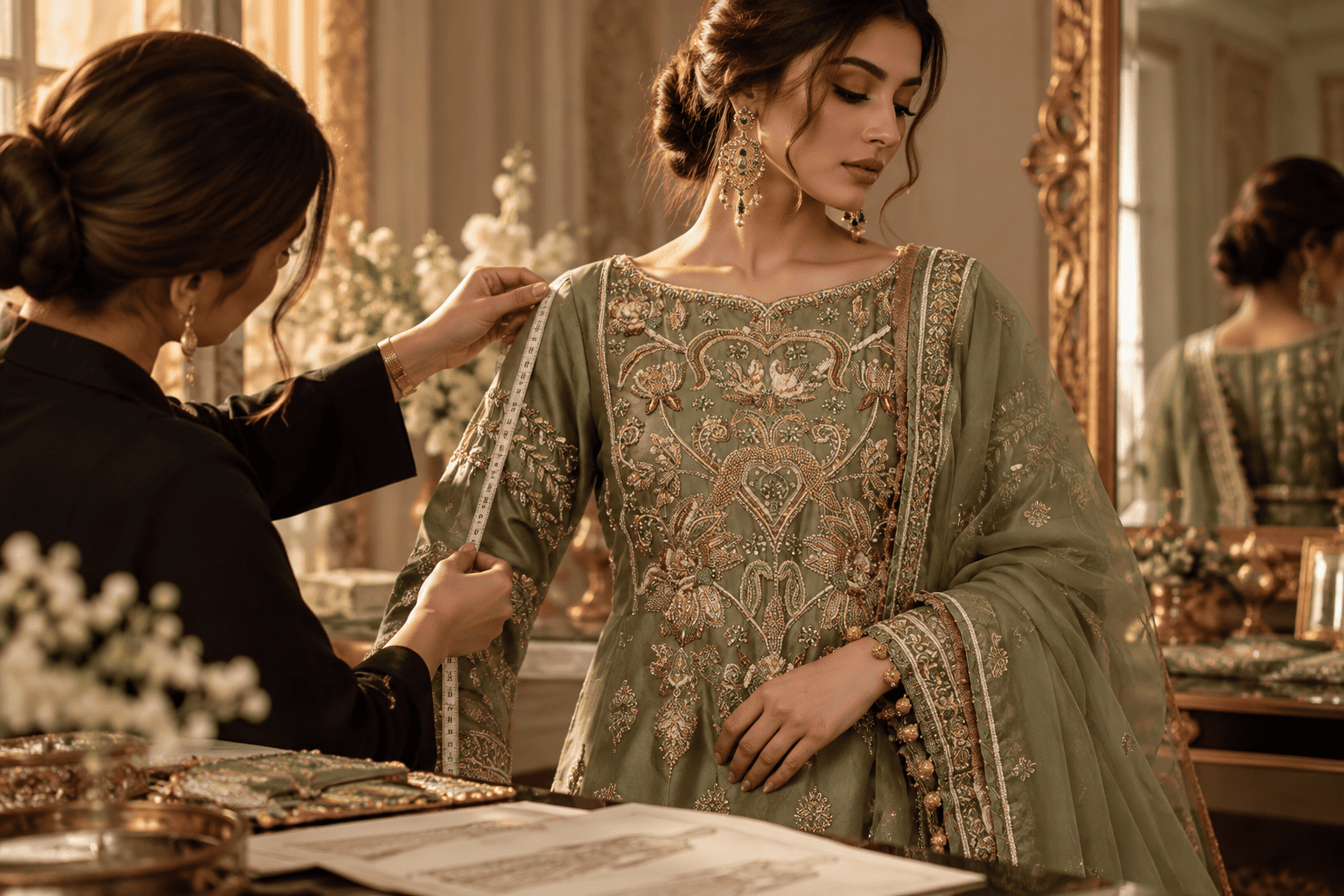
A beautifully embroidered bridal outfit can lose much of its impact when the proportions are not right. The neckline may sit beautifully, yet the shoulders can feel too wide. A lehenga may have the perfect embroidery but fall at the wrong length. Sleeves may look elegant in photographs but become uncomfortable once the bride begins moving. These details are why fit should be treated as part of the bridal design rather than as something to correct at the end.
For UK brides choosing made to order South Asian bridalwear, accurate measurements are especially important. Lehenga sets, ghararas, shararas, pishwas and heavily embroidered formal ensembles involve different shapes, layers and areas of detailed handwork. A standard clothing size alone cannot always communicate how these garments need to sit on an individual bride.
Made to order bridalwear gives measurements a role before the garment is completed. That allows the silhouette, embroidery placement and garment length to be considered together instead of relying entirely on alterations after production.
This guide explains which bridal measurements matter, when they should be taken, how fit changes across different silhouettes and what UK brides should discuss before commissioning their final outfit.
Why Bridal Dress Measurements Matter More Than Your Usual Clothing Size
Everyday clothing sizes are designed to fit a broad range of body proportions.
A size label can tell you approximately where you sit within a standard sizing system, but it does not describe your shoulder width, sleeve length, torso proportion, preferred garment length or where you want the waistline to sit.
Bridalwear requires more precision.
Two brides who normally purchase the same dress size can have different proportions. One may need a longer bodice, while another requires narrower shoulders. Sleeve length, bust placement and overall height can also differ even when the general clothing size is identical.
This becomes particularly important when the garment includes extensive hand embroidery.
If decorative motifs have been positioned around the neckline, waist or sleeves, major alterations after completion can disturb the relationship between the embroidery and the silhouette.
That is why Abdullah Bin Shahbaz approaches its hand embroidered bridal wear for UK brides through made to order construction and custom sizing rather than expecting every bride to fit the same predetermined proportions.
What Measurements Are Usually Needed for a Made to Order Bridal Dress?
The exact measurements required depend on the selected garment, but a bridal measurement brief often needs considerably more information than a bust, waist and hip measurement.
The designer may need your shoulder width, bust, underbust, waist, hips, armhole, upper arm, sleeve length, wrist, bodice length and total garment length.
For lehengas and other lower garments, waist, hip and finished length become particularly important.
The designer may also need your overall height and the approximate heel height you expect to wear with the outfit.
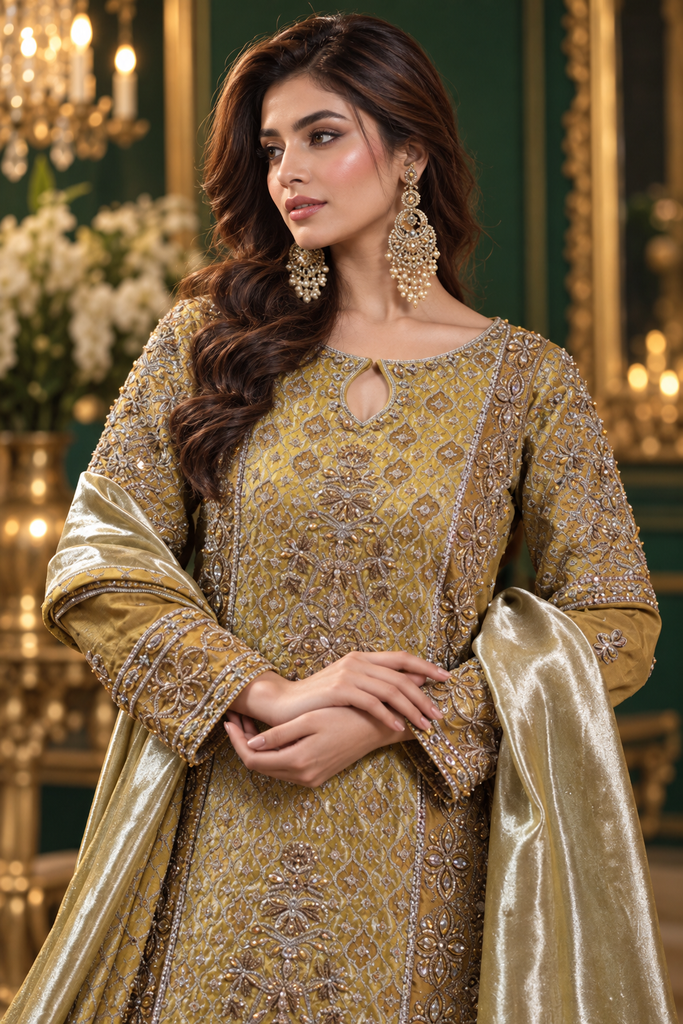
Refined Hand Embroidery, Made for Your Bridal Look
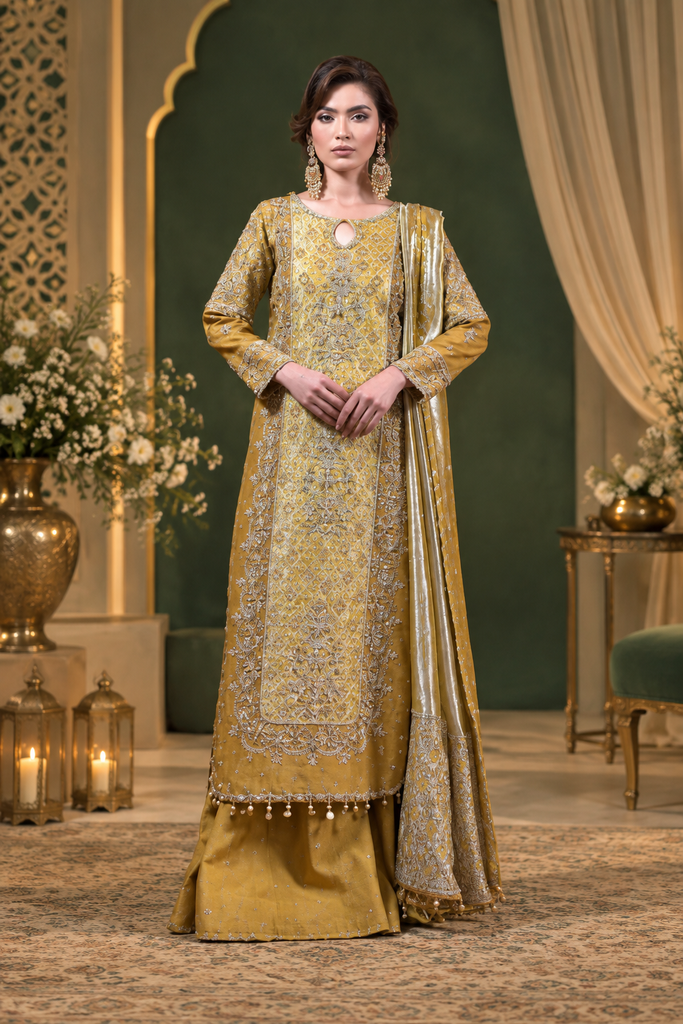
See the Complete Bridal Look
Explore the full silhouette, dupatta styling and overall finish of this statement bridal outfit, and discover how the design comes together from close detail to complete look.
These measurements should not be guessed.
Small differences can affect where a neckline sits, how a sleeve falls or where an embroidered border reaches the floor.
The most reliable approach is to follow the specific measurement instructions provided for the garment you are commissioning.
How Should a Made to Order Bridal Dress Fit?
A correctly fitted bridal outfit should feel secure without appearing strained or restricting normal movement.
The shoulder seam should sit naturally. The bodice should follow the bride’s proportions without excessive pulling or loose fabric. Sleeves should allow comfortable movement through the arms and elbows, while the lower garment should maintain the intended silhouette when walking and sitting.
The objective is not simply to create the smallest possible fit.
Luxury bridalwear often combines structure with several layers of fabric and embellishment. The garment needs enough ease for the bride to breathe, move and remain comfortable throughout a long wedding event.
A dress can technically match a set of body measurements and still feel wrong if movement has not been considered.
This is why fit should always be discussed in relation to the actual wedding experience.
Should Someone Else Take Your Bridal Measurements?
Where possible, having another person take your measurements is usually more reliable than measuring yourself.
Reaching around your own body can change your posture or cause the measuring tape to move away from the correct position.
The tape should normally sit flat against the body without being pulled excessively tight. At the same time, allowing too much slack can create inaccurate measurements.
Stand naturally.
Do not hold your breath or deliberately change your posture to create a smaller measurement. The purpose is to provide an accurate representation of how your body normally sits.
If your designer provides a specific measurement method, follow that method rather than combining instructions from several unrelated online guides.
Different designers may construct garments differently, so their required measuring points can vary.
Read also: Before finalising your measurements, review the questions to ask during your bridal wear consultation in the UK. Fit, customisation and production expectations are easier to resolve before the order progresses.
Wear the Right Clothing When Taking Measurements
What you wear while being measured can affect the result.
Bulky clothing should be avoided because it can add unnecessary centimetres around the body.
Ideally, measurements should be taken over lightweight, fitted clothing or the type of undergarments that best represent what will be worn underneath the bridal outfit.
This matters particularly around the bust and bodice.
Different undergarments can change the shape and position of the bust, which may affect how a fitted blouse or kameez sits.
If you already know that your wedding outfit will require a particular foundation garment, mention this when measurements are being discussed.
The aim is to measure the body as it will realistically exist underneath the finished outfit.
Why Shoulder Measurement Is So Important
Shoulders influence the structure of the entire upper garment.
If the shoulder width is too broad, the neckline and sleeves can appear misplaced. If it is too narrow, the bodice may pull and restrict arm movement.
This becomes even more noticeable when embroidery frames the neckline or runs from the shoulder towards the sleeve.
Hand embroidered motifs are often designed to follow the structure of the garment. Incorrect shoulder proportions can therefore affect both fit and the visual position of the embellishment.
Shoulders also influence how the dupatta sits.
A head or shoulder dupatta may place additional weight around the upper garment, making a well-balanced shoulder fit even more valuable.
This is one area where standard sizing should not replace an accurate measurement.
Getting the Bust and Bodice Fit Right
The bust measurement alone does not tell the complete story of a bridal bodice.
The designer may also need the underbust and information about bodice length depending on the selected design.
This is important because the garment needs to balance coverage, structure and comfort.
A fitted bridal blouse should not pull noticeably across the chest, while a kameez or pishwas bodice should maintain the intended shape without appearing loose where structure is required.
The neckline also changes how the bodice is perceived.
A wider neckline, higher neckline and deeper neckline each interact differently with the shoulder and bust area.
If you want a neckline adjustment, discuss it alongside your measurements rather than treating it as a separate decorative change.
Embroidery around the neckline may need to be redesigned or repositioned to preserve the original balance.
How to Get the Waist Measurement Right
Waist placement affects the overall proportion of bridalwear.
For some garments, the natural waist provides the key reference point. Other silhouettes may sit slightly differently depending on their construction.
Do not automatically measure where the waistband of your everyday trousers sits.
The designer needs the measurement corresponding to where the bridal garment is intended to be worn.
This becomes particularly important for lehengas.
If the waist position changes, the visual relationship between the blouse, exposed midsection, dupatta and lehenga can also change.
The bride’s height and torso length should therefore be considered together with the waist measurement.
Small proportion changes can significantly influence how the final bridal silhouette appears.
Bridal Lehenga Measurements Need More Than Waist Size
A bridal lehenga must be considered from waist to floor.
The designer needs to understand not only the bride’s waist but also the intended finished length and how the garment should sit over the hips.
Heel height matters.
A lehenga measured for flat shoes may appear too short when worn with substantial heels. Conversely, excessive length can make walking difficult and increase the chance of stepping on the garment.
The amount of flare also changes how a lehenga behaves.
A heavily structured bridal lehenga creates a different movement pattern from a softer, more fluid skirt. Embroidery weight and borders can further influence how the hem falls.
If the lehenga contains a detailed hand embroidered border, getting the original length right becomes especially valuable because shortening it later may involve more than simply trimming the fabric.
How Gharara and Sharara Fit Differ From a Lehenga
Ghararas and shararas introduce different fitting considerations because the lower garment is constructed as trousers rather than a skirt.
The waist and hips remain important, but the garment must also allow sufficient movement through the legs.
A gharara includes its characteristic structure around the knee, so proportions above and below that point affect how the silhouette falls.
A sharara usually creates its volume differently and may begin flaring higher.
Length remains important for both.
The finished garment needs to work with footwear without dragging excessively or appearing unintentionally short.
When these garments include embroidery around the knee, flare or hem, later alteration can become more complicated.
This is why choosing the silhouette first and providing measurements for that specific style is better than assuming one lower garment measurement will work for every bridal outfit.
Why Sleeve Measurements Need Extra Attention
Sleeves can appear simple until embroidery is added.
A bridal sleeve may include a decorated cuff, detailed border or motifs extending from the shoulder through the arm.
Accurate sleeve length ensures that these details finish where the designer intended.
Upper arm measurement is also important for comfort.
A sleeve that is too narrow may restrict movement even when it looks fitted correctly while the arms are resting. Brides need to be able to greet guests, adjust their dupatta and move naturally throughout the event.
The wrist or cuff measurement can matter when the sleeve is heavily finished.
If you are planning bangles, bracelets or other jewellery around the wrist, this can also be worth mentioning during the consultation.
The fit should accommodate both the garment and the way you intend to style it.
How Neckline Customisation Can Affect Fit
A neckline is both a design element and a structural part of the upper garment.
Changing it can influence how the dress sits across the shoulders and chest.
A bride may prefer more coverage, a wider opening or another neckline shape entirely. These requests should be confirmed before embroidery placement is finalised.
For example, a motif designed around a rounded neckline cannot necessarily be moved unchanged onto a completely different shape.
The surrounding embroidery may need to be adapted so that the finished neckline still appears intentional.
This is one of the reasons made to order bridalwear can be useful.
The measurement and neckline decision can be considered before construction rather than forcing the bride to modify a finished heavily embroidered garment.
How Much Ease Should a Bridal Dress Have?
Ease refers to the small amount of additional room built into a garment beyond the body’s exact measurements.
Without appropriate ease, a dress may technically match the numbers but feel restrictive.
The amount required depends on the silhouette and fabric.
A fitted bodice may need less visible ease than a straight kameez, while sleeves need enough room for comfortable arm movement.
Fabric also affects the decision.
Some materials have more natural flexibility than others. Bridal fabrics combined with extensive embroidery can behave more rigidly once the surface has been heavily worked.
The designer should therefore interpret measurements rather than simply copying them directly into every garment dimension.
This is part of the difference between measurement and fit.
Measurements provide the information. Construction turns that information into a wearable garment.
Should Bridal Measurements Be Taken With Wedding Shoes?
You do not necessarily need to wear the exact final wedding shoes during every measurement, but the intended heel height should be known when garment length is being finalised.
A few centimetres can make a visible difference to a full length bridal outfit.
If you have already chosen your shoes, use them when confirming the finished length.
If not, decide the approximate heel height you expect to wear and communicate that accurately.
Do not change from substantial heels to flats at the last minute without considering how the garment will fall.
This is particularly relevant for lehengas, pishwas and other floor length silhouettes.
The finished length should make the outfit appear graceful while still allowing practical movement.
When Should You Submit Final Bridal Measurements?
Measurements should be taken according to the production schedule agreed with the designer.
Taking them extremely early can create problems if you expect your body measurements to change significantly before production or the wedding.
Leaving them too late can also create unnecessary pressure on a made to order commission.
Discuss the timing during your consultation.
The designer can explain when measurements need to be confirmed for the particular garment and how later changes would be managed.
If you are still working out your wider schedule, our guide on how early to order your bridal dress in the UK explains where measurements, customisation and production fit into the planning process.
The important point is to treat measurements as part of production rather than an administrative detail that can be supplied at any stage.
What if Your Measurements Change Before the Wedding?
Small changes in body measurements are possible during the months leading to a wedding.
If you know that this is likely, mention it before the garment enters production.
The best approach depends on the particular design and how far the garment has progressed.
Some adjustments can be handled relatively easily. Others become more difficult once detailed embroidery has been positioned across seams or fitted areas.
Avoid deliberately submitting measurements that are smaller than your actual body because you hope to reach them later.
A made to order garment should be based on accurate information.
If your circumstances change, communicating with the designer provides a much better basis for deciding what can reasonably be adjusted.
Ready Made Alteration vs Made to Order Fit
Ready made and made to order bridalwear approach fit from opposite directions.
With a ready made garment, the dress exists first and alterations are used to adapt it to the bride.
With made to order bridalwear, the bride’s measurements can influence the garment before it is completed.
This difference is particularly relevant to heavily embroidered pieces.
Altering a plain seam can be relatively straightforward. Altering a seam that runs through zardozi, dabka or another carefully arranged motif can require considerably more attention.
Neither approach automatically guarantees a better result.
A ready made outfit that happens to suit your proportions may require very little alteration.
Made to order becomes particularly valuable when you need custom sizing or want fit decisions incorporated from the beginning.
Read also: Compare both approaches in our guide to ready made vs made to order bridal wear in the UK.
How Hand Embroidery Influences Fitting Decisions
Hand embroidery adds depth, texture and sometimes physical weight to a garment.
These qualities need to be considered during fitting.
A heavily embroidered bodice may behave differently from the same fabric without embellishment. Borders can add weight at the hem. Detailed sleeves may become less flexible once they have been extensively worked.
The location of handwork also influences which alterations are practical later.
A bride choosing dense embellishment should therefore think about comfort before simply increasing embroidery coverage.
The goal is not to minimise the craftsmanship.
It is to place that craftsmanship where it creates the greatest visual value without making the finished garment unnecessarily difficult to wear.
If you are still deciding how embroidery density and other custom choices affect the scope of your commission, our guide to what affects the cost of hand embroidered bridal wear explains these considerations in more detail.
Fit Should Match the Wedding Event
A bridal outfit does not exist independently from the event where it will be worn.
A Nikkah may involve extended sitting and more intimate movement between family members. A Mehndi can involve dancing and greater physical movement. Baraat bridalwear may include heavier embroidery and a more structured silhouette, while Walima dressing can introduce another balance between formal presence and comfort.
Consider what you will actually be doing.
If you expect to dance, sleeve movement and lower garment mobility become particularly important.
If your outfit includes a heavy dupatta worn over the head for a significant period, the upper garment needs to remain comfortable under that additional weight.
Fit should help you move through the event naturally rather than requiring you to constantly adjust the garment.
Do Not Ignore Sitting Comfort During a Bridal Fitting
A dress can feel perfect while standing and become uncomfortable the moment you sit.
Brides spend a significant amount of time seated during ceremonies, photographs and receptions.
The waist, hips, armholes and sleeves should therefore be considered in both standing and seated positions.
For heavily structured garments, this becomes even more important.
A fitted waist that feels secure when standing may become restrictive when sitting for a long period. Tight sleeves can limit movement once the arms are bent.
During any fitting or fit assessment, think beyond the mirror.
Move naturally.
Sit, raise your arms carefully and consider how the outfit behaves through the positions you are likely to use during the wedding.
How Should a Bridal Dress Look From the Back?
Fit is frequently judged almost entirely from the front.
Wedding photography does not work that way.
The back of the garment appears while the bride is walking, during ceremony photographs and in many candid moments throughout the event.
Check how the shoulders sit from behind.
Look at whether the bodice pulls across the back and whether the fabric falls smoothly towards the waist.
For a dupatta-heavy look, consider how the garment sits beneath the draping.
A couture outfit should look considered from every major angle.
This is particularly important when detailed embroidery continues across the back because poor fit can distort otherwise beautifully placed motifs.
How to Check Your Bridal Dress Fit Before the Wedding
Once the garment is complete, evaluate the overall fit rather than focusing only on whether it closes comfortably.
Check the shoulder placement, neckline, sleeve movement and bodice balance.
Confirm that the waist sits where intended and that the lower garment works with your selected footwear.
Walk in the outfit.
Sit in it.
Consider the dupatta arrangement and how jewellery interacts with the neckline.
If an adjustment appears necessary, identify it clearly rather than requesting changes based only on a general feeling that something is not right.
The earlier specific issues are identified, the easier it becomes to discuss what can reasonably be refined.
Your Bridal Fit Checklist Before Production
Before the final garment moves into production, you should be confident about several key details.
Your body measurements should be accurate and taken according to the designer’s guidance. The intended heel height should be known for floor length garments. Sleeve and neckline preferences should already have been discussed.
The silhouette should also be confirmed.
Changing from one major garment shape to another later is not a small alteration.
If you are wearing important jewellery or have a particular dupatta styling requirement, mention those details as well.
Most importantly, make sure the designer understands how you expect the garment to feel when worn.
A consultation should resolve these questions before craftsmanship is committed to the fabric.
For a complete pre-order checklist, read what to ask during a bridal wear consultation in the UK.
FAQs About Bridal Dress Measurements and Fit
Q: What measurements are needed for a made to order bridal dress?
A: Requirements vary according to the silhouette, but common measurements can include shoulders, bust, underbust, waist, hips, armhole, upper arm, sleeve length, wrist, bodice length and total garment length. Lehenga, gharara and pishwas designs may require additional measurements specific to their construction.
Q: Can I use my normal UK dress size for made to order bridalwear?
A: Your usual dress size can provide general context, but made to order bridalwear normally requires actual body measurements. Standard sizes do not account for differences in shoulders, sleeve length, torso proportion or finished garment length.
Q: Should bridal measurements be tight or loose?
A: Measurements should represent the body accurately without pulling the tape excessively tight or leaving unnecessary slack. The designer can then build the appropriate ease into the garment according to its silhouette and fabric.
Q: Should I take measurements while wearing my wedding shoes?
A: For full length garments, your intended heel height should be considered when the finished garment length is confirmed. If your final wedding shoes are available, they can be useful when checking length.
Q: Can a hand embroidered bridal dress be altered after it is finished?
A: Some alterations may be possible, but heavily embroidered areas require greater care because motifs, borders and embellishment can cross seams or fitted sections. Accurate measurements before production can reduce the need for substantial later alterations.
Q: When should I send my final bridal measurements?
A: Follow the production schedule provided by your designer. Measurements should be accurate for the stage at which the garment will be constructed, particularly if you expect your body measurements to change during wedding planning.
Q: What if my measurements change after placing my bridal order?
A: Tell the designer as soon as possible. What can be adjusted depends on the garment and how far production has progressed. Avoid waiting until the final stages if you already know that a significant measurement has changed.
Q: Is made to order the same as made to measure?
A: The terminology can vary between designers. Made to order usually means a garment is produced after the order is placed, often from an existing design, while measurements and selected customisations may be incorporated. Always confirm exactly what the service includes.
Conclusion
The right bridal fit begins long before the finished dress reaches the final fitting stage.
Accurate measurements allow the silhouette, embroidery, sleeves, neckline and garment length to be considered together. They reduce reliance on substantial alterations and give hand embroidered details a better chance of sitting exactly where the design intended.
For UK brides commissioning a lehenga, gharara, sharara, pishwas or another made to order bridal ensemble, the most important step is not simply knowing your usual clothing size. It is providing accurate measurements, communicating how you want the outfit to feel and confirming important styling decisions before production begins.
Fit should support the craftsmanship rather than compete with it.
At Abdullah Bin Shahbaz, made to order bridalwear combines custom sizing with traditional hand embellishment and premium fabrics. Explore our hand embroidered bridal wear for UK brides and contact the team to discuss your preferred design, wedding event and measurement requirements before your bridal outfit enters production.