
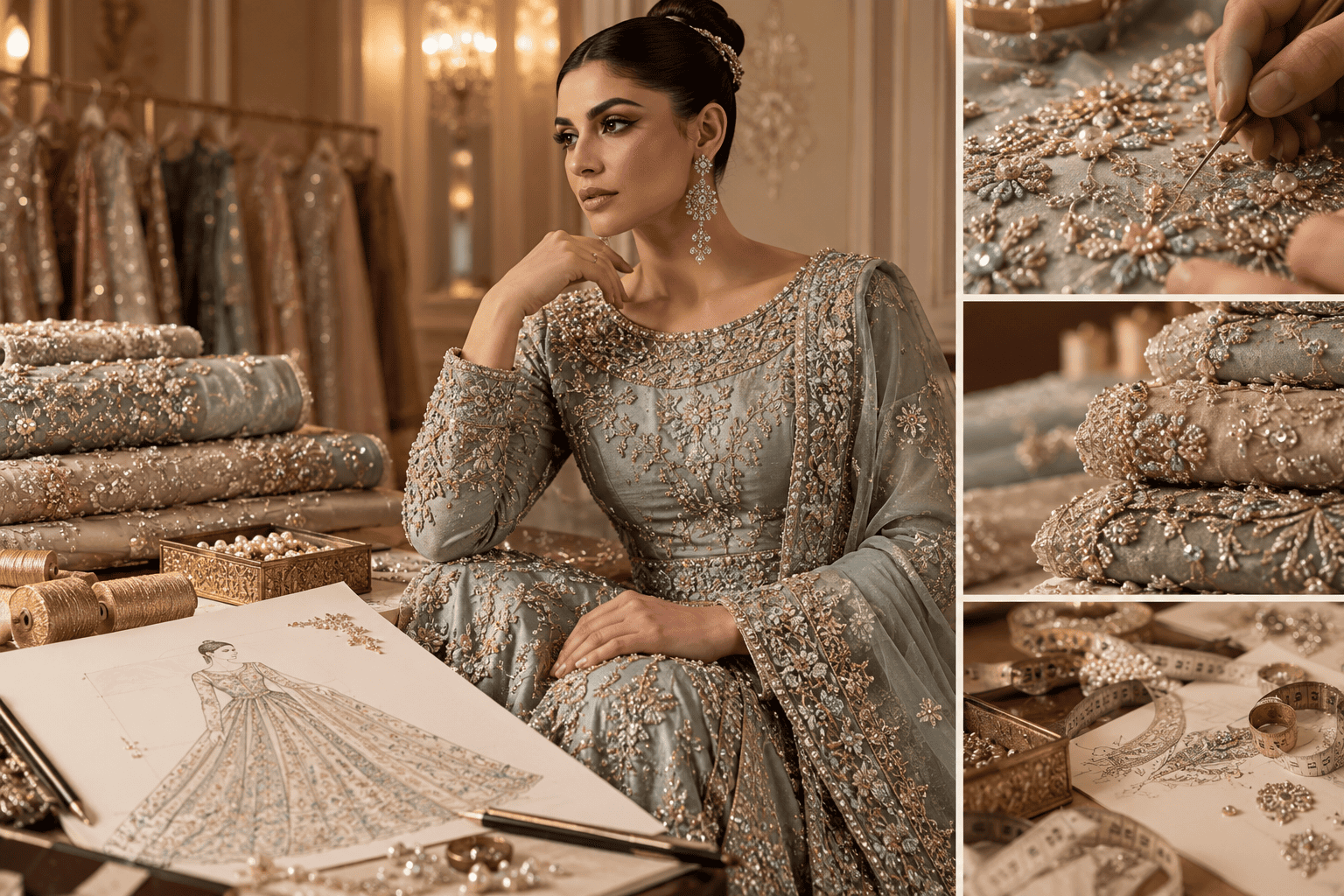
The cost of hand embroidered bridal wear is rarely determined by the appearance of the finished dress alone. Behind an intricately embellished lehenga, gharara or bridal ensemble are decisions involving fabric quality, embroidery techniques, artisan workmanship, garment construction and individual customisation. These details influence not only the final quotation but also how the outfit looks, feels and moves on the wedding day.
For UK brides considering luxury Pakistani bridalwear, understanding these factors makes it easier to approach a designer with realistic expectations. Two dresses may appear similar in photographs yet require very different levels of craftsmanship. A lightly embellished outfit with carefully positioned motifs involves a different production process from a fully embroidered bridal ensemble featuring intricate zardozi, dabka and hand-finished borders.
This guide explains what affects the cost of hand embroidered bridal wear, how different design choices influence production and what to discuss before commissioning a made to order piece. The purpose is not to place a fixed price on couture, but to help brides understand what they are investing in and make informed decisions about their wedding attire.
What Determines the Cost of Hand Embroidered Bridal Wear?
The cost of hand embroidered bridal wear primarily depends on the fabric, embroidery techniques, embellishment density, silhouette, number of garment pieces and degree of customisation. Production complexity and the specialist workmanship required to complete the design also influence the final quotation.
Unlike standard ready made clothing, made to order bridal couture involves several interconnected decisions. A change in fabric may affect how much embroidery it can support, while altering the silhouette can change the amount of material required. Similarly, introducing additional handwork to the sleeves, dupatta or hem increases the amount of detailed craftsmanship involved in completing the garment.
At Abdullah Bin Shahbaz, each piece is made to order using traditional hand embroidery techniques and custom sizing. Brides exploring hand embroidered bridal wear for UK weddings can consider these elements together before discussing their preferred design and individual requirements.
The Main Factors That Influence Bridal Couture Pricing
Understanding the different components of a bridal outfit provides a clearer picture of why quotations vary. The following table highlights the principal cost considerations involved in commissioning a hand embroidered garment.
| Cost Factor | How It Influences the Garment | What Brides Should Consider |
|---|---|---|
| Fabric Selection | Material quality, quantity, structure and suitability for embroidery. | Choose fabric according to the silhouette and occasion. |
| Embroidery Technique | Different hand techniques require different levels of specialist workmanship. | Understand which techniques are included in the design. |
| Embroidery Density | Greater coverage generally requires additional artisan time and materials. | Consider whether full or selective embellishment suits the event. |
| Silhouette | Flare, layers, panels and garment construction affect material and production requirements. | Select a shape that complements the intended bridal look. |
| Customisation | Design adjustments may introduce additional development or handwork. | Clarify required changes before confirming the commission. |
| Dupatta and Additional Pieces | Extra fabric, embroidery and finishing contribute to the complete ensemble. | Confirm which individual pieces are included. |
| Finishing and Construction | Detailed borders, lining, stitching and garment finishing affect production complexity. | Consider the complete garment, not just its visible embroidery. |
How Hand Embroidery Influences the Final Cost
Hand embroidery is one of the defining features of luxury South Asian bridalwear, and its complexity can significantly influence production requirements. Traditional techniques are developed directly on the fabric, with artisans placing individual threads, metallic elements, beads and embellishments to construct the intended motifs.
Zardozi creates a rich metallic surface, while dabka introduces raised detailing through coiled metallic elements. Resham offers softer threadwork and can be used to develop floral patterns, coloured motifs and more delicate decorative areas. Mukesh, cutdana and other embellishments introduce additional texture and light reflection.
The time required depends on more than the name of the technique. A small motif combining several materials may demand greater precision than a larger, simpler pattern. Intricate borders, repeated geometric details and carefully balanced embellishment across multiple garment pieces can also increase the work involved.
This is why embroidery should be assessed according to its quality, complexity and placement rather than its visual quantity alone. A considered design may use concentrated handwork around the neckline, sleeves and borders to achieve an elegant result without covering every part of the fabric.
Why Embroidery Density Makes a Difference
Embroidery density refers to the amount of embellishment covering the garment. It is an important consideration because a bridal outfit featuring scattered motifs requires a different level of workmanship from one with closely arranged embroidery across the bodice, sleeves, skirt and dupatta.
For example, a traditional Baraat ensemble may feature extensive metallic handwork, richly developed borders and a heavily embellished dupatta. A Nikkah outfit may instead use refined detailing around selected areas, allowing the fabric and silhouette to contribute more prominently to the overall appearance.
Neither approach is inherently more luxurious. The appropriate level of embroidery depends on the bride’s preferences, the formality of the event and the design language she wants to achieve.
When discussing a quotation, consider whether the embroidery needs to remain consistent across the complete garment or whether certain areas should receive greater emphasis. This helps the designer understand the intended result before production begins.
The Role of Premium Fabric in Bridal Dress Cost
The fabric is the foundation of every bridal garment. Its quality determines how effectively the outfit supports embroidery, maintains its silhouette and responds to movement. Materials such as silk, organza and tissue are frequently associated with luxury bridalwear because they offer different levels of structure, drape and visual character.
Fabric requirements also change according to the design. A heavily flared lehenga may need considerably more material than a straight-cut formal outfit, while a layered silhouette introduces additional construction requirements. The quantity of material used for sleeves, lining, additional panels and the dupatta must also be considered.
The most suitable fabric is not necessarily the one with the highest individual material cost. It is the material that supports the intended handwork and creates the right relationship between structure, comfort and appearance.
For a UK wedding, the season and venue are worth discussing during the design process. A bridal outfit intended for a summer celebration may benefit from different fabric and layering decisions from one created for a formal winter reception.
Does the Bridal Silhouette Affect the Cost?
The silhouette influences how a bridal outfit is constructed and how much fabric and specialist work may be required. A lehenga, gharara, sharara, pishwas and straight-cut ensemble each have different structural characteristics, which can affect the production process.
A heavily flared garment involves the development of multiple panels and requires careful attention to how the fabric falls. If these panels also feature individually positioned embroidery, the decorative design must be considered alongside the construction. Additional layers, borders or structural details can further influence the work involved.
For this reason, silhouette selection should take place before the finer elements of embroidery and customisation are finalised. Changing the overall shape after significant design work has been agreed may alter the requirements of the original commission.
How Customisation Changes a Made to Order Bridal Quotation
Customisation allows a bride to adapt a design to her preferences, but the nature of the requested changes determines how much additional work may be involved. Adjusting a garment to personal measurements is different from redesigning its neckline, changing its silhouette or introducing a new embroidery pattern.
Some modifications are relatively focused. A bride may wish to alter sleeve length, explore another colour or make adjustments to the dupatta. More extensive changes, particularly those affecting the original embroidery placement or garment structure, may require additional design consideration and production work.
It is therefore useful to separate essential changes from optional preferences before beginning the consultation. If a bride already loves the central identity of an existing collection piece, retaining its strongest design elements can help preserve the balance of the original outfit.
At Abdullah Bin Shahbaz, the Zarposh collection explores richer metallic embellishment and formal silhouettes, while Naqsh expresses a softer design language through delicate motifs and refined handwork. These distinct aesthetics provide useful starting points when considering the level of detail and style required for a bridal commission.
Does a Dupatta Affect the Cost of Bridal Wear?
The dupatta is sometimes treated as a secondary part of a bridal outfit, yet it can involve considerable design and embroidery work in its own right. Fabric selection, border detailing, scattered embellishment and the intended draping style all contribute to its construction.
A lightly worked dupatta with a refined border creates a different production requirement from one featuring extensive embroidery across its surface. A second dupatta introduces another individual garment element, with its own fabric and finishing considerations.
Before finalising the outfit, discuss how the dupatta will be worn and whether its embroidery should match the main garment or provide a more restrained complement. This allows its design to be considered as part of the complete ensemble rather than as a separate decision made towards the end of production.
How Wedding Occasions Influence Bridal Design Requirements
The wedding event can help establish which elements deserve the greatest attention. While personal style remains the central consideration, different celebrations often call for different levels of formality, movement and embellishment.
The following table illustrates how design priorities may vary across traditional South Asian wedding occasions without assigning fixed prices to particular types of bridalwear.
| Wedding Event | Common Design Considerations | Factors to Discuss |
|---|---|---|
| Nikkah | Refined motifs, graceful silhouettes and softer embellishment. | Fabric, neckline, embroidery placement and dupatta detailing. |
| Mehndi | Expressive colour, comfortable movement and decorative details. | Garment weight, silhouette, embellishment and comfort. |
| Baraat | Formal silhouettes, detailed handwork and a strong bridal presence. | Embroidery density, fabric quantity, borders and additional pieces. |
| Walima | Elegant fabrics, balanced embellishment and polished finishing. | Colour, drape, silhouette, handwork and overall design balance. |
These are styling considerations rather than fixed rules. A bride may prefer extensive hand embroidery for an intimate Nikkah or a more restrained outfit for a large formal reception. The quotation should reflect the actual garment being commissioned rather than the occasion name alone.
Why Two Similar Looking Bridal Dresses Can Have Different Costs
Photographs do not always reveal the differences between two bridal garments. Similar colours and silhouettes can create the impression that two outfits are almost identical, even when the materials and methods used to produce them vary considerably.
One garment may feature detailed hand embroidery across its entire surface, while another may use a combination of decorative techniques. The quality of the base fabric, complexity of the motif, number of garment pieces and level of finishing can also differ without being immediately obvious in a full-length photograph.
When comparing bridal designs, look closely at the embroidery, borders, sleeves and dupatta. Consider whether the garment is developed around personal measurements and how much customisation is included in the proposed commission.
The objective is not simply to find the lowest quotation for a similar appearance. It is to understand what is included in each garment and whether the level of workmanship corresponds with the bridal outfit you want.
Understanding the workmanship behind a bridal outfit is equally important. Discover what makes luxury bridal couture worth the investment, from traditional hand embroidery to premium fabrics and personalised construction.
How to Plan Your Bridal Wear Requirements Without Fixed Prices
You do not need a published price list to begin planning a couture purchase. A more practical starting point is to establish the features that matter most to you and communicate them clearly during the consultation.
Begin with the wedding event and preferred silhouette. Consider whether you are drawn to extensive metallic embellishment, delicate threadwork or a balance of the two. Decide which colours you would like to explore and whether you need adjustments to an existing collection design.
It is also helpful to identify the elements on which you would prefer not to compromise. For one bride, this may be authentic hand embroidery. For another, it may be a particular fabric, custom fit or a statement dupatta. Establishing these priorities gives the designer a clearer understanding of where to focus the commission.
If you have an intended spending range, sharing it privately during the consultation can help establish which design requirements may be feasible. This does not mean choosing a lower quality garment. It means developing the design around a realistic and clearly communicated brief.
What Should Be Included in a Bridal Couture Quotation?
A personalised bridal quotation should help you understand the scope of the garment being commissioned. It is important to clarify the main fabric, included garment pieces, embroidery requirements, agreed customisation and production expectations before confirming an order.
Ask whether the proposed design includes the complete outfit shown in the reference photographs. If the image features additional pieces, such as a second dupatta or separately embellished accessories, establish whether those elements form part of the commission.
Any significant requested changes should also be discussed before production begins. A clear understanding of the intended design reduces the possibility of confusion and makes it easier to compare the final garment against the agreed requirements.
For additional background on the production philosophy behind the brand, read the Abdullah Bin Shahbaz story, which explains its commitment to traditional hand embellishment and artisan craftsmanship.
When Should You Request Your Bridal Quotation?
It is advisable to begin discussing your bridal requirements once the wedding date, event and preferred design direction are reasonably clear. This gives sufficient context for the designer to consider the fabric, embroidery and customisation involved.
Hand embroidered couture requires planning, particularly where a design involves extensive surface work or several individually embellished pieces. The production schedule should therefore be discussed as part of the initial brief rather than treated as a separate consideration after the design has been selected.
Providing accurate information early also allows the bride to make decisions with greater confidence. A clear brief reduces unnecessary changes and helps establish a better understanding of what the commission is intended to achieve.
FAQs About Hand Embroidered Bridal Wear Cost
Q: How much does hand embroidered bridal wear cost in the UK?
A: The cost varies according to the fabric, hand embroidery, garment silhouette, number of pieces and customisation involved. Made to order bridal couture is best discussed through a personalised quotation because different designs require different levels of craftsmanship.
Q: Why does hand embroidery affect bridal dress pricing?
A: Hand embroidery requires specialist artisans to develop motifs and embellishments directly on the fabric. The technique, density, complexity and total embroidered area influence the amount of workmanship and materials involved.
Q: Does heavier embroidery always mean a higher cost?
A: Greater embroidery coverage can increase production requirements, but weight alone does not determine the cost. Intricate motifs, delicate techniques and precise embellishment placement may also require considerable artisan attention.
Q: Does custom sizing increase the cost of a bridal dress?
A: This depends on the designer and the scope of the commission. Made to order bridalwear may already include custom sizing, while more extensive alterations to an existing design can involve additional work. The fitting and customisation arrangements should be confirmed before ordering.
Q: Is a fully hand embroidered bridal dress more expensive than machine embroidered clothing?
A: Extensive hand embroidery generally involves more individual artisan labour than comparable machine embroidery. However, the final cost also depends on materials, design complexity, construction and finishing, so the embroidery method should not be considered in isolation.
Q: Can I request changes to reduce the complexity of a bridal design?
A: Brides can discuss adjustments to embroidery placement, fabric, garment pieces or other design features where the designer permits them. Any changes should preserve the overall balance of the garment and be confirmed before production begins.
Q: How can I get an accurate quotation for a made to order bridal outfit?
A: Share your wedding event, preferred design, measurements, colour choices, embroidery preferences, customisation requirements and wedding date. Providing a clear brief allows the designer to assess the intended garment more accurately.
Conclusion
The cost of hand embroidered bridal wear reflects much more than fabric and decorative embellishment. Traditional embroidery techniques, artisan workmanship, silhouette construction, custom sizing and detailed finishing all contribute to the complete garment. Understanding these factors allows brides to evaluate couture according to the quality and personalisation involved rather than relying on appearance or a fixed price alone.
For brides planning a Nikkah, Mehndi, Baraat or Walima in the UK, the most useful approach is to begin with the desired design and communicate individual requirements clearly. This creates a better foundation for choosing the right materials, embroidery and overall level of customisation.
At Abdullah Bin Shahbaz, hand embroidered bridalwear is created through traditional artisan techniques, premium fabrics and made to order construction. To discuss your preferred outfit and receive guidance based on your individual design requirements, contact our team for a personalised bridal consultation.