
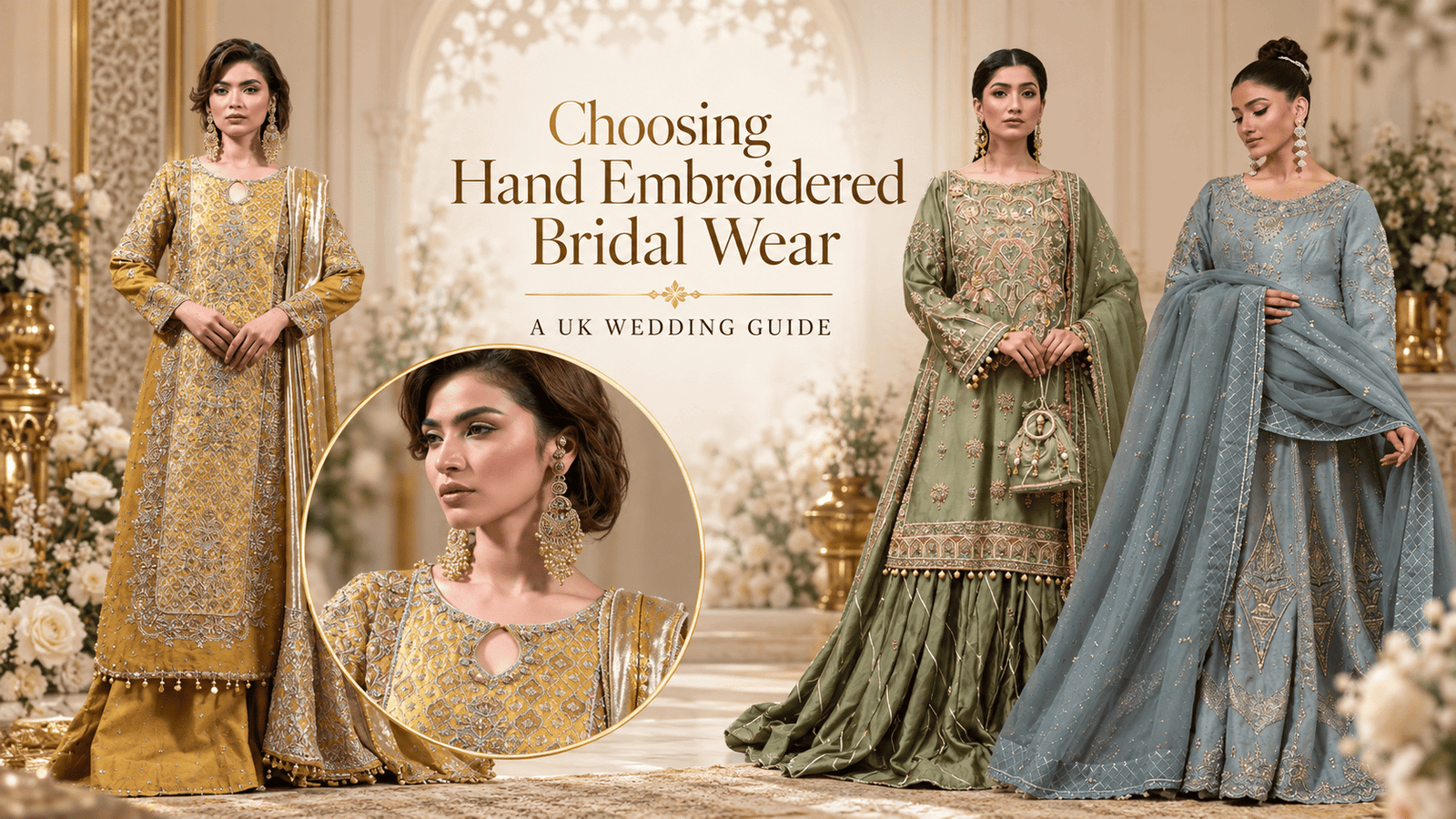
Choosing a bridal outfit is very different from choosing clothing for any other occasion. The dress has to feel right when you first see it, but it also has to work through hours of ceremonies, photographs, movement and celebration. When hand embroidery is involved, there is another layer to consider because the quality of the workmanship, fabric, embellishment and finishing can dramatically change how a bridal outfit looks and feels in person.
For UK brides looking for South Asian bridalwear, the choice can be especially broad. A single search can bring up heavily embellished lehengas, softer Nikkah outfits, traditional red bridal ensembles, contemporary pastels and made to order couture. The challenge is not simply finding something beautiful. It is understanding which dress has the right craftsmanship, silhouette, fabric and level of detail for your wedding.
A considered approach makes that decision much easier. Instead of choosing only from photographs, think about how the outfit has been made, where you will wear it, how it should move and which details genuinely matter to you.
Begin With the Wedding Event, Not Just the Dress
Before comparing embroidery or fabrics, decide what role the outfit needs to play in your wedding.
A Nikkah dress may call for refinement, graceful detailing and a softer visual presence. A Mehndi outfit usually has more freedom for colour, movement and playful embellishment. Baraat bridalwear can support richer embroidery and a more commanding silhouette, while a Walima outfit often moves toward polished elegance and a different colour story.
This matters because there is no single correct level of bridal embellishment. An outfit that feels perfect for a grand evening Baraat may feel unnecessarily heavy for an intimate daytime Nikkah. In the same way, something very restrained may not give a bride the presence she wants for a large formal reception.
Start by considering the venue, time of day, length of the event and overall mood of the celebration. These factors will help determine whether you need stronger metallic handwork, delicate resham details, lighter embellishment or a more structured couture finish.
UK brides exploring these options can begin with our hand embroidered bridal wear for UK brides, where made to order bridal pieces are designed around individual measurements, colour preferences and wedding occasions.
Look Beyond the Photograph and Examine the Handwork
One of the biggest differences between mass produced bridalwear and genuine hand embroidered couture becomes visible when you look closely.
Hand techniques such as zardozi, dabka, mukesh, resham and cutdana create texture and depth because individual elements are placed and worked into the fabric by artisans. The result should not look completely flat or mechanically repetitive. When photographed from different angles, genuine hand embellishment tends to interact with light in a more dimensional way.
That does not mean that heavier embroidery is automatically better. Quality matters more than how much surface area is covered.
Look at close photographs of the neckline, sleeves, borders and motifs. Examine whether the embroidery follows the shape of the garment naturally and whether individual elements appear securely finished. On premium bridalwear, the finer areas should receive the same attention as the most obvious parts of the dress.
This is particularly important when choosing a bridal outfit online because the purchasing decision may begin before you have had the opportunity to examine the piece closely in person.
Think About the Fabric Underneath the Embroidery
Embroidery receives most of the attention, but the fabric supporting it has an equally important role.
The same embroidery can behave very differently on silk, organza, tissue or another bridal fabric. A structured fabric can give a lehenga or formal silhouette greater presence, while a lighter fabric may create softer movement. Some fabrics allow metallic work to appear more architectural, whereas others work beautifully with delicate resham or scattered embellishment.
The right choice depends on the silhouette and occasion rather than simply which material sounds more luxurious.
A heavily embellished outfit also needs a fabric that can support the weight of the handwork without losing its shape. At the same time, the bride still needs to move comfortably. This balance between structure and wearability is one of the details worth discussing when considering custom or made to order bridalwear.
UK weddings take place throughout the year, so the season and venue should also influence the decision. An indoor winter reception can support a very different fabric strategy from a warm summer celebration where movement and comfort become more important.
Choose Embroidery That Matches the Way You Want the Dress to Feel
Bridal embroidery is not only decorative. It changes the entire personality of an outfit.
Dense metallic work can create grandeur and formality. Smaller motifs can make a dress feel more refined. Resham can introduce colour and softness, while crystals, pearls or cutdana can add controlled shine. Mukesh detailing can create movement as light travels across the surface.
Rather than asking which embroidery is the most elaborate, ask what you want the outfit to communicate.
If you want a traditional bridal presence, you may prefer richer surfaces and stronger borders. If your style is quieter, carefully placed motifs and controlled hand embellishment may feel more personal. A successful bridal outfit does not need every possible technique at once. It needs the right techniques working together.
Brides drawn to stronger metallic craftsmanship and statement embellishment can explore the Zarposh collection, where handwork, formal silhouettes and richer detailing are developed for important wedding occasions.
Do Not Sacrifice Comfort for Visual Impact
A bridal outfit can look extraordinary while still being difficult to wear.
Consider how long you will be dressed, whether you will be sitting for extended periods, how much walking is involved and whether you expect to dance. The weight of the skirt, sleeve movement, neckline and dupatta arrangement can all affect the experience.
Heavy embroidery placed around areas that need frequent movement can become tiring over a long event. A very long hem may look impressive during posed photographs but become inconvenient when walking between different parts of a venue. A dupatta that is beautiful but difficult to secure can create unnecessary adjustments throughout the day.
The goal is not to make the dress simpler. It is to make sure the craftsmanship supports the bride rather than working against her.
When comparing luxury bridal couture, consider how the outfit has been constructed as well as how it has been decorated.
Fit Should Be Considered Before Production, Not After It
A beautifully embroidered dress loses much of its impact if the proportions are wrong.
This is one of the main reasons made to order bridalwear can be valuable. Instead of selecting the nearest standard size and relying entirely on alterations afterward, the outfit can be developed around the bride’s measurements from the beginning.
The fit of the bodice, shoulders, sleeves, waist, skirt length and neckline should work together. This becomes even more important when embroidery crosses seams or is designed around specific areas of the body because major alterations after completion may affect the original placement of the handwork.
Accurate measurements also help determine how the outfit should fall and move.
When submitting measurements, follow the designer’s instructions rather than measuring according to a general clothing size. Bridal silhouettes often require more precise information than everyday clothing, particularly when multiple layers or structured garments are involved.
Decide How Much Customisation You Actually Need
Custom bridalwear does not necessarily mean redesigning an outfit completely.
For many brides, the most useful customisation may involve sizing, colour adjustments, sleeve preferences, neckline changes, embroidery density or dupatta details. These choices can make an existing design feel far more personal without changing the identity of the original piece.
Before requesting changes, decide which elements matter most to you.
If you love the overall design but want a different colour, that may be a relatively focused decision. If you want to change the silhouette, neckline, sleeves, embroidery pattern and dupatta together, the final outfit may require a more involved couture process.
A clear consultation helps both the bride and designer understand where customisation adds value and where preserving the original design may produce a stronger result.
You can also learn more about the craftsmanship and design philosophy behind the garments through the Abdullah Bin Shahbaz story, including the brand’s approach to hand artistry, premium fabrics and made to order production.
Consider How the Dress Will Look in Real Wedding Conditions
Studio photographs are useful, but your wedding will not happen in a studio.
You may move between natural daylight, warm indoor lighting, flash photography and video. Metallic embroidery can look different in each environment, and the apparent colour of a fabric can change under different lighting conditions.
Think about how the dress will photograph from the front, side and back. Look at the border placement, dupatta work and embroidery across the sleeves because these areas often appear prominently in wedding photography.
Movement matters too. A skirt or dupatta should create shape while walking rather than only looking good when completely still.
These details are easy to overlook when choosing a dress from a single front facing photograph. Looking at multiple views and close details gives you a much better understanding of the garment you are considering.
Plan Your Bridal Order Early Enough
Hand embroidered bridalwear is not created in the same way as mass produced fashion.
When artisans are applying detailed embroidery by hand and the outfit is being made around individual measurements, production requires planning. Additional customisation can add further complexity.
For that reason, begin your bridalwear search early enough to have a proper conversation about the design, measurements, production requirements and wedding date.
Avoid choosing an outfit first and only asking about the timeline afterward. Your wedding date should be part of the initial consultation so that the production requirements can be assessed before the order is confirmed.
This is particularly important when your dress has dense handwork or significant customisation. Leaving sufficient time also gives you more confidence to make careful decisions rather than choosing under pressure.
Use the Consultation to Ask Specific Questions
A bridal consultation should do more than confirm whether a dress is available.
Ask what embroidery techniques are used, which fabrics form the base of the garment, whether sizing is customised, what changes are possible and how those changes may affect the overall design. Discuss the wedding event and explain how you expect to wear the outfit.
If your wedding includes several functions, mention that too. The designer can help distinguish between an outfit intended for a Nikkah, Mehndi, Baraat or Walima rather than treating every event the same.
You should also discuss production expectations before confirming the order. Clear information at this stage reduces uncertainty later.
The strongest bridal buying decisions usually come from understanding the garment rather than simply falling in love with the first photograph.
Choosing Between Rich and Refined Bridal Styles
Not every bride wants the same visual language.
Some brides are drawn to the grandeur of metallic embroidery, architectural borders and strong couture silhouettes. Others prefer softer motifs, refined embellishment and a lighter feeling throughout the outfit.
Neither approach is more bridal than the other.
Zarposh represents the richer side of the Abdullah Bin Shahbaz aesthetic, while the Naqsh collection offers a softer expression of hand embellishment through refined motifs and elegant formal silhouettes.
Looking at collections with a clear aesthetic direction can make the decision easier because you begin by identifying the type of craftsmanship and mood that feels closest to you.
The right approach is not to select the collection that appears most heavily decorated. It is to identify the design language that works naturally with your wedding event and personal style.
Choose the Dress You Will Still Appreciate Up Close
A bridal outfit is seen from across the room, but many of its most important moments happen much closer.
Family photographs, bridal portraits, jewellery shots and the moments before the ceremony all reveal the workmanship at close range. This is where hand embroidery, fabric quality and careful finishing become especially noticeable.
Instead of choosing only for immediate impact, consider whether the dress still feels special when you focus on its details.
Luxury bridalwear should reward that closer look. The embroidery should have depth, the fabric should support the design and the finishing should feel deliberate throughout the garment.
When all of those elements work together, the dress becomes more than a heavily embellished outfit. It becomes a piece created specifically for an important part of your wedding.
Find the Right Hand Embroidered Bridal Wear for Your Wedding
The right bridal outfit is a balance of craftsmanship, fit, comfort and personal style.
Begin with the wedding event, then look closely at the quality of the handwork, fabric and silhouette. Consider how much customisation you genuinely need, how the outfit will feel after several hours and whether the production timeline works comfortably with your wedding plans.
Most importantly, choose bridalwear that feels considered rather than simply decorated.
Abdullah Bin Shahbaz creates made to order bridal and formal pieces using traditional hand embroidery, premium fabrics and custom sizing. Brides can explore the collections according to their preferred aesthetic and discuss their event, measurements and customisation requirements with the team before commissioning an outfit.
Frequently Asked Questions About Choosing Hand Embroidered Bridal Wear
What should I look for in a hand embroidered bridal dress?
Look closely at the texture, placement and finishing of the embroidery rather than judging only by how heavily embellished the dress appears. Quality handwork should complement the silhouette and fabric, and the detailing should remain carefully finished across prominent areas such as the neckline, sleeves, borders and dupatta.
Is made to order bridalwear better than buying a standard size?
The better option depends on your requirements, but made to order bridalwear can be particularly useful when fit, colour or design adjustments matter. Developing the outfit around accurate measurements can also reduce the need for major alterations after detailed embroidery has already been completed.
Which fabric is best for a hand embroidered bridal dress?
There is no single best fabric for every bride. Silk, organza, tissue and other bridal fabrics each create different levels of structure, movement and visual finish. The right choice should suit the embroidery weight, silhouette, season and wedding event.
Should a Nikkah dress have lighter embroidery than a Baraat dress?
It does not have to, but many brides choose different levels of formality for different events. A Nikkah outfit may use more restrained detailing, while a Baraat dress may support richer embroidery and a stronger bridal silhouette. Personal style and the scale of the event should guide the decision.
How early should I begin choosing made to order bridalwear?
Start early enough to allow time for consultation, measurements, production, hand embroidery and any agreed customisation. The exact timeline depends on the complexity of the chosen design, so your wedding date should be discussed before placing the order.