
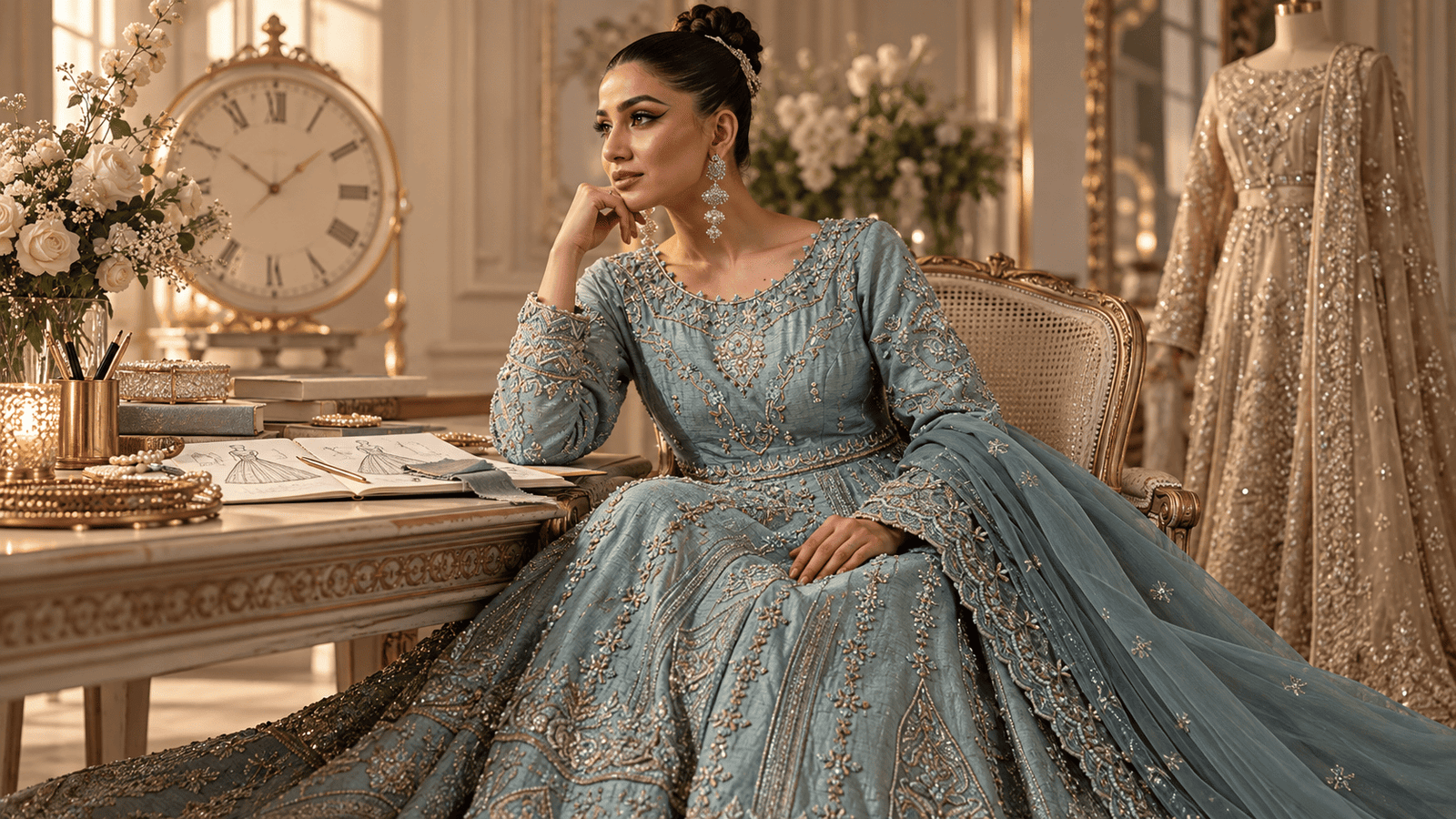
Choosing a bridal dress often begins with colour, silhouette and embroidery, but timing is just as important. A made to order bridal outfit cannot always be treated like ordinary occasionwear because fabric selection, measurements, embroidery, stitching, customisation and finishing may all need to take place before the garment is ready.
For UK brides considering hand embroidered bridal couture, planning early provides more freedom. It gives you time to compare silhouettes, discuss your wedding event, choose the right level of embroidery and make thoughtful customisation decisions without placing unnecessary pressure on the design process.
As a general planning guide, beginning your bridalwear search around six to nine months before the wedding can provide useful breathing room for made to order couture. Brides considering extensive hand embroidery, significant customisation or outfits for several wedding functions may prefer to begin even earlier. The actual production time, however, depends on the individual garment rather than a single universal number.
This guide explains when to begin looking for your bridal outfit, what can influence the timeline and how to plan a Nikkah, Mehndi, Baraat or Walima dress with greater confidence.
How Early Should You Order a Bridal Dress in the UK?
For made to order bridalwear, it is sensible to begin planning several months before the wedding rather than waiting until the final stages of preparation. Around six to nine months can provide a useful starting point for many brides, while more complex couture requirements may justify beginning nine to twelve months ahead.
This does not mean that every bridal dress takes that long to produce. The purpose of beginning early is to allow time for decisions as well as production.
A bride may need to compare silhouettes, choose fabrics, decide how much hand embroidery she wants and consider whether she would like changes to the colour, neckline, sleeves or dupatta. Measurements must also be confirmed before production begins.
The earlier these decisions are made, the easier it becomes to create a clear bridal brief.
Abdullah Bin Shahbaz creates hand embroidered bridal wear for UK brides on a made to order basis, with custom sizing and traditional artisan techniques forming part of the process.
Why Made to Order Bridal Wear Needs More Planning
Made to order bridalwear begins after the design and requirements have been confirmed. This differs from purchasing a ready made outfit that has already been produced in a standard size.
The designer must first understand the selected garment, measurements and any agreed customisation. Fabric is then prepared before embroidery, construction and finishing take place.
When traditional handwork is involved, the embroidery itself becomes an important part of the timeline. Zardozi, dabka, mukesh, resham and cutdana are applied through detailed artisan work rather than being produced instantly by machine.
The amount of embroidery also matters.
A dress with refined motifs concentrated around the neckline and borders requires a different level of production from a heavily embellished Baraat outfit featuring extensive work across the bodice, sleeves, skirt and dupatta.
Planning early allows these differences to be considered properly instead of forcing every design into the same schedule.
A Practical Bridal Wear Planning Timeline
The exact timing of a made to order bridal dress varies, but the following planning framework can help brides understand when key decisions should ideally take place.
| Stage Before the Wedding | What to Focus On | Why It Matters |
|---|---|---|
| 9–12 Months | Inspiration, designer research and overall bridal style | Useful for highly customised couture or multiple wedding outfits |
| 6–9 Months | Select the design, fabric, silhouette and embroidery direction | Provides comfortable planning time for many made to order dresses |
| 4–6 Months | Confirm measurements and approved customisation | Allows the production brief to become more precise |
| 2–4 Months | Review agreed details and prepare accessories and styling | Keeps the complete bridal look coordinated |
| Final Weeks | Final checks, jewellery, footwear and dupatta styling | Avoids major design changes close to the wedding |
This table should be treated as planning guidance rather than a guaranteed production schedule. Every garment has its own requirements, particularly when hand embroidery and customisation are involved.
How Hand Embroidery Affects the Bridal Dress Timeline
Hand embroidery requires time because the design is developed directly onto the fabric by skilled artisans.
A bridal garment may combine several embroidery techniques. Zardozi can create rich metallic detail, while dabka adds raised texture. Resham can introduce softer threadwork, and mukesh or cutdana can add small areas of reflected light.
The complexity comes from how these elements are arranged.
A simple motif repeated across a garment is different from an embroidery composition that changes between the neckline, sleeves, panels, hem and dupatta. Borders may also require detailed alignment so that the decorative work remains balanced once the garment is stitched.
This is one reason brides should avoid judging production time only by how large or small a dress appears in photographs.
A refined design can still involve extremely detailed workmanship.
Read also: If you are comparing different embroidery levels and garment requirements, read our guide to what affects the cost of hand embroidered bridal wear.
Does Customisation Increase the Time Needed?
Customisation can influence the timeline depending on the type of change requested.
Small adjustments may involve colour, sleeve length, neckline or dupatta detailing. More extensive changes can involve the silhouette, embroidery layout or construction of the garment itself.
These larger changes require more consideration because one decision can affect another.
For example, changing the neckline may mean adjusting the embroidery surrounding it. Altering the silhouette can change the amount of fabric required and may affect how borders or motifs are positioned. Adding another heavily embellished dupatta introduces a completely separate fabric and embroidery element.
This is why it is useful to discuss customisation before production rather than requesting major changes later.
A clear design brief protects both the visual integrity of the garment and the bridal timeline.
When Should You Finalise Your Bridal Measurements?
Measurements should be confirmed according to the designer’s production process rather than taken casually at the beginning of wedding planning.
The important measurements for bridalwear may include the shoulders, bust, waist, hips, sleeve length, garment length and other details depending on the selected silhouette.
A lehenga, pishwas, gharara or straight formal ensemble may require slightly different considerations.
Accuracy matters because hand embroidered garments are more complicated to alter once the decorative work has been placed around seams, borders and fitted areas.
Brides should therefore follow the designer’s measurement instructions carefully.
If you expect significant changes in your measurements before the wedding, mention this during the consultation so the production plan can be discussed appropriately.
Why Your Wedding Event Should Be Confirmed Early
The event itself influences how the bridal dress is designed.
A Nikkah outfit can have a very different visual character from a Baraat dress. Mehndi dressing often places greater emphasis on movement and colour, while a Walima outfit may use another combination of fabric, embroidery and silhouette.
Knowing the event early helps define the design direction.
| Wedding Event | Common Bridal Priorities | Timing Consideration |
|---|---|---|
| Nikkah | Refined embroidery, graceful colours and elegant silhouettes | Custom colour and dupatta choices should be confirmed early |
| Mehndi | Movement, colour and lighter festive embellishment | Comfort and garment weight should be considered during design |
| Baraat | Rich embroidery, formal silhouettes and strong bridal detailing | Dense handwork may require greater production planning |
| Walima | Polished finishing, elegant fabric and balanced embellishment | Fabric, colour and overall styling should be coordinated early |
These are not strict rules. A bride may choose a richly worked Nikkah outfit or a more restrained Baraat dress.
What matters is that the designer understands the purpose of the garment before important production decisions are made.
Ordering One Bridal Dress vs Planning Several Wedding Outfits
A South Asian wedding often includes several functions rather than one ceremony.
If you are commissioning outfits for Nikkah, Mehndi, Baraat and Walima, beginning early becomes even more valuable because each dress may require a different design direction.
Trying to choose every garment independently can result in repeated colours, similar silhouettes or outfits that do not feel visually distinct from one another.
Planning them together makes it easier to create contrast.
You may choose softer embroidery for one event, richer metallic handwork for another and a different silhouette for the reception. Colour can also be planned across the complete wedding rather than decided separately for each day.
The Zarposh collection provides a richer expression of formal handwork, while Naqsh offers a softer visual language with more delicate motifs. Looking at different collection directions can help brides decide how each wedding event should feel.
When Is It Too Early to Start Looking for Bridal Wear?
There is little harm in beginning your research early.
You do not need to place an order immediately. Early research can simply help you understand which silhouettes, embroidery techniques and colour palettes appeal to you.
The greater risk is making every decision too quickly before the wedding itself has taken shape.
If the venue, event style or wedding date is still uncertain, use the early stage for inspiration rather than finalising extensive customisation.
Once the event details become clearer, your bridal decisions can become more specific.
Starting early should create confidence, not pressure.
When Is It Too Late to Order a Made to Order Bridal Dress?
There is no single point that automatically makes an order impossible because production depends on the garment and the designer’s current schedule.
However, options naturally become more limited as the wedding approaches.
A bride placing an order close to the wedding date may have less freedom to request extensive hand embroidery, major silhouette changes or several additional pieces.
This is why the wedding date should be shared during the first meaningful consultation.
The designer can then assess whether the preferred garment and level of customisation are realistic within the available time.
Avoid assuming that a simpler looking dress will automatically be faster to produce. Fine hand embroidery, specialised fabric or detailed finishing may still require considerable work.
What Information Should You Have Before Your Bridal Consultation?
You do not need every wedding detail finalised before speaking with a designer, but having a basic brief makes the consultation much more useful.
Know your wedding date or approximate period, the event for which the outfit is intended and the type of silhouette you are considering.
Think about colour preferences and whether you favour heavier metallic embroidery or more refined handwork. It is also useful to mention any coverage preferences, sleeve requirements or dupatta styling ideas.
Reference photographs can help communicate the overall mood you like, but avoid expecting one designer to reproduce another designer’s garment exactly.
The objective of a consultation should be to translate your preferences into a dress that fits the design identity and craftsmanship of the brand you have chosen.
You can learn more about the craftsmanship behind the collections through the Abdullah Bin Shahbaz story.
Why Last Minute Design Changes Can Create Problems
Changing a colour early in the consultation is very different from changing embroidery placement after work has begun.
Bridal garments are developed in stages, and later decisions often depend on earlier ones.
Once motifs have been placed on fabric, changing the neckline or silhouette may affect their position. Once borders have been developed, changing the garment length may alter the balance of the design.
This is why brides should take enough time during the consultation to make decisions confidently.
It is better to ask questions before production than to rush into a commission and attempt to redesign it later.
A clear approval process helps preserve the intended result.
Should You Order Your Bridal Dress Before Choosing Jewellery?
The dress should usually establish the main visual direction of the bridal look.
Once the neckline, colour and embroidery have been chosen, jewellery can be selected to complement those details rather than competing with them.
A heavily worked neckline may need a different necklace strategy from a softer, more open design. Antique gold handwork may also suggest a different jewellery finish from silver, pearl or crystal embellishment.
This does not mean that brides cannot already own meaningful jewellery they intend to wear.
If an important family piece or particular jewellery set is definitely part of the wedding look, show it during the bridal consultation. The garment can then be planned with that element in mind.
The same principle applies to shoes, bridal accessories and dupatta styling.
Why Ordering Early Can Improve the Bridal Experience
The greatest advantage of beginning early is not simply having more time.
It is having more room to make better decisions.
A bride who is not under immediate deadline pressure can compare embroidery styles carefully, consider different fabrics and think about how the outfit needs to function throughout the wedding.
She can also distinguish between details she genuinely wants and ideas that looked appealing for only a moment.
This matters particularly with couture because customisation should feel deliberate.
The objective is not to change every part of a design. It is to make thoughtful decisions that help the garment feel personal while preserving its strongest qualities.
Planning time creates that opportunity.
FAQs About When to Order Bridal Wear in the UK
Q: How early should I order my bridal dress in the UK?
A: For made to order bridalwear, beginning the process around six to nine months before the wedding can provide useful planning time. Brides considering extensive customisation, heavy hand embroidery or several wedding outfits may prefer to begin nine to twelve months ahead. The actual production period depends on the individual garment.
Q: How long does a hand embroidered bridal dress take to make?
A: There is no universal timeframe. Production depends on the embroidery technique, embroidery density, fabric, silhouette, number of garment pieces and level of customisation. The designer should confirm the expected timeline for your specific commission.
Q: Can I order a bridal dress three months before my wedding?
A: This depends on the design and available production schedule. Some garments may be possible within a shorter timeframe, while heavily hand embroidered or highly customised couture may require more planning. Contact the designer before assuming a particular dress can be completed within the available period.
Q: Should I choose my bridal dress before my jewellery?
A: In many cases, choosing the dress first makes it easier to select jewellery that complements the neckline, colour and embroidery. If you already have jewellery that you definitely intend to wear, show it during the bridal consultation.
Q: When should I finalise my bridal dress measurements?
A: Measurements should be taken according to the designer’s instructions and production schedule. Accurate measurements are particularly important for hand embroidered garments because substantial alterations after production may affect decorative areas.
Q: Do heavily embroidered bridal dresses take longer?
A: They can require additional production time because greater embroidery density involves more artisan work. However, complexity matters as much as quantity. Smaller intricate motifs can also require considerable precision.
Q: Should I plan Nikkah, Mehndi, Baraat and Walima outfits together?
A: Planning several wedding outfits together can help create better contrast between colours, silhouettes and embroidery levels. It can also make the complete bridal wardrobe feel more considered rather than repetitive.
Conclusion
Ordering bridalwear early is not about creating an unnecessarily long process. It is about giving craftsmanship, fit and personal decisions the time they deserve.
For UK brides choosing made to order couture, beginning several months before the wedding creates more flexibility for fabric selection, measurements, hand embroidery and thoughtful customisation. Brides commissioning heavily embellished pieces or several wedding outfits can benefit from starting even earlier.
The exact timeline should always be confirmed according to the individual design. A heavily embroidered Baraat dress, refined Nikkah outfit and customised Walima ensemble may each require different levels of production planning.
At Abdullah Bin Shahbaz, every bridal piece is made to order with custom sizing, premium fabrics and traditional hand embellishment. Explore our hand embroidered bridal wear for UK brides and discuss your wedding date, occasion and preferred design with the team early enough to create your outfit with the attention it deserves.