
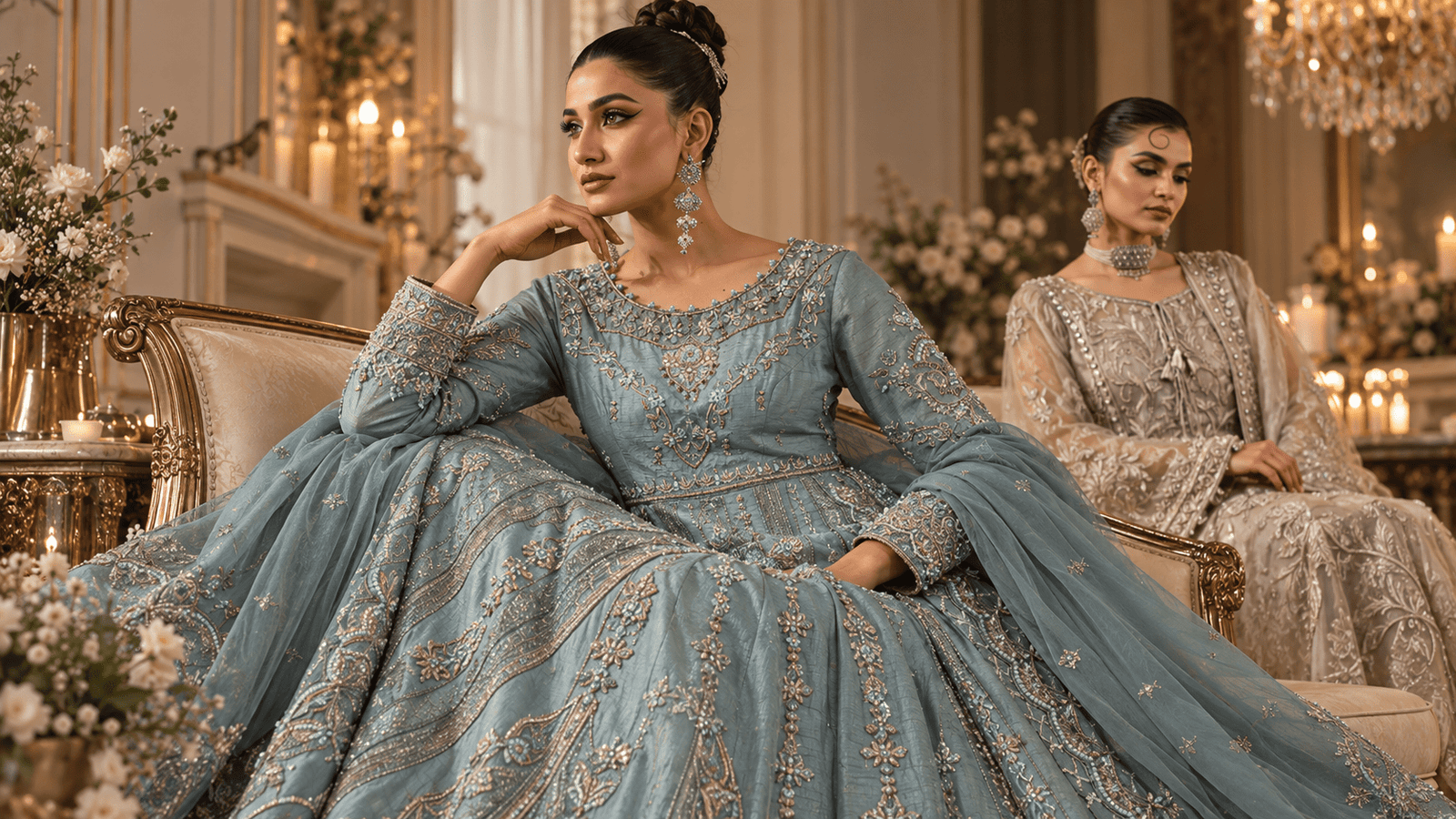
A bridal outfit can be beautiful at first glance, yet luxury bridal couture is defined by much more than appearance. The difference is found in how the garment is conceived, how the fabric is selected, how the embroidery is worked, how the silhouette is fitted and how carefully every visible and hidden detail is finished.
For a bride preparing for a Nikkah, Mehndi, Baraat or Walima in the UK, this distinction matters. Bridalwear is photographed closely, worn for hours and remembered long after the event itself. A design that looks impressive in a campaign image still needs to feel balanced on the body, move comfortably and retain the quality that made it special in the first place.
This is why brides considering couture often look beyond the question of whether a dress is simply expensive. The more useful question is what has gone into creating it.
When luxury bridalwear combines genuine hand craftsmanship, premium materials, made to order construction and thoughtful customisation, the value lies in the entire garment rather than a label attached to it.
What Actually Makes Bridal Couture Luxury?
Luxury bridal couture is distinguished by the level of consideration involved in creating the garment.
It usually begins with a more deliberate production process. Instead of producing large quantities of an identical design, couture focuses on the individual piece. Fabric, embroidery, silhouette, measurements and finishing are considered together rather than treated as separate stages.
Hand craftsmanship is another important difference. Techniques such as zardozi, dabka, resham, mukesh and cutdana require artisans to work directly on the fabric, building motifs gradually by hand. The depth created by this process is difficult to judge from a distant photograph, but becomes much more apparent when the garment is viewed closely.
Luxury also depends on proportion. More embroidery does not automatically make a dress more luxurious. The placement, quality, density and relationship between different embellishment techniques matter just as much.
For UK brides exploring this level of craftsmanship, Abdullah Bin Shahbaz’s luxury hand embroidered bridal wear brings together made to order construction, traditional hand techniques and custom sizing within one bridal offering.
Couture Bridal Wear vs Standard Ready Made Bridal Wear
The distinction becomes easier to understand when the production approaches are considered side by side.
| Feature | Luxury Bridal Couture | Standard Ready Made Bridal Wear |
|---|---|---|
| Production | Usually created individually or in limited quantities | Produced in predetermined sizes and designs |
| Fit | Can be developed around personal measurements | Based on standard sizing |
| Embroidery | May involve extensive handwork and artisan techniques | Can include machine work, handwork or a combination |
| Fabric Selection | Chosen to complement the embroidery and silhouette | Usually fixed before purchase |
| Customisation | Colour, neckline, sleeves, dupatta and details may be adjustable | Usually limited |
| Finishing | Greater attention can be given to individual garment finishing | Designed for repeat production |
| Bridal Experience | More consultation and design consideration | Faster selection from an existing garment |
This does not mean ready made bridalwear has no place. For some brides, the right design may already exist in the right size and require very few changes.
Couture becomes particularly relevant when the bride places greater importance on personal fit, hand craftsmanship, fabric, customisation or a specific visual identity.
Hand Embroidery Adds More Than Surface Decoration
One of the strongest reasons brides are drawn to luxury bridal couture is the character created by hand embroidery.
A machine can repeat a motif with remarkable consistency. Hand embroidery behaves differently. The artisan builds the surface of the garment gradually, controlling thread, metallic elements, beads, crystals and other details as the design develops.
Zardozi can create a rich metallic dimension. Dabka adds sculptural texture. Resham introduces softer threadwork and colour. Mukesh can produce small points of reflected light, while cutdana and other embellishments add controlled brilliance.
The value is not simply that someone has spent more time on the garment. The importance lies in what skilled handwork allows the designer to create.
Motifs can follow the architecture of a neckline. Borders can become progressively richer towards the hem. Sleeve details can echo the main body without overwhelming it. A dupatta can be treated as part of the whole design rather than as an accessory added at the end.
This is where couture craftsmanship becomes visible.
Read more: Explore how embroidery, fabric, fit and occasion should work together in our guide to choosing hand embroidered bridal wear for your UK wedding.
Premium Fabric Changes the Entire Garment
Embroidery cannot be considered independently from the fabric underneath it.
Silk, organza, tissue and other bridal fabrics each respond differently to weight, structure and movement. A dense hand embroidered border needs sufficient support. A flowing silhouette requires the right drape. A structured bridal shape needs fabric capable of holding its form.
Luxury bridal couture therefore considers the relationship between material and embellishment before the finished garment is created.
Fabric also affects how colour appears. Metallic handwork placed over a muted base can create a very different mood from the same embellishment applied over a jewel tone. Light fabrics may create softness and movement, while richer materials can support a stronger ceremonial presence.
For a UK wedding, season and venue also deserve consideration. The same fabric strategy will not suit every celebration. A winter evening reception and a summer daytime Nikkah place different demands on comfort, layering and movement.
The best choice is not necessarily the most expensive material. It is the fabric that allows the design, embroidery and bride to work together naturally.
Made to Order Fit Is Part of the Luxury
Luxury is often discussed in terms of visible embellishment, but fit can have an even greater effect on how a bridal outfit looks.
A couture garment should respect the proportions of the person wearing it.
The shoulder line, sleeve length, waist position, neckline, bodice and overall length affect the balance of the complete outfit. In heavily embroidered bridalwear, those measurements become particularly important because significant alterations after production can interfere with carefully positioned motifs and borders.
Made to order construction allows these decisions to be considered earlier in the process.
Rather than treating fit as a correction made after the dress exists, measurements become part of the garment from the beginning.
This distinction can be especially valuable for lehengas, ghararas, shararas, pishwas and other South Asian bridal silhouettes where several pieces need to work together.
A beautifully worked dress should not merely fit technically. It should sit correctly, move confidently and allow the intended silhouette to be seen.
Customisation Should Make the Bridal Outfit More Personal
Couture gives brides greater freedom, but good customisation is not about changing every detail.
The most successful adjustments usually have a clear purpose.
A bride may want a different neckline for greater coverage. Sleeves may need to be adjusted to suit the season or personal preference. A colour may need to work with jewellery or the broader wedding palette. The dupatta may require heavier or lighter edging depending on how it will be styled.
Embroidery density can also influence the character and weight of the dress.
The important point is that these decisions should preserve the coherence of the original design.
A dress does not become more personal simply because more changes have been requested. True customisation means identifying the adjustments that make the garment work more naturally for the bride and the occasion.
Where the Value of Bridal Couture Really Comes From
The value of couture is created by several elements working together.
| Element | What It Contributes |
|---|---|
| Hand Embroidery | Texture, depth and artisan character |
| Premium Fabric | Structure, drape, movement and finish |
| Made to Order Fit | Better proportion and garment balance |
| Customisation | Greater alignment with the bride’s preferences |
| Skilled Finishing | Cleaner seams, borders and detailed areas |
| Design Coherence | A considered relationship between silhouette and embellishment |
| Limited Production | Greater individual attention to the garment |
This is why judging bridal couture by embellishment alone can be misleading.
A heavily decorated garment made without careful fabric selection or proportion may create immediate impact but still lack refinement. In contrast, a couture piece can use embroidery more selectively and still communicate greater craftsmanship because every component has been considered.
Luxury lies in consistency.
The quality should continue from the main bodice into the sleeves, dupatta, borders and finishing. The dress should remain convincing both from across the room and in close photography.
Luxury Does Not Always Mean Heavier Embroidery
One of the most useful distinctions for brides to understand is the difference between richness and excess.
A heavily worked Baraat outfit may appropriately use dense metallic embroidery, dramatic borders and a stronger visual presence. A Nikkah or Walima dress may feel equally luxurious with more refined motifs and a softer balance.
The occasion should help determine the level of embellishment.
Abdullah Bin Shahbaz’s Zarposh collection explores a richer visual language through metallic handwork and formal detailing, while the Naqsh collection offers a more restrained expression through smaller motifs and delicate embellishment.
Neither direction needs to be judged simply by the amount of work visible on the surface.
A bride choosing couture should ask which expression of luxury feels right for her wedding rather than assuming that the heaviest option must be the best one.
Why Bridal Couture Often Photographs Differently
Wedding photography reveals details that everyday viewing can miss.
Close bridal portraits can show the texture of embroidery around the neckline and sleeves. Side photographs reveal how the dupatta falls. Movement shows whether the skirt or pishwas has been constructed with the intended volume and balance.
Metallic embroidery also reacts to different lighting conditions.
Natural daylight, venue lighting and camera flash can each bring out different aspects of zardozi, mukesh, crystals or beadwork. This is one reason dimensional hand embellishment often develops a stronger presence in photographs than completely flat decorative surfaces.
The fabric matters equally.
A well chosen material supports movement without losing the structure of the design. When the embroidery, fabric and silhouette work together, the garment remains visually interesting from several angles rather than relying on one carefully styled front view.
Couture Can Carry Meaning Beyond a Single Trend
Fashion changes quickly. Bridalwear is remembered differently.
Wedding photographs may be viewed decades after the event, which is why many brides look for something that feels contemporary without depending entirely on a short lived trend.
Traditional embroidery techniques can provide that connection.
Zardozi, resham, dabka and other forms of South Asian handwork already have histories far older than any current bridal season. When designers reinterpret these techniques through modern silhouettes, colour palettes and styling, a garment can feel current while remaining connected to its craftsmanship.
This balance is particularly important in Asian bridal couture.
The objective does not need to be recreating historical clothing. It is about allowing traditional skills to remain visible within a design that feels relevant to the bride wearing it today.
You can learn more about the design and craftsmanship approach behind the collections through the Abdullah Bin Shahbaz story.
When Is Luxury Bridal Couture the Right Choice?
Couture makes most sense when the bride values the things that the process is designed to provide.
If fit is important, made to order construction has clear relevance. If genuine hand embroidery matters, it becomes important to understand how the garment has been worked. If the bride wants changes to colour, neckline, sleeves or dupatta, a more flexible production process becomes valuable.
Couture can also be particularly suitable when the wedding outfit needs a clear identity.
A Baraat dress may require greater ceremony and richness. A Walima look may call for a different colour story. A Nikkah outfit may benefit from quieter refinement. The ability to consider those details together can create a more coherent result than choosing each feature independently.
The decision should therefore be based on priorities rather than status.
A bride who values craftsmanship, fit, customisation and a garment made with individual attention is more likely to appreciate what couture provides.
Questions to Ask Before Choosing Bridal Couture
Before commissioning an outfit, ask questions that reveal how the garment will actually be created.
Find out whether the embroidery is completed by hand and which techniques are used. Ask what fabrics form the base of the design and why they have been selected. Confirm whether the garment is made according to personal measurements and which customisations are possible.
You should also discuss the wedding occasion.
Explain whether the outfit is intended for a Nikkah, Mehndi, Baraat or Walima because this can influence fabric, embroidery density, colour and overall weight.
Most importantly, make sure you understand the design you are commissioning before production begins.
A good couture experience should replace uncertainty with clarity.
FAQs
Q: What makes a bridal dress couture?
A: Bridal couture usually involves a higher level of individual design attention, craftsmanship, specialist finishing and fit than standard mass produced bridalwear. Made to order construction, hand embroidery, premium fabric and customisation can all form part of the couture process.
Q: Is hand embroidered bridal couture better than machine embroidered bridalwear?
A: They offer different results. Hand embroidery can create greater texture, variation and dimensional detail because the embellishment is applied directly by artisans. Machine embroidery can produce precise repeated patterns efficiently. The right choice depends on the level of craftsmanship and finish the bride wants.
Q: Is heavier embroidery always more luxurious?
A: No. Luxury is determined by the quality and placement of the work as well as the fabric, design, finishing and fit. A refined bridal dress with carefully positioned hand embroidery can feel more luxurious than a heavily embellished garment where the elements do not work together.
Q: Why is made to order fit important for bridal couture?
A: Made to order construction allows measurements to influence the garment before production is completed. This can improve proportions and reduce the need for significant alterations that might disturb embroidery or decorative borders.
Q: Can luxury bridal couture be customised?
A: Customisation depends on the designer and garment, but colour, neckline, sleeves, measurements, dupatta details and embroidery density may be adjustable on made to order pieces. Changes should be confirmed before production begins.
Q: Is luxury bridal couture suitable for Nikkah, Mehndi, Baraat and Walima?
A: Yes. Couture does not refer to one level of embellishment. The design can be adapted to suit the character of each event, from refined Nikkah dressing to richer Baraat bridalwear and elegant Walima outfits.