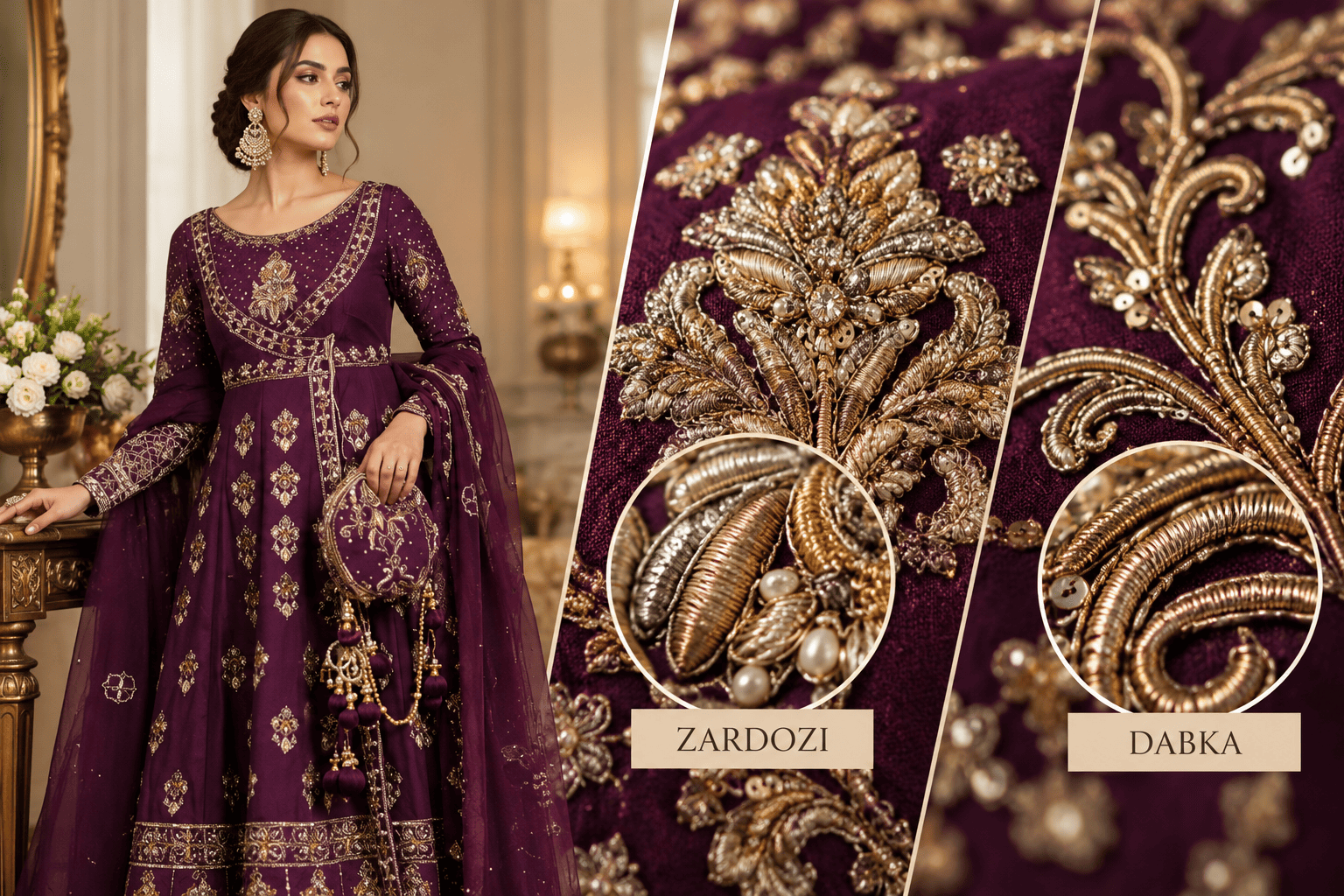
Understanding zardozi vs dabka embroidery can make it much easier to judge Pakistani formal wear before buying. Both terms appear frequently in product descriptions, particularly on dresses designed for weddings, engagement celebrations, Eid, receptions and formal evening events, but they do not describe exactly the same thing.
Zardozi is a broader tradition of raised metallic embroidery. Dabka refers to a fine coiled metallic element that can be stitched by hand into motifs, borders and outlines and is often used as part of zardozi work. This means the two are not always competing techniques. In many finely worked Pakistani dresses, they appear together to create different layers of texture and detail.
For shoppers, however, the practical question is simpler. How does each type of handwork affect the appearance, weight and formality of a dress, and which direction should you choose for your occasion?
If you are currently comparing formal occasion wear, explore Abdullah Bin Shahbaz hand embroidered Pakistani formal wear UK to see how traditional embroidery can be used across refined and statement formal looks.
What Is Zardozi Embroidery?
Zardozi is a traditional form of decorative metallic embroidery associated with richly worked South Asian clothing. It creates a raised and dimensional surface through metallic threads and decorative elements that are secured onto fabric by skilled artisans.
The visual effect can range from controlled borders and small motifs to much richer compositions covering necklines, sleeves and larger sections of the garment. This flexibility is one reason zardozi works so well on Pakistani formal dresses. It can make a relatively simple silhouette feel more ceremonial without requiring every part of the outfit to carry the same embroidery density.
On a well designed formal dress, zardozi should feel integrated into the garment rather than added simply to create weight. The embroidery should follow the structure of the neckline, border or motif so that it strengthens the overall composition.
What Is Dabka Embroidery?
Dabka is a finely coiled metallic wire or decorative element that is stitched onto fabric by hand. Its coiled construction creates a raised surface that catches light differently from flatter thread embroidery.
It is commonly used to define outlines, curves, borders and individual sections within larger embroidered motifs. When placed carefully, dabka can create strong texture without covering the entire garment in metallic material.
You will often see dabka combined with other elements such as zardozi work, resham, pearls, sequins or stones. This layering creates the rich surface detail associated with Pakistani formal fashion.
For shoppers, the important point is that a dress described as having dabka work may not necessarily be completely covered in heavy metallic embroidery. The dabka may instead be concentrated around carefully selected areas.
Zardozi vs Dabka Embroidery: What Is the Difference?
The easiest way to understand the difference is to think of zardozi as the broader embroidery tradition and dabka as one of the metallic elements that can be used within that tradition.
Product descriptions sometimes use both words as if they refer to completely separate styles, but in practice they often work together. A large floral motif may use several metallic materials, with dabka creating raised outlines and other elements building the inner detail.
| Feature | Zardozi | Dabka |
|---|---|---|
| What it describes | A broader metallic embroidery tradition | A coiled metallic element used in embroidery |
| Visual effect | Rich, layered and dimensional | Raised, textured and light catching |
| Common use | Motifs, borders, necklines and formal compositions | Outlines, curves, borders and detailed accents |
| Formality | Can range from refined to very rich | Depends on density and how it is combined |
| Often combined with | Dabka, resham, pearls, stones and other detailing | Zardozi compositions, resham and embellishment |
Understanding this distinction helps you read product descriptions more accurately. Instead of asking whether zardozi or dabka is automatically better, look at how the materials and techniques have been used across the complete design.
Which Looks More Formal?
Zardozi is usually associated with a stronger formal presence because the broader technique can combine several metallic elements and create a more layered surface. A dress with concentrated zardozi across the neckline, sleeves and borders can immediately feel suitable for a major wedding celebration or formal evening event.
Dabka can also look extremely formal, but the effect depends on how much is used. Fine dabka outlines around motifs may create elegant texture without making the outfit appear particularly heavy. Dense dabka work combined with additional metallic embellishment can create a much richer result.
This is why embroidery density matters more than the technique name alone. A lightly worked zardozi dress can look more restrained than an outfit with dense dabka and additional embellishment.
When Should You Choose Zardozi Formal Dresses UK?
Women searching for zardozi formal dresses UK usually want an outfit with stronger occasion presence. Metallic handwork responds beautifully to evening lighting and can make rich colours and premium fabrics feel even more sophisticated.
Zardozi works especially well for formal receptions, wedding celebrations, engagement evenings, Eid gatherings and larger family occasions. It is particularly effective when you want the embroidery itself to become one of the main visual features of the outfit.
For this type of formal direction, explore the Zarposh collection. Its richer embroidery and statement styling make it especially relevant when you want metallic craftsmanship to play a central role in the finished look.
When Does Dabka Work Best?
Dabka is particularly effective when you want texture and definition without covering every section of the dress with dense metallic work. Because it can be used to outline motifs and define borders, it gives designers control over exactly where the strongest details appear.
This makes dabka suitable for both richer evening outfits and more refined occasion wear. A small amount around the neckline and cuffs can elevate a formal dress, while denser work across multiple motifs can create a more ceremonial appearance.
The result therefore depends less on the presence of dabka itself and more on its placement, density and relationship with the other embroidery techniques used on the garment.
Why Placement Matters More Than Quantity
Good formal wear does not need embroidery everywhere.
A richly worked neckline can become the focal point while smaller motifs continue through the body of the dress. Detailed cuffs can add visual interest without making the sleeves overly heavy. A statement border can give the lower silhouette enough richness while allowing the main fabric to remain visible.
This use of contrast is important because the eye needs quieter areas to appreciate the detailed sections. When every part of a garment carries the same level of embellishment, individual motifs can begin to disappear into the overall surface.
Quality embroidery should direct attention, not simply fill space.
How Zardozi and Dabka Work Together
Some of the most interesting Pakistani formal dresses combine zardozi and dabka rather than choosing only one.
A larger motif may use metallic embroidery to create its main structure, while dabka adds raised outlines or definition around individual sections. Resham can then introduce colour and softness, while pearls, sequins or cutdana may provide smaller points of light.
This combination creates visual depth because different materials respond differently to light. Some areas appear raised, others remain softer and some reflect more strongly.
The effect is especially noticeable during evening events, where movement and lighting make the surface details more visible.
Zardozi, Dabka and Resham: What Changes?
Resham creates a very different effect from metallic embroidery. Instead of relying on reflective metallic materials, resham uses threadwork to create motifs, floral details and decorative patterns.
This generally produces a softer appearance.
A dress with predominantly resham embroidery may feel refined and elegant, while heavier zardozi and dabka usually create greater ceremonial presence. Neither direction is automatically better. They simply suit different preferences and occasions.
If you prefer quieter formal dressing with refined motifs, explore the Naqsh collection, which offers a useful contrast to richer metallic formal wear.
Which Fabrics Work Well With Metallic Embroidery?
Fabric has a major influence on how zardozi and dabka look and behave.
Silk can support detailed handwork while retaining movement and natural richness. Organza offers more structure, which can help embroidered motifs remain visually defined. Tissue can enhance metallic details through its own subtle luminosity, while softer fabrics may work better when the embroidery is lighter and more carefully distributed.
The embroidery should never fight against the fabric underneath it. If the embellishment is too heavy for the material, the garment can pull, sag or lose the intended silhouette.
This relationship between fabric and handwork is one of the most important signs of considered formal design.
Does Zardozi Make a Dress Heavy?
It can, but not necessarily.
The weight depends on the amount of metallic embroidery, the materials used and how widely the work is distributed. A dress with a zardozi neckline and border may remain comfortable, while a garment with dense metallic work across multiple panels can naturally feel heavier.
This is another reason not to judge formal wear by the technique name alone.
When shopping online, look at close up images and the full silhouette. Try to understand whether the embroidery is concentrated in selected areas or spread across most of the outfit.
A formal dress should still allow you to sit, move and enjoy the occasion comfortably.
Is Dabka Lighter Than Zardozi?
Dabka can create a lighter overall effect when used sparingly, but the answer depends on coverage.
A few dabka details around motifs may add only modest weight. Dense dabka work across a large area can become much more substantial.
Similarly, a zardozi composition does not need to be extremely heavy if it is strategically placed.
For shoppers, embroidery density and garment construction provide more useful information than trying to classify one technique as automatically lighter than another.
How to Recognise Good Dabka Work
Close up photography can reveal a lot about dabka embroidery.
Look for raised metallic lines that appear securely attached to the fabric. The curves and outlines should feel intentional, and the detailing should integrate naturally into the surrounding motif.
Loose ends, inconsistent placement or decorative elements that appear poorly secured can affect both appearance and durability.
Handwork can show tiny natural differences because it has been applied by artisans, but these variations should still sit within an overall sense of precision.
How to Recognise Good Zardozi Work
Good zardozi usually reveals itself through composition as much as surface detail.
Look at whether motifs feel balanced across the garment and whether the embroidery follows the shape of the neckline, sleeves and borders. The metallic work should complement the silhouette rather than making the dress feel visually crowded.
Close up images can help you see texture, but full length photographs are equally important because they show whether the complete embroidery arrangement works as one design.
The strongest formal pieces look considered from both distances.
Which Is Better for Wedding Guest Wear?
Both can work beautifully.
For an evening Baraat or formal reception, richer zardozi can create enough presence for a major wedding celebration. Dabka can also be effective when used to build detailed motifs or add texture around a statement formal design.
For a quieter Nikkah or daytime event, more restrained metallic work may feel more appropriate.
The key distinction is between guest formal wear and bridal styling. A guest dress can contain beautiful zardozi or dabka without needing the embroidery density and overall styling associated with bridal clothing.
For more occasion specific guidance, read our Pakistani wedding guest outfits UK guide.
Which Is Better for Engagement Wear?
Engagement dressing often sits between sophisticated party wear and very formal wedding fashion.
This makes controlled metallic embroidery particularly useful.
A zardozi neckline or border can give the outfit enough occasion presence without requiring the entire garment to be heavily worked. Dabka can introduce dimension through individual motifs, sleeves or cuffs.
The final choice should depend on the venue, time of day and how formal the celebration will be.
For an intimate daytime engagement, softer handwork may be enough. For a large evening event, stronger metallic embroidery can feel entirely appropriate.
Which Works Better for Eid and Formal Parties?
For Eid and repeat occasion wear, versatility becomes more important.
Extremely dense metallic embroidery may feel too specific for some future events, while carefully placed zardozi or dabka can allow the same dress to move between Eid gatherings, wedding celebrations, engagement dinners and formal evenings.
This is where good design provides better value than maximum embellishment.
An outfit that looks luxurious because of workmanship and proportion can often be restyled more easily than one whose identity depends entirely on heavy embroidery.
How Colour Changes Metallic Embroidery
Gold and antique metallic details can create very different effects depending on the base colour.
On deep plum, emerald, maroon or navy, metallic work creates strong contrast and a richer evening appearance. On ivory, champagne, sage or softer pastel shades, similar detailing can feel more delicate.
This means choosing zardozi or dabka should not happen separately from choosing colour.
The fabric, colour and metallic finish need to work together so that the embroidery remains visible without overwhelming the garment.
How to Compare Two Embroidered Dresses Online
When two dresses use similar embroidery terminology, compare more than the product titles.
Look at where the handwork is concentrated, how large the motifs are, whether the sleeves and back contain embroidery, how the dupatta is finished and whether the lower garment carries matching details.
A dress with less overall embroidery may still involve more refined craftsmanship if the detailing is carefully composed.
Also compare the full silhouette. A beautiful close up motif does not guarantee that the embroidery works well across the complete garment.
Do Not Confuse Embroidery With Fabric
Zardozi and dabka describe surface craftsmanship, not the fabric itself. They can be applied to different base materials depending on the design and the amount of support the embroidery requires.
This distinction matters because shoppers sometimes assume a particular embroidery term also tells them how the garment will feel or move. It does not.
Always check the fabric composition separately when evaluating a formal dress.
How to Care for Metallic Hand Embroidery
Metallic handwork deserves careful handling.
Avoid pulling or rubbing embellished areas unnecessarily, especially when jewellery can catch against the surface. When storing a heavily embroidered garment, protect the embellishment from friction with other clothing.
Follow the care instructions provided for the individual garment rather than assuming every embroidered dress can be treated the same way.
Professional cleaning may be more suitable for heavily worked formal pieces, particularly where several hand applied materials are used together.
A Practical Zardozi vs Dabka Buying Checklist
Before choosing between two metallic embroidered formal dresses, look beyond the technique names. Check the embroidery density, where the work is positioned, what fabric supports it and whether the outfit remains comfortable enough for the occasion.
You should also consider whether the dress can be worn again, whether the embroidery suits the time of day, whether close up photographs show clean finishing and whether the product description clearly explains the handwork. These factors will usually tell you more about the quality and usefulness of the garment than simply seeing the words zardozi or dabka in the title.
Frequently Asked Questions About Zardozi vs Dabka Embroidery
What is the main difference between zardozi and dabka embroidery?
Zardozi is a broader tradition of raised metallic embroidery, while dabka is a fine coiled metallic element commonly used within embroidered motifs and zardozi compositions.
Is dabka part of zardozi embroidery?
It often is. Dabka can be used alongside other metallic materials, threadwork, pearls and embellishments within a larger zardozi composition.
Which is heavier, zardozi or dabka?
Weight depends mainly on the amount of embroidery and how widely it is distributed. Light dabka detailing can be very wearable, while dense metallic work of any type can increase the weight of a garment.
Is zardozi suitable for Pakistani formal wear?
Yes. Zardozi works especially well for formal evening events, wedding celebrations, engagement parties, Eid and other occasions where richer handwork is appropriate.
Is dabka suitable for party wear?
Yes. Controlled dabka detailing can create texture and occasion presence without requiring an extremely heavy formal outfit.
Can zardozi and dabka appear on the same dress?
Yes. They are frequently combined because dabka can form part of the wider metallic embroidery composition.
Which embroidery is better for a wedding guest outfit?
Neither is automatically better. Consider the event, embroidery density, colour, fabric and how formal you want the outfit to feel. The strongest guest outfit is usually the one where the handwork remains balanced with the silhouette.
Where can I explore zardozi formal dresses in the UK?
Explore Abdullah Bin Shahbaz Pakistani formal dresses UK for hand embroidered formal and party wear.
For richer metallic embroidery and statement occasion dressing, browse the Zarposh collection.
For a softer formal direction with refined handwork, explore the Naqsh collection.
Final Thoughts
The zardozi vs dabka embroidery question becomes much easier once you understand that the two terms do not necessarily describe competing styles. Zardozi refers to a broader metallic embroidery tradition, while dabka is one of the raised metallic elements that can be used to create detailed handwork.
When buying Pakistani formal wear, focus less on which term sounds more luxurious and more on how the craftsmanship has been applied. Look at embroidery placement, density, fabric, finishing and the complete silhouette.
A well designed formal dress does not need maximum metallic work to make an impression. It needs the right embroidery in the right places.
Explore Abdullah Bin Shahbaz hand embroidered Pakistani formal wear UK for formal and party wear built around artisan craftsmanship, discover richer metallic detailing in Zarposh, or explore the refined formal direction of Naqsh.