Choosing the right Pakistani formal dresses for wedding guests UK women can wear is about more than finding an outfit with beautiful embroidery.
A good wedding guest look needs to match the occasion, venue and level of formality while still feeling comfortable enough to wear for several hours. Fabric, colour, fit, embroidery and silhouette all influence whether an outfit feels polished or simply overdone.
The most successful formal looks usually have one thing in common: balance.
They feel special enough for a wedding but remain clearly different from bridal dressing.
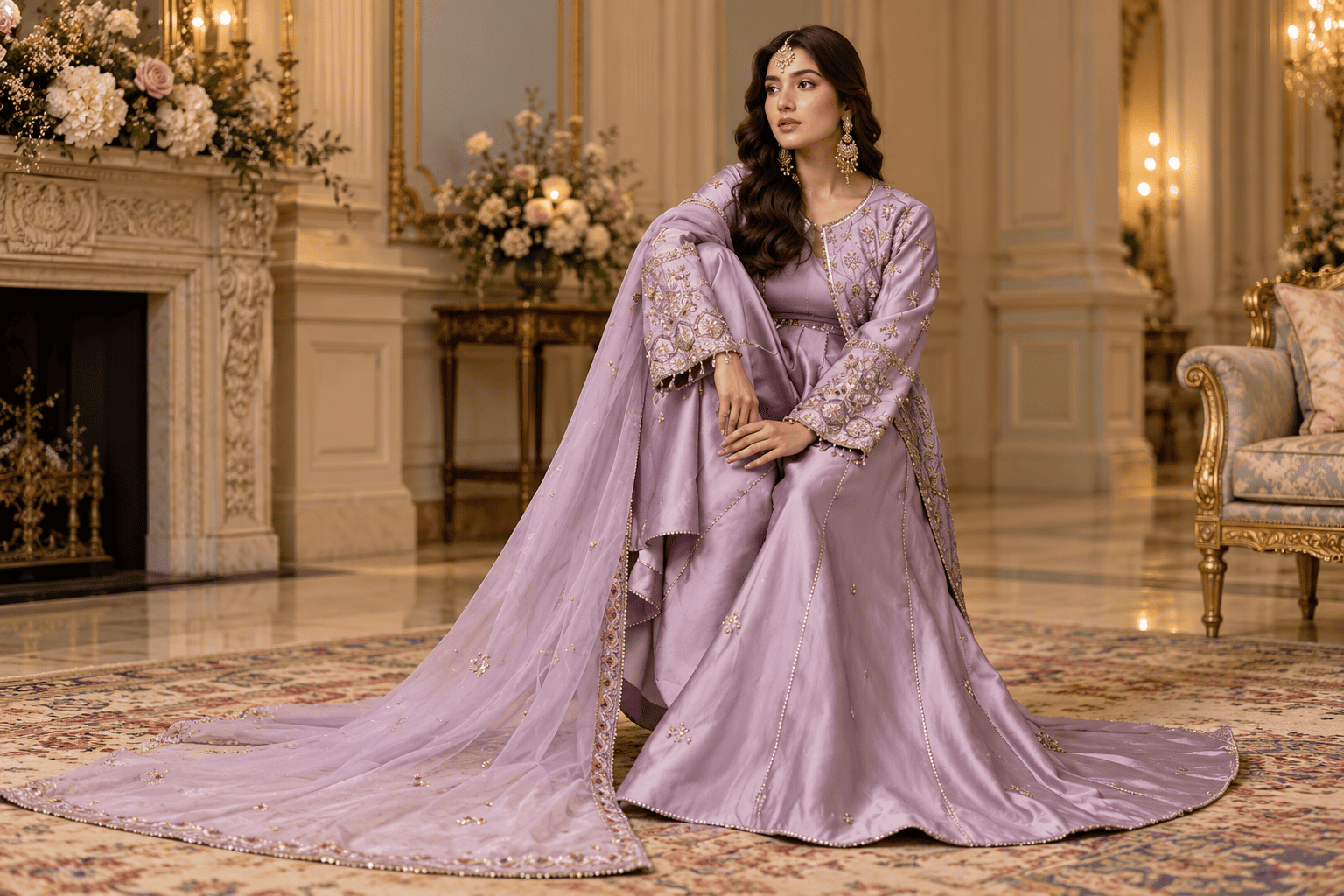
If you are currently looking for elevated occasion wear, explore our collection of Pakistani formal dresses UK created with traditional handwork, refined silhouettes and premium fabrics.
This guide will help you decide how formal your outfit should be, which fabrics and embroidery techniques suit different celebrations, how to choose colour and fit, and how to invest in formal wear you can enjoy beyond one wedding.
What Makes a Pakistani Formal Dress Right for a Wedding Guest?
A wedding guest outfit should make you feel dressed for the occasion without competing with the couple or looking unnecessarily heavy.
This does not mean formal wear has to be simple.
Beautiful zardozi, dabka, resham, detailed borders, statement sleeves and an embroidered dupatta can all be appropriate. What matters is how these elements are balanced across the complete outfit.
A strong formal look usually combines quality fabric, considered embroidery, flattering proportions and a colour that works for the occasion.
The difference between an elegant guest outfit and an overwhelming one is often not the amount spent. It is how well those elements work together.
Pakistani Formal Dresses for Wedding Guests UK: Start With the Occasion
Before choosing colour or embroidery, understand the celebration you are dressing for.
Pakistani weddings can include several events, and the level of formality can change considerably between them.
| Occasion | Formal Direction | Suitable Embroidery | Colour Direction |
|---|---|---|---|
| Mehndi | Festive and expressive | Light to medium | Greens, pinks, mustard, orange, jewel tones |
| Nikkah | Refined and graceful | Light to medium | Sage, dusty blue, blush, champagne, muted tones |
| Baraat | Formal and statement led | Medium to rich | Emerald, teal, plum, navy, deep jewel tones |
| Walima | Polished evening formal | Refined medium | Champagne, silver, dusty rose, lilac, soft blue |
| Reception | Sophisticated party wear | Medium | Jewel tones, muted metallics and evening shades |
If you need detailed guidance for each ceremony, read our complete Pakistani wedding guest outfits UK guide.
That guide focuses on what to wear to Mehndi, Nikkah, Baraat and Walima celebrations, while this article focuses on choosing the actual formal dress.
Decide How Much Embroidery You Really Need
One of the most common mistakes when shopping for Pakistani wedding guest wear is assuming that more embroidery always means a better outfit.
It does not.
Embroidery should strengthen the design rather than hide it.
For a daytime Nikkah or engagement, delicate threadwork and carefully placed embellishment can create enough presence.
For a Baraat or formal evening reception, richer metallic embroidery can work beautifully.
The important consideration is density.
If the neckline is heavily worked, the sleeves or body of the garment may benefit from quieter detailing. If the dupatta is the statement element, the main dress does not need to compete with it.
This contrast makes craftsmanship easier to appreciate.
When to Choose Zardozi Formal Wear
Zardozi is ideal when you want a stronger formal presence.
The metallic nature of the technique adds richness and catches evening light particularly well. It can define necklines, borders, cuffs and larger motifs without requiring every inch of fabric to be embellished.
For close family celebrations, Baraats, wedding receptions and formal evening events, zardozi can create the right level of occasion dressing.
Women who prefer richer metallic handwork can explore the Zarposh collection, where traditional craftsmanship is used across statement formal pieces.
When Dabka Works Best
Dabka creates texture and dimension.
Because the technique has more physical depth than flat thread embroidery, it works especially well around structured borders, necklines and focal motifs.
The key is moderation.
If the dress already has strong dabka work across the upper body, quieter sections elsewhere help the garment remain elegant.
This is particularly useful when choosing Pakistani formal wear for wedding guests UK celebrations where you want visible craftsmanship without crossing into bridal styling.
When Resham Is the Better Choice
Resham offers a softer interpretation of formal dressing.
Fine thread embroidery can create intricate detail without the stronger metallic appearance of zardozi or dabka.
It works particularly well with pastel colours, floral motifs and refined silhouettes.
For Nikkahs, engagement dinners, daytime celebrations and sophisticated Walima looks, resham can feel beautifully appropriate.
Women who prefer this softer direction can explore the Naqsh collection, where refined motifs and delicate handwork create a quieter form of occasion dressing.
Choose Fabric Before Falling in Love With Embroidery
The same embroidery can look completely different depending on the fabric beneath it.
That makes fabric one of the most important decisions when choosing a formal outfit.
Organza
Organza offers structure while remaining visually light.
It works particularly well for dupattas, sleeves and formal shirts where embroidery needs enough support to remain defined.
Silk
Silk creates richness through its natural finish and movement.
It can make relatively restrained embroidery feel more luxurious because the fabric itself contributes to the overall appearance.
Chiffon
Chiffon works well when you want greater movement and softness.
It suits flowing silhouettes and lighter formal dressing, especially for events where comfort matters.
Tissue
Tissue creates a luminous appearance that complements metallic embellishment particularly well.
It can work beautifully for evening celebrations where a stronger formal effect is appropriate.
The right fabric should support the embroidery, silhouette and occasion at the same time.
Fit Can Matter More Than Embroidery
A heavily embroidered outfit will never look completely polished if the proportions are wrong.
Fit affects how every other design element is perceived.
The shoulder should sit properly. The shirt length should complement the lower garment. Sleeves should feel intentional. The overall silhouette should fall naturally rather than pulling or bunching in the wrong areas.
This is especially important with hand embroidered clothing because embroidery often follows particular lines in the garment.
If those proportions change too much, the visual balance can change with them.
When suitable sizing options are available, choose the one that maintains the proportions of the original design rather than simply selecting the closest standard size.
Think About Your Relationship With the Couple
Not every guest needs to dress at the same level.
A sister, cousin or close family member will often choose richer formal wear than a colleague or more distant guest.
This can help you decide how much embellishment feels appropriate.
If you are immediate family, a more detailed formal outfit can work beautifully.
If you are attending as a friend or colleague, a refined three piece formal ensemble with medium embroidery may feel more appropriate.
There is no strict formula.
The goal is simply to match your level of dressing to your role in the celebration.
Choosing Colours for Pakistani Wedding Guest Formal Wear
Colour plays a major role in how formal an outfit feels.
Jewel tones such as emerald, teal, sapphire, plum and deep green work particularly well for evening celebrations.
Sage, dusty blue, blush, lilac and champagne create a softer direction.
Mehndi celebrations often allow brighter colour combinations, while Walima dressing can lean towards more refined or muted shades.
You do not need to follow rigid internet rules about specific colours.
If the host has provided a dress code or colour theme, that should always take priority.
Otherwise, focus on choosing a colour that suits both the event and the overall design of the outfit.
What Works Best for a Daytime Wedding?
Daylight makes fabric texture and embroidery easier to see.
For this reason, daytime formal wear does not necessarily need heavy embellishment to create impact.
Softer colours, fine resham work, smaller motifs and lighter fabrics can look particularly elegant.
A refined formal outfit in daylight often benefits from visible areas of fabric between embroidered details.
This gives the design room to breathe and helps the craftsmanship stand out.
What Works Best for an Evening Wedding?
Evening celebrations allow richer colour and stronger embellishment.
Zardozi, dabka, mukesh and reflective detailing can respond beautifully to ballroom or reception lighting.
Deep jewel tones also tend to feel particularly appropriate in formal evening settings.
The mistake is assuming that evening wear needs maximum embellishment everywhere.
It does not.
A well structured silhouette with carefully concentrated embroidery usually creates a more sophisticated result.
Consider the Venue Before Buying
The venue can completely change what feels appropriate.
A large hotel reception often supports richer formal wear.
A smaller family celebration may suit something more restrained.
A mosque Nikkah may require more modest coverage and a dupatta that can be worn comfortably.
A celebration where you expect to spend significant time standing or moving may call for lighter fabric and an easier silhouette.
Think about how the outfit will actually function during the event, not only how it appears in a product photograph.
UK Weather Should Influence Your Fabric Choice
Pakistani wedding styling in the UK also means thinking practically about weather.
Autumn and winter celebrations can suit richer fabrics, deeper colour and layered styling.
Spring and summer events may benefit from lighter fabrics and less embroidery density, particularly when venues become warm once filled with guests.
Your outfit may be worn indoors, but you still need to arrive at the venue, move between spaces and occasionally spend time outdoors for photographs.
A beautiful formal dress should work for the entire experience.
How to Avoid Looking Too Bridal
The easiest way to keep formal guest wear separate from bridal styling is to create contrast.
If the outfit has a richly embroidered neckline, allow other areas to remain quieter.
If the dupatta carries heavy borders, the main garment may need less embellishment.
If the fabric itself is luxurious, you may not need embroidery across every panel.
Colour and styling also matter.
Statement jewellery, hair and makeup can elevate formal wear without turning the entire look into a bridal composition.
The aim is not to underdress.
It is to leave a visible distinction between beautifully dressed guest and bride.
Hand Embroidered Formal Dresses UK: Why Detail Matters
Hand embroidery gives a formal outfit character that often becomes more noticeable the closer you look.
Techniques such as zardozi, dabka, resham, mukesh and cutdana create different textures and respond differently to movement and light.
This means a carefully hand embroidered dress can feel luxurious without being extremely heavy.
The craftsmanship itself creates the impact.
If this kind of detailing is important to you, explore our hand embroidered Pakistani formal wear UK collection to compare different formal directions.
Choose an Outfit You Can Wear More Than Once
A strong formal purchase should not necessarily be limited to one wedding.
Think about how the outfit could work again for an engagement dinner, Eid celebration, reception or another formal family occasion.
A versatile outfit usually has a strong silhouette and refined embroidery rather than an extremely event specific design.
Jewellery, shoes, makeup and dupatta styling can completely change how the same formal piece feels.
Repeat wear makes quality craftsmanship even more valuable.
Instead of asking only, “Is this impressive enough for this wedding?” ask, “Will I still want to wear this again?”
That question often leads to a better purchase.
Zarposh or Naqsh: Which Formal Collection Suits You?
The two Abdullah Bin Shahbaz collections offer different formal directions.
Choose Zarposh for a Stronger Statement
Zarposh suits women drawn to richer colour, metallic embroidery and more pronounced formal detailing.
It can work particularly well for evening wedding celebrations, Baraats, receptions, Eid events and formal dinners.
Explore the complete Zarposh formal collection.
Choose Naqsh for Refined Formal Dressing
Naqsh takes a softer approach through elegant colours, smaller motifs and refined handwork.
It is particularly suited to Nikkah celebrations, Walima events, engagement dinners and women who prefer quieter sophistication.
Discover the Naqsh formal collection and read this article for your next party wear ideas:
That article explains the difference between Mehndi, Nikkah, Baraat and Walima dressing in more detail.
A Practical Wedding Guest Dress Checklist
Before buying, ask yourself these questions:
- Does the outfit match the formality of the event?
- Does the colour suit the celebration and venue?
- Is the embroidery detailed without feeling bridal?
- Does the fabric suit the season and length of the event?
- Can I sit, walk and move comfortably?
- Does the silhouette flatter me when viewed as a complete outfit?
- Is the fit strong enough to make the embroidery look intentional?
- Can I restyle the outfit for another occasion?
- Does the craftsmanship justify choosing this piece over a simpler alternative?
- Would I still like the dress if it had slightly less embellishment?
If the answer to most of these is yes, you are probably looking at a much stronger purchase.
Common Mistakes When Buying Pakistani Formal Dresses for Weddings
Choosing the Heaviest Outfit Available
Embroidery density is not the same as quality.
Good craftsmanship, placement and balance matter more.
Ignoring Comfort
Pakistani wedding celebrations can last several hours.
An uncomfortable outfit will become more noticeable as the evening continues.
Choosing Fabric Only for Appearance
A beautiful fabric must still work with the embroidery and silhouette.
Forgetting the Venue
The same outfit can feel perfect in a ballroom and excessive at a smaller daytime event.
Buying Something Too Similar to Bridal Wear
Guest wear can be luxurious without using every bridal styling cue at once.
Ignoring Repeat Wear
A versatile formal dress can provide much more value than a piece that only works for one specific celebration.
Frequently Asked Questions About Pakistani Formal Dresses for Wedding Guests UK
What Pakistani formal dresses are suitable for wedding guests in the UK?
Three piece formal suits, long embroidered shirts, refined pishwas styles, ghararas, shararas and other occasion ensembles can all work. The best choice depends on the event, venue, season and required level of formality.
How much embroidery should a wedding guest dress have?
There is no fixed amount. Daytime and intimate events often suit lighter embroidery, while evening Baraats and receptions can support richer handwork. Balance matters more than density.
Can wedding guests wear hand embroidered Pakistani dresses?
Yes. Hand embroidery is ideal for formal guest wear when the design remains clearly distinct from bridal styling.
Which colours are best for Pakistani wedding guests?
Jewel tones, pastels, sophisticated neutrals and muted metallic shades all work well. Follow any colour guidance provided by the family first.
Is zardozi suitable for wedding guest wear?
Yes. Zardozi can create a beautiful formal look when concentrated around borders, necklines or selected motifs rather than making every part of the garment equally heavy.
What should I wear to a Pakistani wedding if I prefer understated clothing?
Choose a refined silhouette with quality fabric, smaller motifs and controlled hand embroidery. Naqsh is particularly suited to women who prefer softer formal dressing.
Where can I shop Pakistani formal dresses for wedding guests in the UK?
Explore Abdullah Bin Shahbaz Pakistani formal dresses UK for hand embroidered formal and party wear. For statement metallic detailing, explore Zarposh. For softer embroidered formal dressing, explore Naqsh.
Final Thoughts
The best Pakistani formal dresses for wedding guests UK women can choose are not necessarily the outfits with the most embroidery.
The strongest look is the one where occasion, colour, fabric, craftsmanship, fit and silhouette work together.
Start by understanding the celebration.
Choose the level of formality.
Then decide how much embroidery, structure and colour the outfit actually needs.
A beautifully made formal dress should help you feel dressed for the occasion without feeling like you are wearing a costume or competing with the bride.
If you are ready to explore your options, browse our Pakistani formal dresses UK, discover statement occasion wear in Zarposh, or explore the softer formal direction of Naqsh.