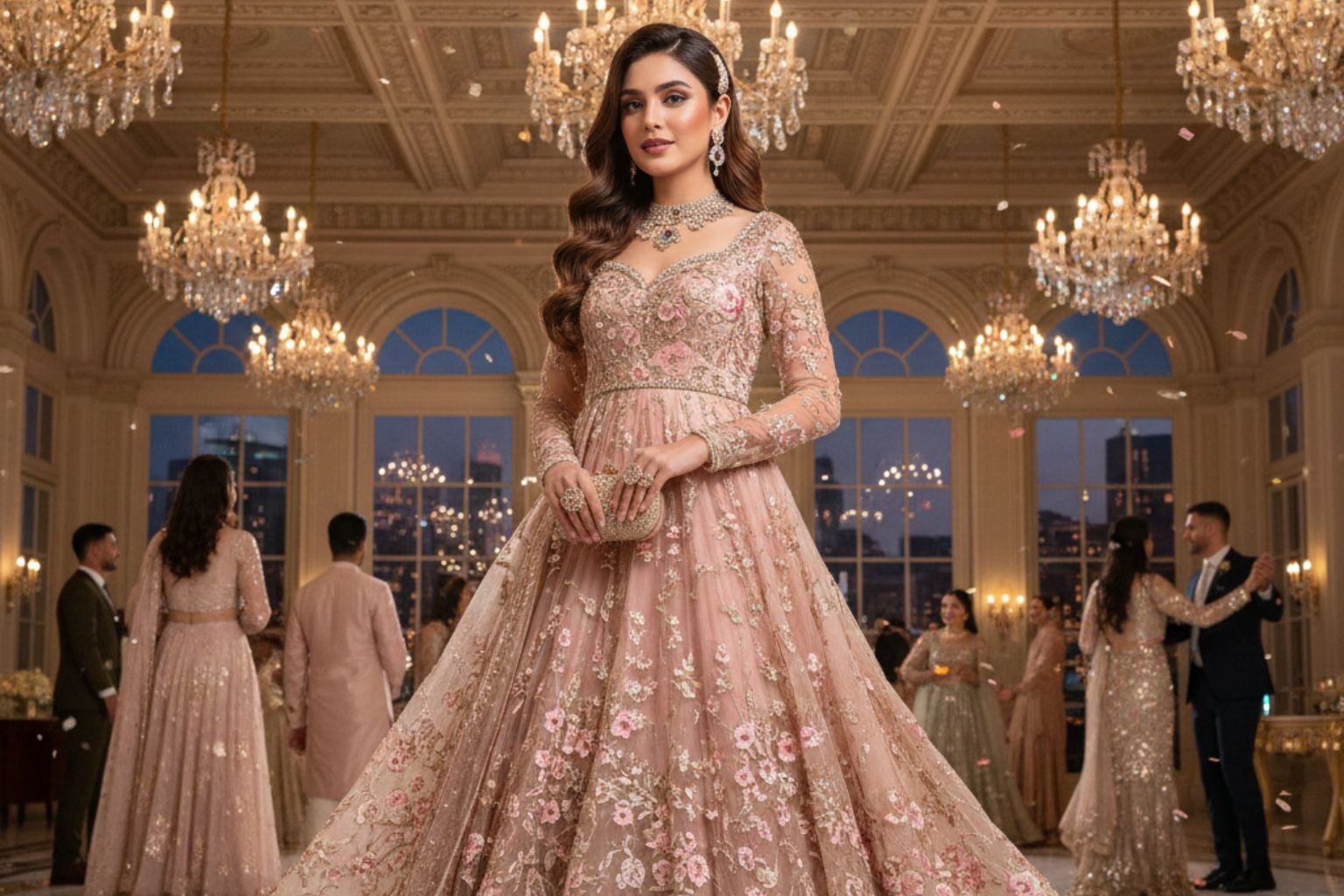
Finding the right outfit for a wedding celebration should feel exciting, not stressful. As a guest at a Pakistani wedding in the UK, formal dresses for wedding occasions give you a wardrobe of beautiful choices, from vibrant Mehndi looks to polished Walima evening wear. This guide walks through the style details, dress codes and practical tips that help you arrive at every event feeling confident and appropriately dressed.
Style Details That Elevate Formal Guest Wear
Small design choices make the biggest difference in formal wear. The right neckline frames your face, the right sleeve balances the silhouette, and the right fabric carries embroidery the way it deserves. Understanding these details helps you choose an outfit that looks considered rather than accidental.
Necklines
On a kameez, anarkali or gown style formal, the neckline sets the mood. Structured necklines draw attention upward and frame your jewellery beautifully, while softer shapes suit daytime events. A well finished neckline also shows the quality of the making, with neat edges and embroidery that sits exactly where it should.
Sleeves
Sleeves shape the whole character of an outfit. Long sheer sleeves with delicate embroidery add modesty and grace, dramatic cuffs bring a modern edge, and simple three quarter sleeves keep the look clean. Choose sleeves that suit the season and the formality of the event.
Fabrics
Silk, velvet, chiffon and organza each bring a different mood. Silk drapes with a natural lustre, velvet adds depth for evening events, chiffon moves lightly for dance filled nights, and organza holds sculpted shapes. The fabric should suit both the event and the embroidery it carries.
Embellishment
Hand embroidery is the soul of Pakistani formal wear. Zardozi and dabka bring richness, resham thread work adds colour and softness, and pearls or crystals add sparkle in measured doses. Well placed embellishment draws the eye without overwhelming the wearer.
Read also: The Enduring Elegance of the Traditional Pakistani Outfit
Dressing for Each Wedding Occasion
A Pakistani wedding is a sequence of celebrations, and each asks for a different energy from your outfit. This simple guide will help you match your look to each function.
| Wedding Occasion | What to Wear | Styling Notes |
|---|---|---|
| Mehndi | A vibrant gharara, lehenga or sharara in festive colours. | Lighter fabrics and floral embroidery suit the dancing and colour of the day. |
| Nikkah | A softly embroidered anarkali or sharara in calm, elegant tones. | Modest, graceful styling suits the intimate ceremony. |
| Baraat | A richly worked lehenga or formal in deep, regal tones. | Statement embroidery with a beautifully finished dupatta. |
| Walima | A gown style formal or refined lehenga with fine embellishment. | Polished evening dressing with soft metallics and flowing lines. |
Two Collections for Every Occasion
Zarposh draws on the grandeur of Timurid era architecture, with bold patterns and rich embellishment made for grand evenings. Naqsh takes a softer path, inspired by floral carvings and marble inlay, with gentle colours and delicate detailing. Between the two collections, there is a look for every occasion on the wedding calendar.
Read also: Halter Neckline Dress: Style That Never Fades
FAQs
Q: Can I wear white or ivory to a Pakistani wedding?
A: As a guest, it is safer to choose festive colours. Ivory and champagne can work for a Nikkah when styled modestly, but avoid anything that could be mistaken for bridal wear.
Q: What should I avoid wearing as a wedding guest?
A: Avoid outfits that compete with the bride, overly casual clothes, and anything too revealing for a family celebration. Matching the formality of the event is always the right choice.
Q: How should I dress differently for daytime and evening events?
A: Daytime events suit lighter fabrics, pastels and softer embroidery. Evening events welcome richer fabrics, deeper tones and more dramatic embellishment.
Q: Can I rewear a formal outfit to another wedding?
A: Yes. Restyle it with a different dupatta, jewellery and hairstyle, and it will feel like a new outfit. Choosing timeless embroidery makes rewearing easy.
Q: How do I choose between a lehenga, sharara and gharara?
A: Consider the event, your comfort and your personal style. Lehengas suit grand evenings, shararas and ghararas move beautifully for the Mehndi, and all three flatter when they are cut well.
Conclusion
Finding formal dresses for wedding occasions is about dressing with joy and confidence, whether you choose the bold elegance of Zarposh or the quiet grace of Naqsh. To begin exploring hand embroidered formal wear made for wedding guests, visit Abdullah Bin Shahbaz.