Bridal couture should feel extraordinary before a single detail is explained. Abdullah Bin Shahbaz creates luxury Pakistani bridal dresses London brides can choose for their craftsmanship, refined proportions and distinctly Pakistani design identity.
Each bridal look brings together premium fabrics, intricate hand embellishment and carefully composed silhouettes. From regal Farshi lehengas and graceful pishwas designs to richly worked couture ensembles, the focus remains on creating bridal wear with presence, detail and individuality.
For the bride who wants more than a conventional wedding outfit, our couture offers a more personal expression of Pakistani bridal tradition.
Traditional zardozi, dabka, resham, mukesh and intricate embellishment techniques.
Selected elements can be refined around your preferred bridal direction.
Proportions are considered around your individual measurements.
Premium fabric, embroidery and silhouette developed as one complete bridal composition.
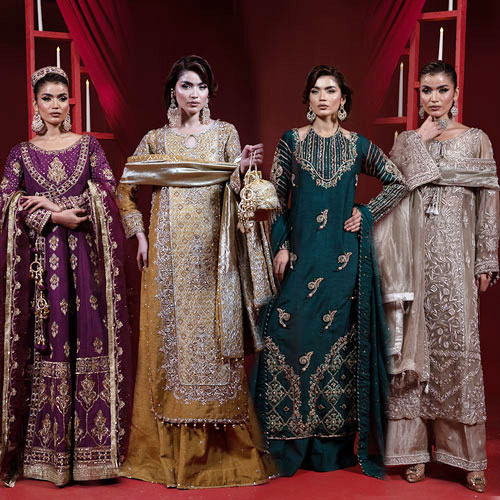
True couture is not defined by the amount of embroidery on a dress. It is defined by the way every detail has been considered together.
At Abdullah Bin Shahbaz, Pakistani bridal couture London brides explore begins with proportion, fabric and silhouette before embellishment becomes part of the design. Handwork is then positioned to enhance the structure of the garment rather than simply cover it.
A heavily embroidered border can anchor a flowing lehenga. Delicate motifs can create rhythm across a pishwas. A statement dupatta can transform the visual balance of an otherwise restrained bridal ensemble.
This approach allows traditional Pakistani craftsmanship to feel luxurious without becoming excessive.
Every element has a purpose, from the first line of embroidery to the finishing visible when the garment is viewed up close.
A wedding outfit becomes more meaningful when it reflects the woman wearing it.
Our approach to bespoke Pakistani bridal dresses London brides select is based on considered personalisation rather than unnecessary alteration.
Measurements form the foundation, but the bridal vision may go further. Depending on the selected design, colour direction, embroidery balance and suitable styling details can be considered while preserving the identity of the original couture piece.
A bride may want the grandeur of a traditional Pakistani silhouette with a softer colour palette. Another may prefer classic bridal tones but with a more contemporary balance of embroidery.
The objective is not to make every design different simply for the sake of customisation.
It is to create a bridal look that feels complete, distinctive and personal.
The beauty of hand embroidery becomes most visible in the details.
Traditional embellishment techniques create different textures, levels of depth and ways of reflecting light. Zardozi introduces metallic richness. Dabka adds dimension. Resham brings softness through threadwork. Mukesh and cutdana can create smaller points of illumination across fabric and borders.
In our hand embroidered Pakistani bridal dresses London collection, these techniques are composed according to the garment rather than applied through a fixed formula. The neckline may require denser work to frame the face. The lower panels may use motifs to create vertical movement. The dupatta border may carry enough detail to complete the bridal composition without competing with the main garment. Hand craftsmanship gives the designer this control. It also means the bridal outfit rewards a closer look, where individual stitches, motifs and finishing become part of the experience.
Luxury should be visible in the way an outfit is constructed, not only in how heavily it is decorated.
Premium fabrics provide the foundation for our bridal designs. Their fall, sheen, structure and movement determine how embroidery should be placed and how the final silhouette should behave.
Our luxury Pakistani bridal couture London collection combines this attention to fabric with traditional artisan techniques and contemporary design discipline.
Some bridal pieces create drama through metallic embroidery and stronger silhouettes. Others rely on delicate motif placement, sophisticated colours and quieter details.
Both approaches can feel luxurious when the proportions are right.
The purpose is to create bridal wear that feels rich without becoming visually confused, traditional without feeling repetitive, and contemporary without losing its Pakistani identity.
The Farshi lehenga brings together grandeur, movement and an unmistakably regal bridal silhouette.
Its extended proportions create a dramatic visual effect, allowing detailed embroidery to develop across a larger surface while maintaining the elegance of the overall shape.
A Pakistani Farshi lehenga London bride selects can become particularly striking when the embroidery follows the natural flow of the garment.
Rich borders can create definition around the hem. Smaller motifs can guide the eye through the body of the lehenga, while an embroidered blouse and carefully composed dupatta bring the complete look together.
Whether interpreted through traditional reds and metallics or more contemporary bridal tones, the Farshi silhouette offers an opportunity to create couture with genuine presence.
A bridal pishwas combines fluid movement with the structure required for formal couture.
Its long panels naturally create vertical lines, making embroidery placement especially important. Detailed work around the bodice can transition into smaller motifs through the length of the garment before returning to more substantial embellishment around the border.
For brides exploring a Pakistani bridal pishwas London look, this silhouette offers a balance between traditional grandeur and graceful movement.
The result can be richly ceremonial or more refined depending on the fabric, colour and density of the embroidery.
A carefully designed pishwas should move beautifully while still holding its visual structure in bridal portraits and formal settings.
The bridal lehenga remains one of the defining silhouettes of Pakistani wedding couture.
Its versatility allows the designer to work with different shirt lengths, blouse structures, skirt volumes and dupatta arrangements while maintaining a recognisable bridal identity.
Our approach to the Pakistani couture lehenga London bride is built around balance.
If the skirt carries dense embroidery, the upper garment may benefit from more controlled detailing. If the blouse becomes the visual statement, the lehenga can create movement through larger motifs and carefully constructed borders.
This balance allows the complete bridal outfit to feel intentional from every angle.
Colour can then transform the mood, from traditional red and maroon to ivory, champagne, muted rose, antique gold and other contemporary bridal directions.
Zardozi has been associated with ceremonial clothing for generations because few embroidery techniques create the same sense of richness and dimension.
Its metallic character allows motifs to catch light differently depending on the angle of the garment. When combined with dabka, fine threadwork and carefully selected embellishments, the embroidery develops greater texture and depth.
A Pakistani zardozi bridal dress should still allow the underlying design to remain visible.
That means considering where heavier metallic work belongs and where quieter areas should create visual breathing space.
At Abdullah Bin Shahbaz, traditional craftsmanship is treated as a design language rather than simply a decorative layer.
That approach allows heritage techniques to remain central to modern Pakistani bridal couture.
Zarposh explores bridal grandeur through architecture, metallic embroidery and traditional artisan techniques.
Intricate zardozi, rich fabrics and carefully structured motifs create couture with a strong ceremonial presence. It is a natural starting point for brides drawn to statement embroidery, regal silhouettes and the depth associated with traditional Pakistani bridal design.
Naqsh approaches craftsmanship through smaller motifs and a more intimate visual language.
Traditional decorative influences are interpreted through refined handwork and carefully balanced compositions, creating pieces for women who appreciate detail without needing overwhelming embroidery density.
The proportion of a bridal outfit affects how every other design element is perceived.
The placement of a waist, the length of a shirt, the width and fall of a lehenga, the shape of a sleeve and the positioning of a dupatta can completely change the character of a couture piece.
Our made to measure Pakistani bridal couture London approach allows these proportions to be considered around the bride.
It is not simply about translating standard sizing into different measurements.
The objective is to preserve the design while allowing the silhouette to sit more naturally on the individual wearing it.
That attention becomes particularly important in heavily embellished couture, where embroidery and garment structure must work together.
Start with the feeling you want the bridal look to create.
A Farshi lehenga can provide dramatic movement and royal presence. A pishwas can create a softer sense of grandeur through long flowing panels. A couture lehenga offers flexibility in proportion, blouse styling and dupatta composition.
Then consider the embroidery.
If you are drawn to traditional richness, zardozi and dabka can provide greater metallic depth. If you want something more refined, smaller motifs, threadwork and carefully spaced embellishment may suit the design better.
Colour comes next.
Traditional reds remain powerful, but Pakistani bridal couture now offers much wider possibilities. Ivory, champagne, muted pink, antique gold and other sophisticated palettes can completely alter the personality of the same silhouette.
The final choice should not depend on what looks most elaborate.
It should depend on which combination of silhouette, craftsmanship and colour feels most like you.
Bridal couture is ultimately judged in the details.
The quality of the fabric. The precision of the handwork. The balance between heavily embellished and quieter areas. The way individual motifs follow the structure of the garment. The relationship between the main outfit and the dupatta.
Abdullah Bin Shahbaz brings these details together through a distinctly Pakistani couture perspective.
Traditional techniques remain visible, but they are not treated as restrictions. They become the foundation for creating bridal looks with individuality, refinement and lasting visual character.
For London brides looking for Pakistani couture that combines heritage with considered design, every piece begins with craftsmanship rather than mass production.
The most memorable bridal outfits are not memorable because they contain the most embroidery.
They are memorable because every detail feels connected.
The silhouette complements the bride. The colour feels intentional. The embroidery creates richness without hiding the garment beneath it. The finishing makes the outfit feel complete when seen from every angle.
Explore Abdullah Bin Shahbaz bridal couture, discover the silhouettes and craftsmanship that speak to you, and begin shaping a bridal look around your own vision.