Choosing a formal outfit as a wedding guest is very different from choosing clothing for any other occasion. The dress has to feel right when you first see it, but it also has to work through hours of celebration, photographs, movement and conversation. When hand embroidery is involved, there is another layer to consider because the quality of the workmanship, fabric, embellishment and finishing can dramatically change how a formal outfit looks and feels in person.
For UK shoppers looking for South Asian formal wear, the choice can be especially broad. A single search can bring up heavily embellished lehengas, elegant nikkah guest dresses, refined sharara sets, contemporary pastels and made to order couture. The challenge is not simply finding something beautiful. It is understanding which dress has the right craftsmanship, silhouette, fabric and level of detail for the wedding you will attend. This guide explains how to choose hand embroidered formal wear UK guests love, with made to order formal pieces designed around individual measurements, colour preferences and the occasion itself.
A considered approach makes that decision much easier. Instead of choosing only from photographs, think about how the outfit has been made, where you will wear it, how it should move and which details genuinely matter to you.
Begin With the Wedding Event, Not Just the Dress
Before comparing embroidery or fabrics, decide what role the outfit needs to play at the wedding you are attending.
A nikkah guest dress may call for refinement, graceful detailing and a softer visual presence. A mehndi outfit usually has more freedom for colour, movement and playful embellishment. A walima or reception outfit can support richer embroidery and a more formal finish.
This matters because there is no single correct level of embellishment for a guest. An outfit that feels perfect for a daytime family function may look underdressed at an evening reception, and vice versa.
Start by considering the venue, time of day, length of the event and overall mood of the celebration. A guest who understands the event first will choose embroidery and fabric with far more confidence.
Look Beyond the Photograph and Examine the Handwork
One of the biggest differences between mass produced formal wear and genuine hand embroidered couture is the quality of the stitching itself.
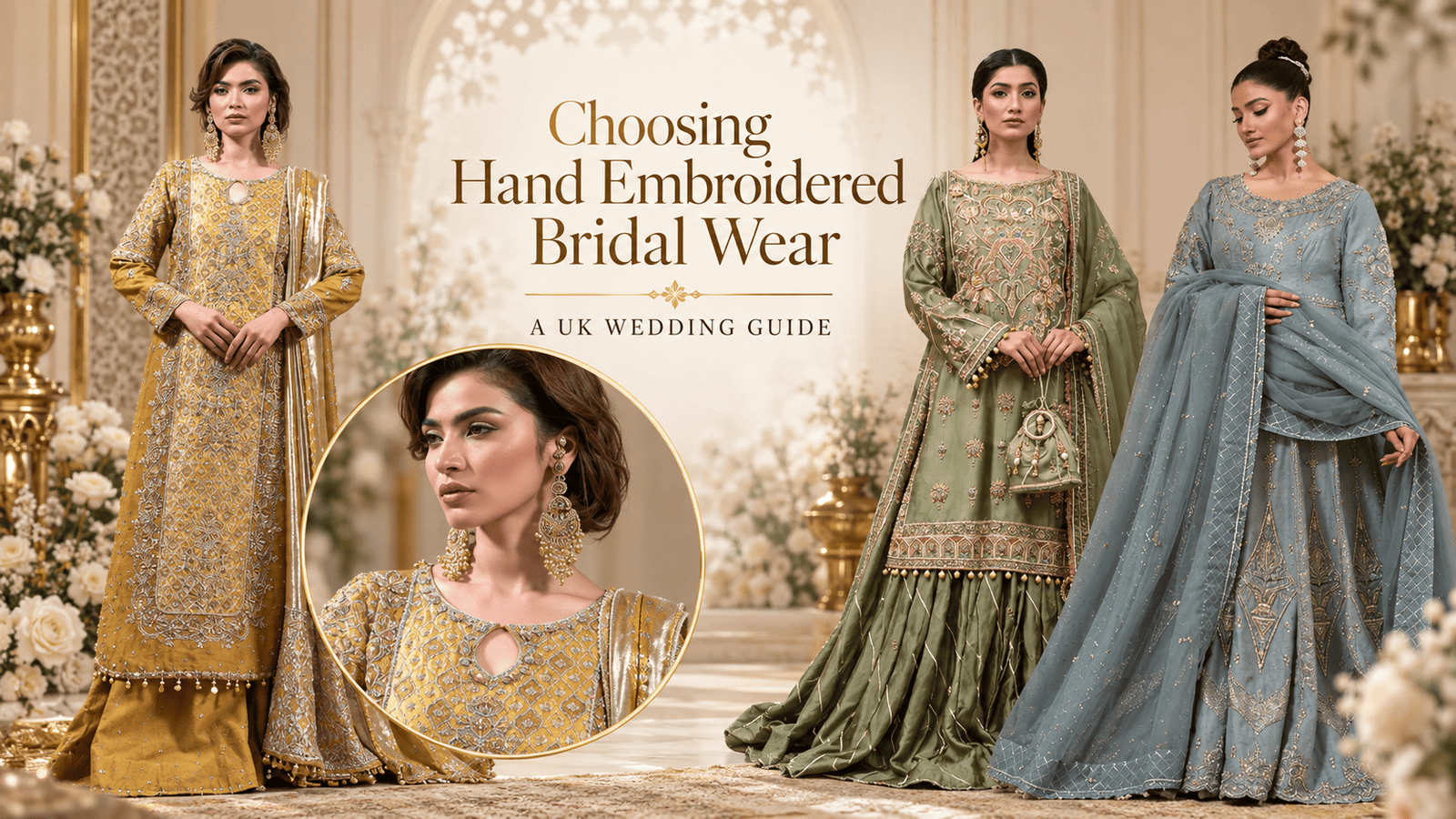
Hand techniques such as zardozi, dabka, mukesh, resham and cutdana create texture and depth because every stitch is placed by an artisan. Machine made imitations can look flat by comparison, even in professional photographs.
That does not mean that heavier embroidery is automatically better. Quality matters more than how much decoration an outfit carries. A refined neckline with precise handwork often outshines a heavily embellished piece with uneven finishing.
Look at close photographs of the neckline, sleeves, borders and motifs. Examine whether the embroidery sits evenly, whether the threads are secure and whether the back of the work looks as considered as the front.
This is particularly important when choosing a formal outfit online because the purchasing decision depends on images rather than touch. Detailed close ups tell you far more than full length studio shots.
Think About the Fabric Underneath the Embroidery
Embroidery receives most of the attention, but the fabric supporting it has an equally important role in how a formal outfit wears.
The same embroidery can behave very differently on raw silk, organza, chiffon or velvet. A structured fabric gives embroidery presence and shape, while a fluid fabric gives it softness and movement.
The right choice depends on the silhouette and occasion rather than simply which material sounds most luxurious. A daytime family function may suit breathable chiffon or organza, while an evening reception can carry the richness of raw silk or velvet.
A heavily embellished outfit also needs a fabric that can support the weight of the handwork without sagging or losing its shape through a long event.
UK weddings take place throughout the year, so the season and venue should also influence the decision. Lighter fabrics work better for summer garden functions, while richer fabrics suit winter evening celebrations.
Choose Embroidery That Matches the Way You Want the Dress to Feel
Hand embroidery is not only decorative. It changes the entire personality of an outfit.
Dense metallic work can create grandeur and formality. Smaller motifs can make a dress feel more refined and modern. The embroidery you choose communicates your personal style before you say a word.
Rather than asking which embroidery is the most elaborate, ask what you want the outfit to communicate as a guest. Elegance at someone else’s wedding means looking polished without overshadowing the couple.
If you want a traditional festive presence, you may prefer richer surfaces and stronger borders. If you prefer a contemporary look, delicate resham or fine sequin work may suit you better.
Guests drawn to stronger metallic craftsmanship and statement embellishment can explore the Zarposh collection, where handwork, formal silhouettes and richer detailing are developed for important wedding occasions.
Do Not Sacrifice Comfort for Visual Impact
A formal outfit can look extraordinary while still being difficult to wear, and a guest who is uncomfortable cannot enjoy the celebration.
Consider how long you will be dressed, whether you will be sitting for extended periods, how much walking the venue requires and whether you will be dancing.
Heavy embroidery placed around areas that need frequent movement can become tiring over a long event. Ask how the weight of the handwork is distributed and whether the lining protects your skin from coarse threadwork.
The goal is not to make the dress simpler. It is to make sure the craftsmanship supports the guest rather than burdening them through hours of celebration.
When comparing luxury formal wear, consider how the outfit has been constructed as well as how it looks. Clean finishing, soft linings and balanced embroidery placement all contribute to comfort.
Fit Should Be Considered Before Production, Not After It
A beautifully embroidered dress loses much of its impact if the proportions are wrong.
This is one of the main reasons made to order formal wear can be valuable for guests. Instead of selecting the nearest standard size and hoping for the best, the outfit is cut around your own measurements.
The fit of the bodice, shoulders, sleeves, waist, skirt length and neckline should work together. These elements determine how the embroidery falls and how the silhouette photographs.
Accurate measurements also help determine how the outfit should fall and move. A skirt that is cut for your height will drape the way the designer intended.
When submitting measurements, follow the designer’s instructions rather than measuring according to your own habits. Consistent measuring points lead to a more accurate fit.
Decide How Much Customisation You Actually Need
Custom formal wear does not necessarily mean redesigning an outfit completely.
For many guests, the most useful customisation may involve sizing, colour adjustments, sleeve preferences or neckline changes. Small changes can transform how an outfit suits you.
Before requesting changes, decide which elements matter most to you. If you love the overall design but want a different colour, that may be a relatively focused decision.
A clear consultation helps both the guest and designer understand where customisation adds value and where the original design should be left alone.
You can also learn more about the craftsmanship and design philosophy behind the garments in our guide to Pakistani wedding guest outfits in the UK, including the brand’s approach to hand artistry, premium fabrics and made to order production.
Consider How the Dress Will Look in Real Wedding Conditions
Studio photographs are useful, but the wedding you attend will not happen in a studio.
You may move between natural daylight, warm indoor lighting, flash photography and video. Metallic embroidery behaves differently under each light, so look for images taken in varied settings if they are available.
Think about how the dress will photograph from the front, side and back. Look at the border placement, the back neckline and how the dupatta falls when you move.
Movement matters too. A skirt or dupatta should create shape while walking rather than only looking good when perfectly arranged.
These details are easy to overlook when choosing a dress from a single front facing photograph. Look for videos or customer images that show the outfit in real conditions.
Plan Your Formal Wear Order Early Enough
Hand embroidered formal wear is not created in the same way as mass produced fashion.
When artisans are applying detailed embroidery by hand and the outfit is being made around individual measurements, production takes careful time and planning.
For that reason, begin your formal wear search early enough to have a proper conversation about the design, the measurements and the making schedule. Please check our Shipping Policy page for current making times.
Avoid choosing an outfit first and only asking about the timeline afterward. The date of the wedding should shape your planning from the very beginning.
This is particularly important when your dress has dense handwork or significant customisation. Leave enough room for measurements, production and any final adjustments.
Use the Consultation to Ask Specific Questions
A formal wear consultation should do more than confirm whether a dress is available.
Ask what embroidery techniques are used, which fabrics form the base of the garment, whether sizing can be adjusted and how the finished outfit will be delivered.
If you are attending several wedding functions, mention that too. The designer can help distinguish between outfits suited to a nikkah, a mehndi or a walima.
You should also discuss production expectations before confirming the order. Clear information at the start prevents disappointment later.
The strongest formal wear buying decisions usually come from understanding the garment rather than simply admiring it. A knowledgeable guest is a confident guest.
Choosing Between Rich and Refined Formal Styles
Not every guest wants the same visual language.
Some guests are drawn to the grandeur of metallic embroidery, architectural borders and strong couture presence. Others prefer delicate motifs, softer palettes and understated elegance.
Neither approach is more appropriate than the other. The right choice is the one that reflects your personality and suits the formality of the event.
Zarposh represents the richer side of the Abdullah Bin Shahbaz aesthetic, while the Naqsh collection offers a softer expression of hand embellishment through refined motifs and elegant formal silhouettes.
Looking at collections with a clear aesthetic direction can make the decision easier because you begin with a style language you already love.
The right approach is not to select the collection that appears most heavily decorated. It is to identify which aesthetic feels most like you.
Choose the Dress You Will Still Appreciate Up Close
A formal outfit is seen from across the room, but many of its most important moments happen much closer.
Family photographs, portraits, jewellery shots and candid moments all reveal the fine details of embroidery and finishing.
Instead of choosing only for immediate impact, consider whether the dress still feels special when you look at it closely. Fine, even stitching and thoughtful motif placement reward that closer look.
Luxury formal wear should reward that attention. The embroidery should have depth, the fabric should feel substantial and the finishing should be clean.
When all of those elements work together, the dress becomes more than a heavily embellished outfit. It becomes a piece you will be glad to wear and happy to see in photographs for years.
Find the Right Hand Embroidered Formal Wear for Your Celebration
The right formal outfit is a balance of craftsmanship, fit, comfort and personal style.
Begin with the wedding event, then look closely at the quality of the handwork, fabric and silhouette. Ask questions, compare options and give yourself enough time to decide well.
Most importantly, choose formal wear that feels considered rather than simply decorated.
Abdullah Bin Shahbaz creates made to order formal pieces using traditional hand embroidery techniques, designed for wedding guests and formal occasions across the UK.
Frequently Asked Questions About Choosing Hand Embroidered Formal Wear
What should I look for in hand embroidered formal wear?
Look closely at the texture, placement and finishing of the embroidery rather than judging only by photographs. Even, secure stitching, clean edges and balanced motifs signal quality handwork.
Is made to order formal wear better than buying a standard size?
The better option depends on your needs, but made to order formal wear can be particularly useful when you want a precise fit, adjusted sleeves or a different colour. Standard sizes suit guests with straightforward fitting needs.
Which fabric is best for hand embroidered formal wear?
There is no single best fabric for every guest. Raw silk, organza, chiffon and velvet each suit different occasions and seasons. Choose the fabric that supports the embroidery and feels comfortable for the event.
Should a nikkah guest dress have lighter embroidery than a walima guest dress?
It does not have to, but many guests choose different levels of formality for different events. A nikkah ceremony often suits refined detailing, while a walima or reception can carry richer embellishment.
How early should I begin choosing made to order formal wear?
Start early enough to allow time for consultation, measurements, production, hand embroidery and any adjustments. Please check our Shipping Policy page for current making times.